
Lieferung heute & morgen

Qualitätsgarantie

Willkommens-Angebote freischalten: KOSTENLOSE Lieferung | Bis zu 80 % RABATT | Kostenlose 30-Tage-JoyPlus-Testphase
App herunterladen
A smoothie blender should reliably handle fruit, vegetables, yoghurt and ice without ending up unused at the back of a cupboard after a few weeks. But there are significant differences between personal blenders, jug blenders and portable blenders. It’s not just wattage and design that matter: jug size, safety features, cleaning requirements and what you’ll actually use it for are all important.
A high power rating may sound impressive, but on its own it says little about the blending results. Blade design, jug shape, motor cooling and the recommended running time all affect performance too. A compact 300-watt smoothie maker may be enough for soft fruit, while frozen fruit or ice may call for a different type of appliance.
So, look at how motor power, blade layout, pulse function and permitted operating time work together. A blender that can only be used in short bursts is less suitable for making large quantities.
The label blender with an ice-crush function doesn’t automatically mean you can blend unlimited amounts of ice. Manufacturers may specify maximum quantities, intermittent operation or particular ice cube sizes. For example, according to the product information, nutribullet recommends using no more than three or four ice cubes per cycle with the nutribullet Flip.
If you regularly blend frozen ingredients, check the instruction manual, maximum fill level and running time. A pulse function is often enough for cocktails and individual portions. For several portions of frozen drinks, a sturdy jug blender with a larger jug is more practical.
A budget blender may seem more versatile if it comes with extra drinking cups, lids or a grinder. In practice, it’s important to check whether these parts are dishwasher-safe, seal securely and are compatible with the blade attachment. A BPA-free blender with takeaway cups is particularly useful for commuters and students, while families are more likely to benefit from a large blending jug.
For a single serving, around 0.5 to 0.7 litres is enough. Couples can get by with around 0.8 to 1.2 litres. For families, soups or several shakes, consider a jug blender with a capacity of 1.5 litres or more. Bear in mind that the usable liquid capacity is often lower than the total volume.
A personal blender with a drinking cup saves you from having to transfer your drink and is handy for the office, gym or commute. A traditional jug blender is a better choice if you want to make sauces, baby food, cocktails or larger quantities.
Wattage indicates the electrical power consumption or the motor power stated by the manufacturer, but it isn’t the only measure of quality. Compact models may be enough for soft fruit and shakes. For nuts, frozen fruit or ice, a pulse function, sturdy stainless-steel blades and effective cooling are all important.
Check the rest periods specified in the manual. Some appliances can run for only 60 seconds at a time, while others can run for up to two minutes. An automatic overheat cut-off is an added safety feature, but it doesn’t replace the need to use the appliance as instructed.
Removable blades, dishwasher-safe cups and a smooth jug shape make cleaning easier. The motor unit must never be immersed in water. Glass jugs are heavier, while plastic or Tritan jugs are often lighter and more resistant to breakage.
Look for a safety interlock that only allows the blender to operate when the jug is fitted correctly and the lid is closed. Always handle the blades by their plastic base. Many blenders aren’t suitable for hot liquids, as pressure can build up inside the jug. Always follow the instructions provided by the manufacturer.
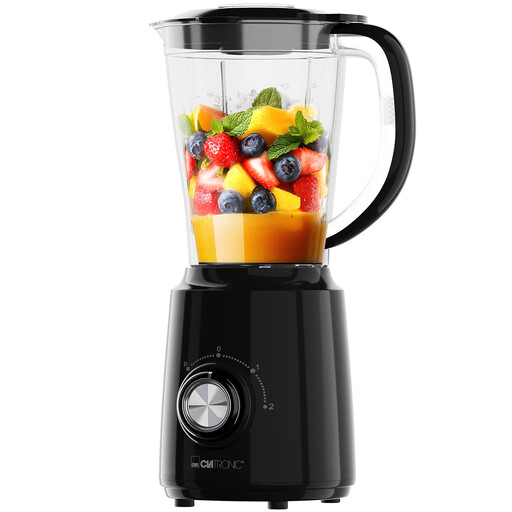
Why it suits this profile: The 1.5-litre jug, three speed settings and ice-crush function cover everyday tasks such as making smoothies, protein shakes, sauces and cocktails.
The BPA-free blending jug has a measuring scale, and the removable blade attachment makes cleaning easier. The safety interlock prevents the blender from running unless the jug is fitted correctly.
1.5-litre capacity, four stainless-steel blades, pulse/turbo function and non-slip rubber feet.
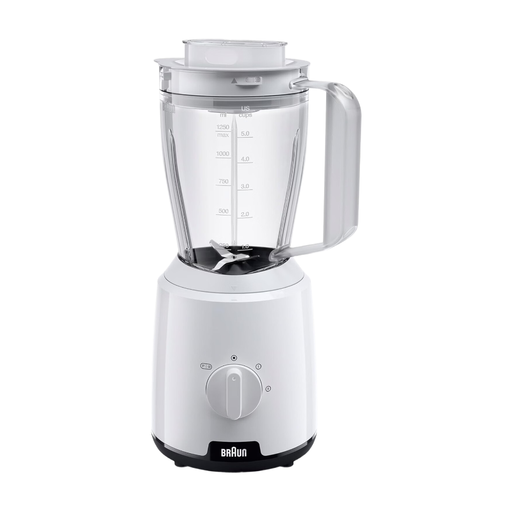
Why it suits this profile: This jug blender combines 600 watts of power and a 1.5-litre capacity with two speeds, pulse operation and a separate ice-crush setting for regular household use.
The product information specifies a three-part safety mechanism and a maximum continuous running time of two minutes. This makes it easier to use the blender as intended.
TriAction jug design, ice-crush function and removable dishwasher-safe parts, according to the product description.
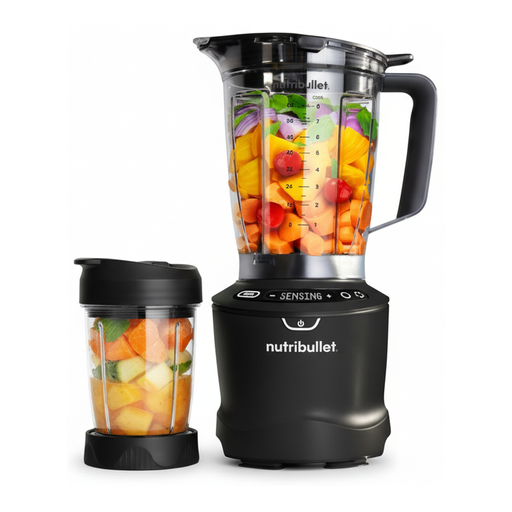
Why it suits this profile: With 1,500 watts of power, several speed settings, a 1.8-litre jug and extra takeaway cups, this model is designed for households that regularly prepare a variety of recipes.
The digital display, five speeds and automatic programmes make it easier to see the selected running time and setting than with a blender that has just one switch.
1.8-litre jug, two extra cups, pulse function and a 1,500-watt motor, according to the product information.
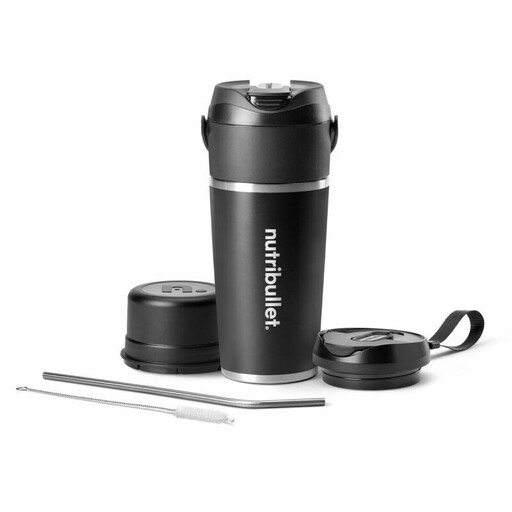
Why it suits this profile: This rechargeable blender has a USB-C port, carry handle and insulated 590-millilitre cup, making it suitable for the office, sport, travel and campervans.
The product information specifies a limited number of ice cubes and short blending cycles. This makes clear that it’s designed for use on the go, rather than for making family-sized portions in a large, high-powered blender.
11.1-volt battery, USB-C charging, 590-millilitre insulated cup and drinking lid with handle.
We’ve put together a comprehensive, regularly updated list of products that meet these strict selection criteria and the safety regulations in force in the EU.
Compact appliances with lower power ratings may be enough for soft fruit, yoghurt and liquids. For ice, frozen fruit or nuts, motor power, blade design and the pulse function matter more. Always compare the specific usage guidance, rather than looking only at the wattage on the packaging.
There’s no reliable way to give a single lifespan that applies to every blender. It depends on how often you use it, the ingredients you blend, how you clean it and whether you follow the recommended rest periods. Overfilling, running it dry and blending hard ingredients continuously can put extra strain on the motor and blades. Rinsing removable parts regularly and keeping the motor unit dry will help you use the appliance properly.
Running costs depend on the appliance’s power consumption and how long you actually use it. A 600-watt blender running for one minute uses around 0.01 kilowatt hours. To work out your own costs, multiply this figure by your electricity rate and the number of times you use the blender. Rechargeable models also need charging, although this usually uses little electricity for short blending cycles.