
Lieferung heute & morgen

Qualitätsgarantie

Willkommens-Angebote freischalten: KOSTENLOSE Lieferung | Bis zu 80 % RABATT | Kostenlose 30-Tage-JoyPlus-Testphase
App herunterladen
A smoothie maker should process fruit, vegetables, frozen ingredients or ice quickly, then be easy to clean. In practice, however, some purchasing claims can lead to the wrong choice. A high wattage alone, for example, says little about the blade design, container size or suitability for hard ingredients.
Manufacturers often use motor power as a key selling point. In everyday use, however, several factors matter: motor power, blade arrangement, pulse function, maximum running time and permitted filling quantity. A 300-watt personal blender may be sufficient for small portions, while a countertop blender for family-sized portions needs greater capacity.
A BPA-free drinking cup is important to many buyers. Even so, you should also check the type of closure, leak resistance, capacity and cleaning requirements. A container designed solely for blending is not automatically suitable as a drinking or transport cup. Look out for details such as a screw-top lid, drinking opening and leak-proof construction.
A blender with an ice crusher processes ice or frozen fruit in short pulses, depending on the model. A blender with a grinder, on the other hand, is intended for dry ingredients such as spices or coffee beans, provided the manufacturer expressly states this. A juicer uses a filter to separate juice from pulp. It therefore produces a different result from a blender or smoothie maker.
Wattage is a useful guide, but it is not proof of quality on its own. For frozen fruit and ice, stainless-steel blades, a pulse function and clear information about the maximum operating time are important. With compact appliances, plan for several short blending cycles and observe the cooling intervals specified in the instruction manual.
One example is the WMF Küchenminis Smoothie-to-Go Mini Blender with 300 watts, 23,000 revolutions per minute and four stainless-steel blades. According to the product description, it is suitable for small portions and ice. The manufacturer also specifies a maximum continuous operating time of one minute.
For individual portions, containers holding around 0.5 to 0.9 litres are practical. Families or people who want to prepare several portions are more likely to benefit from a countertop blender with a capacity of 1.2 to 1.5 litres. Pay attention to the MAX mark: exceeding it can cause the contents to warm up or splatter, or put strain on the lid.
According to the product specifications, the Bear Table Blender LLJ-B12K1 has a 1.2-litre blending container, a 500-watt motor, four stainless-steel blades and additional grinding and chopping cups, each with a capacity of 100 grams. A minimum liquid quantity of 300 millilitres is specified for operation.
A dishwasher-safe blender can significantly reduce the daily effort involved. Check which parts can actually go in the dishwasher. The motor unit, cable and mains plug must never be immersed in water. On several models, safety interlocks prevent operation if the cup, lid or blade attachment has not been fitted correctly.
For small kitchens, personal blenders with stackable cups or slim countertop models are a sensible choice. Battery-powered appliances have additional considerations, including the charging port, charging time, number of blending cycles per charge and battery care.
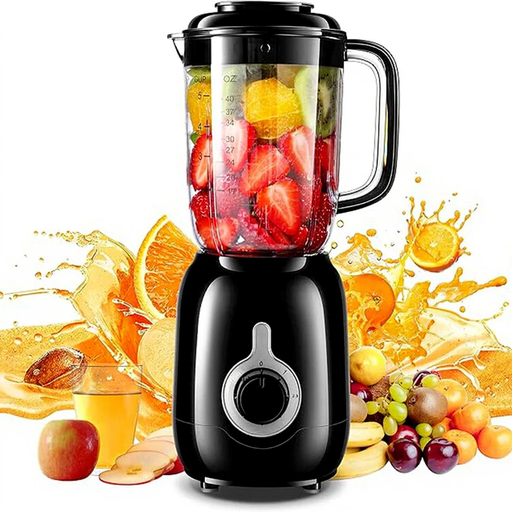
Why this product suits the profile: The 1.2-litre countertop blender is suitable for several portions and also includes grinding and chopping cups. Two speed settings and a pulse function support different types of ingredients.
The product data states the capacity, minimum liquid quantity and safety interlock. This makes it easier to understand important operating limits before buying.
1.2-litre container, 500-watt motor, four stainless-steel blades, plus grinding and chopping cups.
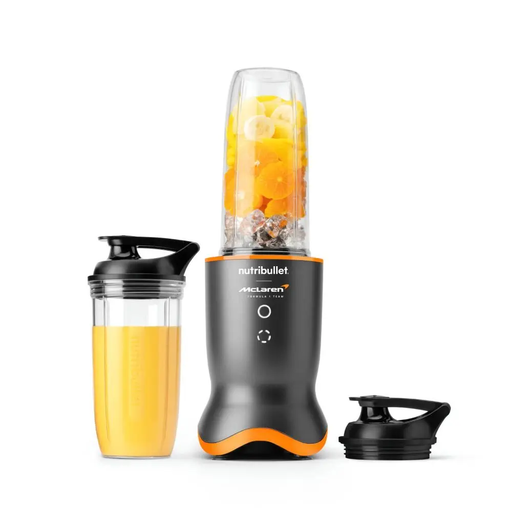
Why this product suits the profile: According to the product description, this personal blender combines a 1,200-watt motor with 700- and 900-millilitre cups made from BPA-free Tritan Renew. A backlit control panel and a non-slip base with suction cups are further features.
The cup sizes and specified maximum running time of 60 seconds make planning easier. The instructions also highlight cooling breaks and the safe handling of sharp blades.
1,200 watts, two BPA-free cups, pulse function, dishwasher-safe cups and blade attachment.

Why this product suits the profile: Anyone who prefers clear juice with less pulp needs a juicer rather than a traditional smoothie blender. According to the product data, this model has 800 watts, two speed settings, a 75-millimetre feed tube and a 1.25-litre juice container.
Clearly distinguishing between juicing and blending prevents false expectations about consistency and pulp. The manufacturer also specifies a safety lock and anti-drip function.
800-watt motor, 1.25-litre juice jug, 2-litre pulp container, foam separator and 75-millimetre feed tube.
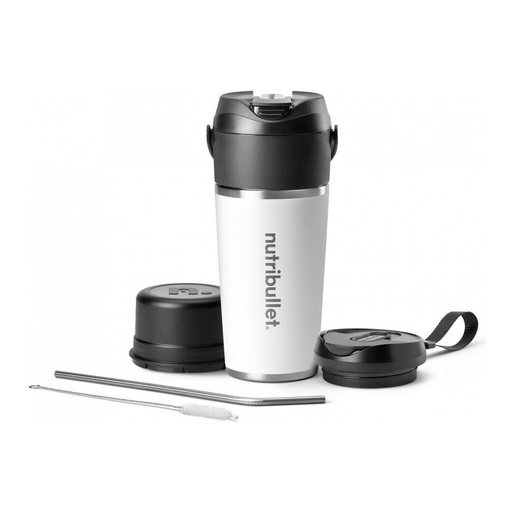
Why this product suits the profile: This portable blender runs on a battery, has a USB-C charging port and comes with a 0.59-litre stainless-steel cup. The blending container and drinking cup are combined in one appliance, reducing the need to transfer the drink when commuting or heading to a workout.
The product description specifies the battery, capacity and a limit for ice cubes. This information helps you assess its suitability for mobile use realistically.
0.59-litre insulated cup, USB-C charging, pulse function and stated suitability for ice and frozen fruit.
We have put together a complete, regularly updated list of products that fully meet these strict selection criteria and the safety regulations applicable in the EU.
Lower power may be sufficient for soft fruit and small portions. For frozen fruit, ice or nuts, motor power, blades, the pulse function and rest periods are more important than wattage alone. The key question is whether the manufacturer expressly states that the appliance is suitable for the intended use.
Its lifespan depends on how often it is used, the ingredients, cleaning and correct loading. Overfilling, unsuitable hard objects and blending cycles that run for too long can put strain on the motor and blades. Before using the appliance for the first time, read the information on maximum running times and cooling intervals.
Energy consumption depends on power and operating time. An appliance with a higher wattage may use less energy during short cycles than a less powerful model that runs for longer. For a rough estimate, multiply the motor power in kilowatts by the daily operating time in hours. Standby consumption and charging losses for battery-powered appliances may also need to be taken into account.
The right choice therefore depends mainly on portion size, ingredients, transport requirements and cleaning effort. By comparing these criteria before buying, you can make a more informed choice between a countertop blender, personal blender, smoothie maker, juicer and portable blender.