
Lieferung heute & morgen

Qualitätsgarantie

Willkommens-Angebote freischalten: KOSTENLOSE Lieferung | Bis zu 80 % RABATT | Kostenlose 30-Tage-JoyPlus-Testphase
App herunterladen
A smoothie maker should reliably blend fruit, vegetables, ice and protein powder, while fitting easily into your daily routine. In practice, however, some marketing claims can lead to disappointing purchases. A high wattage doesn’t automatically guarantee the right blending performance, a large jug may not hold the full stated capacity, and ‘to go’ doesn’t always mean the drinking cup is truly leakproof.
This buying guide explains which technical details matter to UK households and which blender, personal blender or portable blender is right for different needs.
Motor power is often a prominent selling point. A 650-watt blender or 1000-watt blender may suit many tasks, but wattage alone tells you little about the blade design, torque, operating time or the quantity of ingredients you can blend. Terms such as ‘peak power’ may also refer to a short-term maximum.
When choosing a model, it’s worth asking:
A 1.5 or 2.1-litre jug is suitable for making several portions. However, the maximum permitted liquid capacity may be lower than the jug’s total volume. For example, the Ninja Professional Blender is listed with a 2.1-litre jug capacity and a maximum liquid capacity of 1.9 litres.
A personal blender has a much smaller capacity. That’s no drawback if you’re making individual portions each day for work, the gym or your commute. For families or several drinks at once, a traditional kitchen blender with a jug is usually more practical.
Blades that are difficult to remove, parts that aren’t dishwasher-safe or seals that are hard to reach can all make cleaning more of a chore. With sharp stainless steel blades, it’s also important that the jug locks securely into place and that the motor unit doesn’t come into contact with water.
A BPA-free blender may be worth considering, particularly when it comes to the jug and lid. Check which specific parts the material information applies to, though. BPA-free doesn’t automatically mean that every part of the product is made from the same material.
A compact blender with moderate power is often enough for soft fruit, yoghurt and liquids. Frozen fruit, nuts and ice put more strain on the machine. Look for:
A high-performance blender isn’t essential for every household. If you regularly blend large quantities, hard ingredients or ice, a more powerful jug blender could be a good choice. For individual fruit or protein shakes, a personal blender takes up less space.
A small cup of around 590 to 700 millilitres is suitable for individual portions. Models with a capacity of 1.2 to 1.5 litres are better suited to couples or families. According to the product details, the Ninja jug has a total capacity of 2.1 litres and a maximum liquid capacity of 1.9 litres.
Also check:
A blender with a grinder can process dry ingredients such as coffee beans or spices, provided the manufacturer specifically says it can. A blender with to-go cups is handy for commuters, as long as the cups come with a suitable drinking lid or screw-top lid.
For portable models, battery life, charging port and maximum operating time are also important. A cordless blender isn’t automatically a substitute for a mains-powered jug blender: depending on the model, it may struggle with hard or very large ingredients.
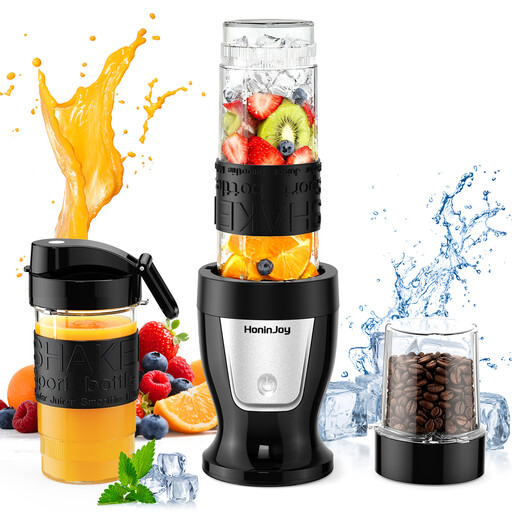
Why it suits this profile: Two BPA-free portable cups (20 and 14 oz) and a grinding cup cover individual portions and simple extra tasks. Its compact design also suits smaller kitchens, flats or motorhomes.
The product details specify pulse control, overheat protection and a locking mechanism with micro-switches. This makes the key safety features clear.
650-watt peak motor, two cups, grinding cup and dishwasher-safe cups, according to the product description.
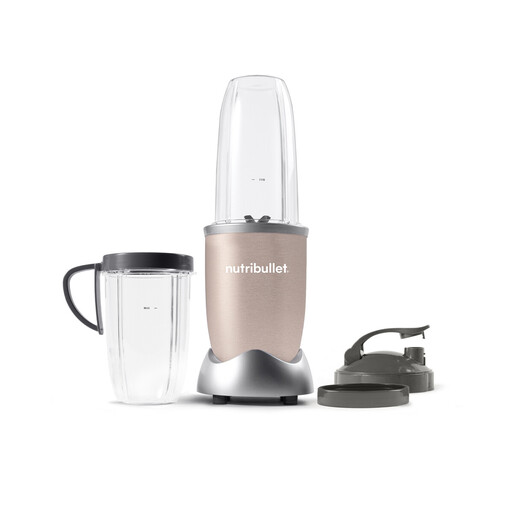
Why it suits this profile: The 900-watt motor, six-blade stainless steel blade and two cups (925 and 700 millilitres) will appeal to buyers who want flexibility when making individual portions.
The instructions specify a maximum blending time of 60 seconds per cycle and clearly mark the maximum fill level.
Two BPA-free cups, flip-top lids and removable dishwasher-safe parts, according to the product details.
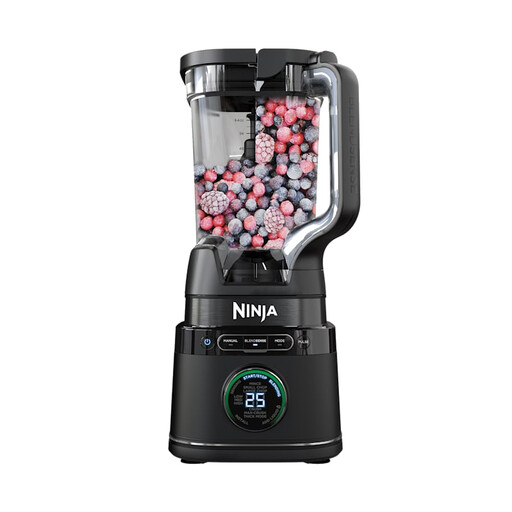
Why it suits this profile: The large jug is designed for several portions. Three speeds, a pulse function and six stainless steel blades are well suited to family-sized batches and frozen ingredients.
The maximum liquid capacity of 1.9 litres is listed separately from the jug’s total capacity. A 60-second operating limit is also specified.
2.1-litre jug, 1000 watts, three speeds plus pulse, and dishwasher-safe parts, according to the product description.
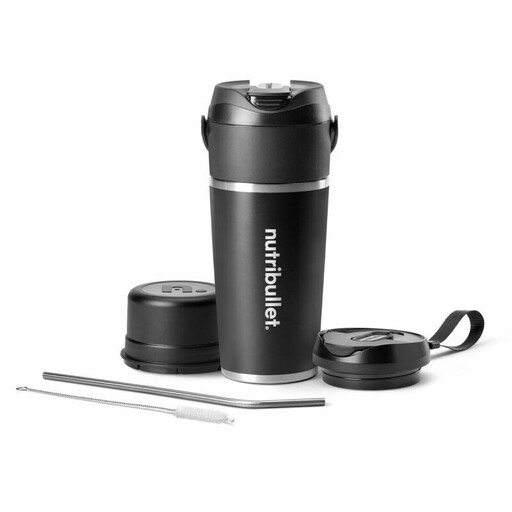
Why it suits this profile: This battery-powered blender has a USB-C port, a 590-millilitre stainless steel cup and a carry handle. It’s a practical choice for portable single servings when there’s no power socket nearby.
The instructions recommend short blending intervals of up to 30 seconds, set a maximum operating time of one minute and give clear advice on handling the sharp blade.
Rechargeable battery, USB-C charging port and insulated 590-millilitre stainless steel cup, according to the product details.
We’ve put together a complete, regularly updated list of products that meet these strict selection criteria and fully comply with the safety regulations in force in the EU.
For ice, look for a clearly specified ice-crushing function, suitable stainless steel blades and a pulse function. A high wattage doesn’t automatically mean that a machine is suitable for crushing ice. The instructions for the specific model are the best guide.
Lifespan depends on how often you use it, how you clean it, whether you overload it and whether you follow the recommended operating intervals. Avoid overfilling, running it empty or blending for too long. Let the motor cool between batches and clean the blades and seals according to the manufacturer’s instructions.
Energy costs depend on the rated power and how long the blender is actually running. A 1000-watt appliance uses 0.167 kilowatt hours in ten minutes of operation, in theory. In everyday use, blending cycles are usually much shorter. To estimate running costs, consider the power rating alongside how long and how often you use the blender.