
Lieferung heute & morgen

Qualitätsgarantie

Willkommens-Angebote freischalten: KOSTENLOSE Lieferung | Bis zu 80 % RABATT | Kostenlose 30-Tage-JoyPlus-Testphase
App herunterladen
A smoothie maker should prepare drinks quickly, take up little space and be easy to clean. In practice, however, unclear power specifications, containers that are too small or unsuitable batteries often lead to disappointing purchases. If you are a working professional, commuter, sports enthusiast or student, you should therefore check before buying whether the appliance genuinely suits your everyday routine.
A high wattage rating sounds convincing at first. However, it does not by itself indicate how evenly a smoothie blender will work. Motor speed, blade design, how full the container is and the recommended operating time are also important. A mini blender with 300 watts may be sufficient for soft fruit and liquids, while regularly blending frozen ingredients or ice requires a different class of appliance.
A personal blender with a drinking cup may be compact, but it often requires a mains socket. A genuine portable blender, battery blender or USB-C blender, on the other hand, can be used independently of the mains. Before ordering, it is worth checking the charging connection, charging time, battery capacity and stated number of blending cycles.
An appliance may be technically suitable yet impractical in everyday use if the blade attachment and drinking vessel are difficult to access. Check whether the cup and lid can be removed and whether they are specified as dishwasher-safe. The motor unit must never be immersed in water. Sharp blades also require careful cleaning with a brush or under running water.
For a single serving, around 300 to 600 millilitres is usually enough. If you want to take a drink with you for several hours or prepare a larger portion, you should plan for a bigger container. Tritan containers are designed to be lightweight and shatter-resistant, while double-walled stainless-steel cups can keep drinks cool for longer. Suitability ultimately depends on the manufacturer’s specifications.
Also look for a clear MAX marking. The container must not be overfilled, as ingredients move around during blending and pressure can build up. A blender with a drinking cup is particularly practical if the blending container can then be replaced with a leak-proof drinking lid.
Four- or six-blade stainless-steel designs are common in smoothie makers. A compact motor is often sufficient for soft fruit, yoghurt and liquids. For ice, nuts or frozen fruit, you should specifically look for an ice-crushing function and suitable usage instructions.
Cut firm ingredients into small pieces before adding them. Depending on the operating instructions, liquid should be added to the container as well. Many appliances may only be operated in short intervals of around 30 to 60 seconds. Running the appliance for longer can cause it to overheat.
Mains-powered appliances are suitable for the kitchen, office or student accommodation. A battery-powered model offers greater flexibility for commutes, travel or use at the sports ground. With a USB-C blender, check whether a power adapter is included and which cable should be used. Weight is also a factor: an insulated stainless-steel cup can be considerably heavier than a plastic container.
A smoothie maker does not automatically replace a juicer or citrus press. A blender processes the entire fruit pulp, while a citrus press is designed for oranges, lemons and similar fruit. If you prefer clear juices, you should not confuse these types of appliance.
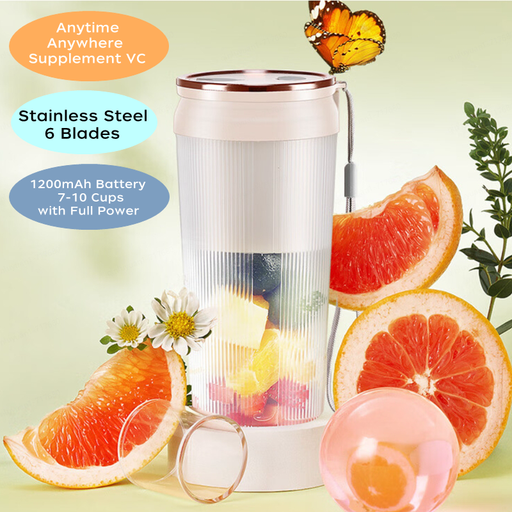
Why this product suits this profile: The 300 ml cup with a 1200 mAh battery is designed for small individual portions made from soft, juicy ingredients.
The product specifications state a clear capacity and recommend small pieces and soft fruit. This helps prevent unrealistic expectations when it comes to ice or hard ingredients.
Battery operation, a compact 300 ml size and a cup that, according to the product specifications, is washable.
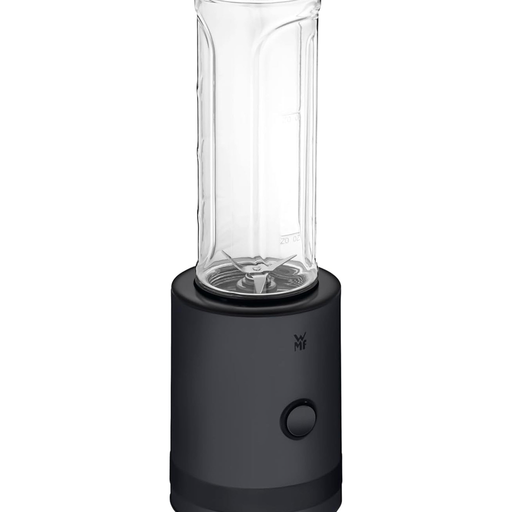
Why this product suits this profile: Two 0.6-litre Tritan containers, a 300-watt motor and a stainless-steel blade are well suited to regular use in the kitchen or office.
The two separate drinking containers reduce the need to transfer the contents. The stated one-minute limit helps prevent unrealistic expectations of continuous operation.
23,000 revolutions per minute according to the product description, plus dishwasher-safe containers and lids.
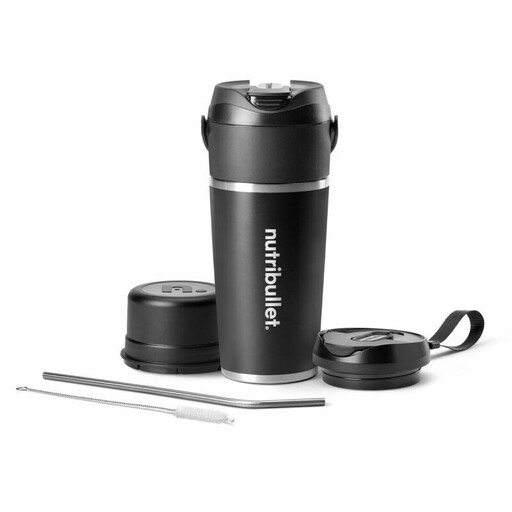
Why this product suits this profile: This battery-powered blender combines a 590 ml stainless-steel cup with a USB-C charging port, carry handle and drinking lid.
The power supply is clearly specified: a rechargeable battery and USB-C. According to the product specifications, the stated 14-plus cycles per charge refers to 30-second cycles.
Insulated stainless-steel cup, pulse function and stated suitability for ice and frozen ingredients.
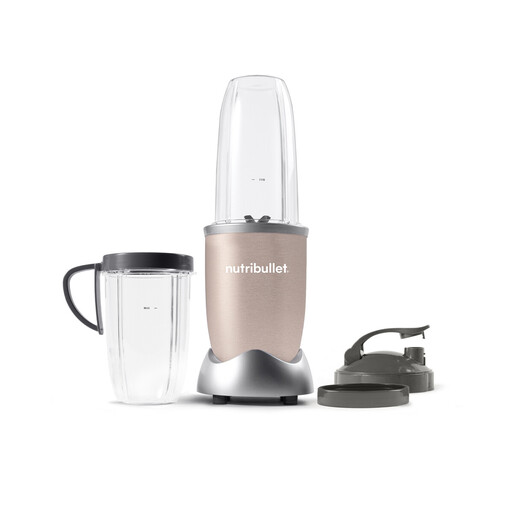
Why this product suits this profile: The 900-watt motor, two cups with capacities of 925 and 700 millilitres, and an additional drinking lid make it suitable for frequent single portions and larger quantities.
The product information expressly lists ice, frozen fruit, nuts and seeds as suitable ingredients. Even so, blending time remains limited to short intervals.
Six-blade stainless-steel blade, two BPA-free cups according to the product specifications, and dishwasher-safe parts.
We have put together a complete, regularly updated list of products that fully meet these strict selection criteria and the safety regulations applicable in the EU.
For soft fruit, liquids and simple shakes, a compact model with around 300 watts may be sufficient. If you regularly blend ice, frozen fruit or nuts, look for higher motor power, suitable blades and an explicitly stated ice-crushing function. Wattage alone does not provide a complete indication of the blending results.
This depends on the battery capacity, ingredients and operating time. A 1200 mAh appliance may allow several short uses; according to the product specifications, the nutribullet Flip offers more than 14 blending cycles per full charge. For regular use on the go, the blender should be charged in good time and the supplied cable should be used.
The electricity used for individual blending cycles is usually low for both variants. A battery-powered model also involves charging cycles and, potentially, a battery replacement later on. A mains-powered appliance makes sense if a socket is always available. For travel, commutes and the workplace, however, a battery blender offers greater independence. The key factor is therefore how you plan to use it, not just the purchase price.