
Lieferung heute & morgen

Qualitätsgarantie

Willkommens-Angebote freischalten: KOSTENLOSE Lieferung | Bis zu 80 % RABATT | Kostenlose 30-Tage-JoyPlus-Testphase
App herunterladen
A smoothie maker can make it much easier to prepare fruit drinks, protein shakes and milkshakes. However, impressive wattage figures or an extensive range of accessories do not automatically mean you have found the right appliance. For small kitchens, offices, student flats and active households, the key considerations are the design, controls, cleaning and what you actually intend to use it for.
Motor power is often stated as a peak figure. An appliance with 650 W peak power may be suitable for single portions, soft fruit and many types of shake. However, this does not automatically mean it can process hard ingredients or large quantities continuously. You should also consider the maximum permitted fill level, operating time and the manufacturer's information on processing ice or nuts.
A personal blender with a cup is practical for taking your drink to the gym or office. However, transporting it can quickly become inconvenient if the lid does not close securely. Check whether sports or drinking cups are included and whether their closures are suitable for the type of transport you have in mind.
Dried fruit fibres, protein powder and milk residue can collect around seals and blade attachments. Removable, dishwasher-safe parts can reduce the cleaning required. A locking mechanism that only allows the motor to start when the cup and blade are correctly fitted is equally important. Sharp stainless-steel blades must only be fitted and cleaned according to the instructions.
For single portions, a compact model is often sufficient. A pulse function can help you briefly process ingredients and control the consistency step by step. When using frozen fruit or ice cubes, the product description should clearly explain the intended use. An appliance advertised as an ice-crusher is not automatically suitable for every ice-cube size or for continuous operation.
A separate grinding cup is useful for coffee, spices or dry ingredients. Check which foods and quantities are permitted. The smoothie maker should only be used in the intended domestic setting and with approved original accessories.
A single cup with a capacity of around 400 to 600 ml is typically suitable for one portion. Several cups can be useful if you prepare drinks for work, university and sport. A blender with drinking cups also means you do not have to transfer your drink into another bottle.
Pay attention to the dimensions of the motor base and the height of the assembled cup. In small kitchens, motorhomes or shared houses, a compact portable blender or personal blender may be more practical than a large smoothie stand blender.
Clear information about materials is important for drinking vessels. According to the product descriptions, the two HoninJoy models in our selection are supplied with BPA-free cups. The supplier states that the accessories are dishwasher-safe. Nevertheless, you should follow the care instructions in the relevant user manual.
An overheating protection function, non-slip feet and a cup-locking mechanism are practical safety features. They do not replace correct operation: the appliance should not be overfilled, operated without liquid or run continuously for longer than intended.
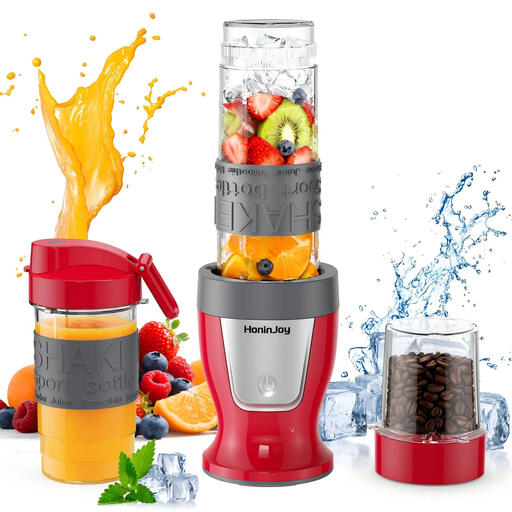
Why this product suits this profile: This compact personal blender is designed for single portions and comes with two portable cups, one measuring 20 oz and the other 14 oz, as well as a grinding cup. It is well suited to preparing smoothies on the go, in small kitchens or at the office or gym.
The product information lists a pulse function, overheating protection and a locking mechanism for the cup and blade base. This makes important information about operation and safety clear and transparent.
650 W peak motor according to the product description, two BPA-free portable cups and dishwasher-safe accessories according to the supplier.

Why this product suits this profile: This appliance is aimed at households that want to prepare sorbets, gelato and other frozen desserts alongside milkshakes and smoothie bowls. It features seven programmes and two containers.
The operating limitations are clearly stated: filled containers must be frozen completely for 24 hours. This means the appliance is not a conventional instant smoothie blender for fresh fruit.
800 W, 0,95 l total capacity, seven programmes and dishwasher-safe removable parts according to the product data.
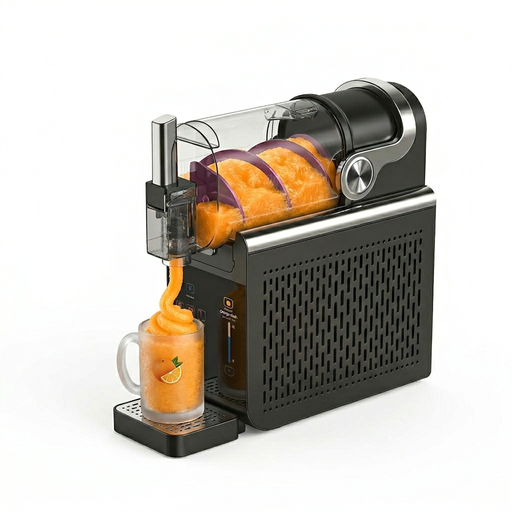
Why this product suits this profile: This slushie maker is designed for frozen drinks, frappés, smoothies and shakes. It is suitable for users specifically looking for a countertop solution for larger or regularly prepared drinks.
The description explicitly highlights the countertop design, continuous ice dispensing and automatic cleaning. This makes its intended use clearer than that of a small portable blender.
Stainless-steel shaft, dual gearing and one-touch operation according to the product description; designed for frozen drinks without having to add ice beforehand.
We have put together a complete, regularly updated list of products that fully meet these strict selection criteria and the safety regulations applicable in the EU.
No. Suitability depends on the motor, blade design, ice-cube size and the manufacturer's specifications. Only use ice if the user manual permits it. When processing frozen ingredients, you may also need to add liquid or use smaller portions.
There is no reliable one-size-fits-all answer. Lifespan depends on how often the appliance is used, the ingredients, overloading and cleaning. Following the maximum fill level, allowing the motor to cool down between uses and caring for the blades and seals as instructed can reduce typical wear and strain.
Running costs depend on power consumption and operating time. For example, a 650 W appliance running for two minutes uses around 0,022 kWh mathematically. To calculate the actual cost, multiply this figure by your electricity tariff. You will often also need to factor in the cost of fruit, liquid, protein powder or ice.