
Lieferung heute & morgen

Qualitätsgarantie

Willkommens-Angebote freischalten: KOSTENLOSE Lieferung | Bis zu 80 % RABATT | Kostenlose 30-Tage-JoyPlus-Testphase
App herunterladen
A smoothie maker should reliably blend fruit, vegetables, ice and liquids. In practice, however, some common marketing claims can lead to the wrong purchase. A high wattage alone tells you little about how well a blender will perform, and a large capacity is not always practical for smaller portions. The term ‘BPA-free’ also deserves a closer look: what matters is whether it applies to the blending jug and all parts that come into contact with food.
This Joybuy Product Recommendation Officer buying guide explains which details matter when choosing a blender or multi-purpose blender, and which models suit different needs.
A 500-watt blender can be suitable for fruit, vegetables, liquids and many smoothie recipes. However, motor power alone does not determine the result. Blade design, jug shape, speed settings and the right amount of liquid all play a part.
If you regularly want to blend hard ingredients, frozen fruit or ice, look for a clearly stated ice-crush function and sturdy blades too. A higher wattage is no guarantee of smoother results.
A blender with a 1.5-litre jug is suitable for several portions and for families. For a single portion, however, a jug of this size may take up more space than expected. A clearly marked scale, a secure lid lock and a refill opening are also useful features.
The maximum capacity should not be confused with the amount you can comfortably use. Leave extra room when blending frothy liquids or preparing hot mixtures. Always check the manufacturer’s guidance on temperature and maximum fill levels before use.
A BPA-free blender is particularly useful when this claim applies to the entire blending jug. The jug should also be removable. Removable blades make cleaning easier, but they must be fitted carefully before the next use.
For a blender with stainless steel blades, details such as ‘rust-resistant’ and ‘removable’ are specific product features you can check. Even so, avoid cleaning blades with harsh cleaning products and dry them thoroughly after washing. For parts that are dishwasher-safe, follow the manufacturer’s guidance.
Several speed settings are useful for smoothies, protein shakes, sauces and puréed fruit. A pulse or turbo function can provide short, powerful bursts. A blender for smoothies and protein shakes should be easy to use, so liquids and powders can be blended evenly.
Look for:
A four-piece stainless steel blade may be designed for chopping fruit, vegetables and softer ingredients. For frozen food or ice, an explicitly stated ice-crush function is more useful than a general marketing claim such as ‘suitable for everything’.
Always process ice in the quantity recommended by the manufacturer. Very hard or large pieces can put extra strain on the motor and blades. A smoothie maker is not automatically suitable for hot liquids either. Check the instruction manual to see whether soups can be blended directly in the jug.
A transparent jug with a scale makes measuring easier. A 1.5-litre capacity is often practical for families, while compact dimensions and easy storage matter more in smaller kitchens.
Before buying, check:
Baby food has specific hygiene, temperature and ingredient requirements. A blender for baby food can make puréeing easier, but it is no substitute for choosing age-appropriate foods or following the relevant safety guidance.
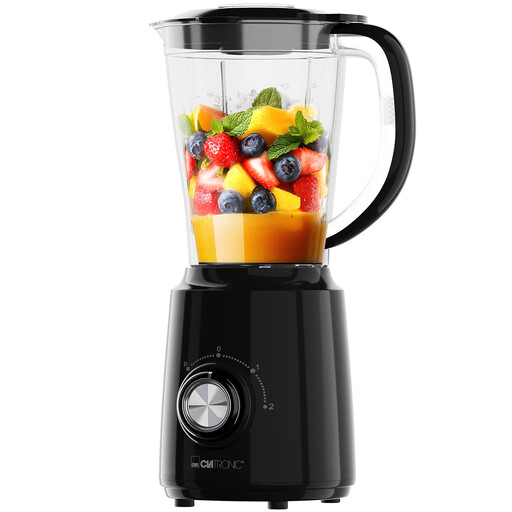
Why this product suits this profile: This blender combines 500 watts, a BPA-free 1.5-litre jug and several control options for smoothies, shakes, sauces and puréed food.
As well as the motor power, the product details specify an ice-crush function, four speed settings and removable stainless steel blades.
1.5-litre jug with a scale and refill opening, plus a four-piece stainless steel blade; rubberised feet help keep it stable.
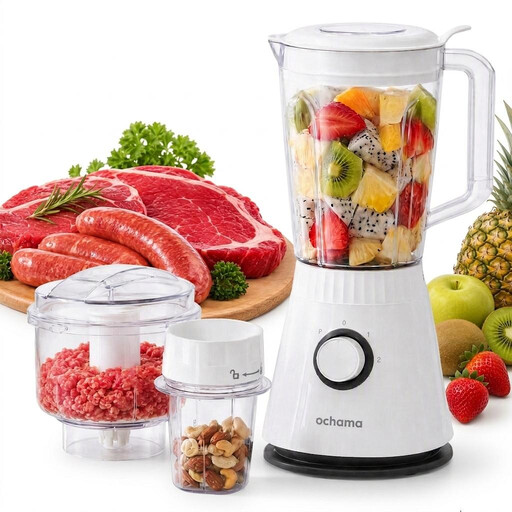
Why this product suits this profile: This model is designed for households looking for a compact multi-purpose blender with several functions for drinks and everyday food preparation.
The product description specifies what it can be used for, along with 600 watts, three speed settings and an ice-crushing function.
600-watt motor, 1.5-litre jug and stated uses for juice, baby food, chopping meat and grinding spices.
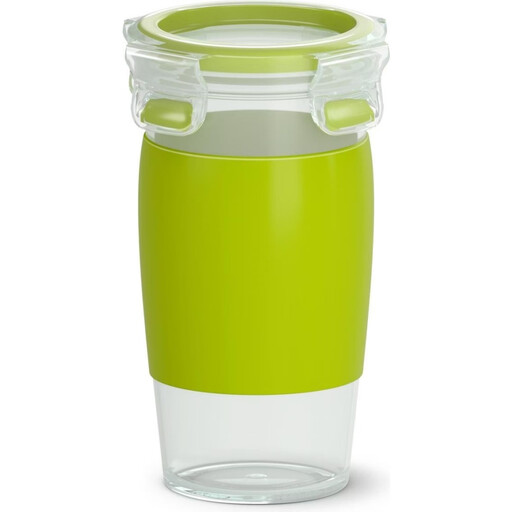
Why this product suits this profile: This container complements a smoothie blender for anyone who wants to take prepared drinks or snacks on the go and values easy cleaning.
The product details specify a leakproof design, BPA-free material and clear guidance on use in the microwave, freezer and dishwasher.
Leakproof smoothie cup made from polypropylene; according to the product details, it is dishwasher-, freezer- and microwave-safe.
We’ve put together a complete, regularly updated list of products that meet these strict selection criteria and fully comply with the safety regulations in force in the EU.
For classic smoothies made with soft fruit, vegetables and liquid, 500 watts may be enough, depending on the recipe and design. For frozen ingredients or ice, also check the blade design, pulse function and whether an ice-crush function is specifically listed. Wattage alone is not a reliable way to compare blenders.
Lifespan depends on how often you use it, the ingredients you blend, and how well it is cleaned and maintained. Hard ingredients, overfilling and long, uninterrupted blending sessions can put strain on the motor. A stable design, correct fill levels and cleaning after every use all help you use the blender as intended.
Electricity use depends on the motor’s power and how long it runs. A 500-watt appliance running for five minutes will, in theory, use considerably less energy than a more powerful appliance running for longer. For everyday use, it’s not just the wattage that matters, but also choosing an appropriate blending time.