
Lieferung heute & morgen

Qualitätsgarantie

Willkommens-Angebote freischalten: KOSTENLOSE Lieferung | Bis zu 80 % RABATT | Kostenlose 30-Tage-JoyPlus-Testphase
App herunterladen
A smoothie maker can quickly process fresh fruit, vegetables, dairy products and frozen ingredients. However, not every appliance is right for every household. A small personal blender for your morning drink has different requirements from a powerful jug blender for several people or a machine for frozen desserts.
It is therefore worth looking at the technical specifications before buying, rather than focusing on eye-catching advertising claims. Key factors include motor power, container capacity, safety features, cleaning requirements and how you actually intend to use the appliance.
A high wattage initially sounds convincing. On its own, however, it says little about blending performance. The blade design, container shape, pulse function and permitted operating time also affect the results. A smoothie blender should therefore not be chosen based solely on motor power.
Also check whether the stated figure refers to maximum or continuous power. Some appliances quote a peak value. For everyday use, the full manufacturer’s specifications and instruction manual are therefore more important than a single number.
A blender with to-go cups is convenient when you want to take your drink to the office, university or the gym. However, check whether the containers come with suitable drinking or screw-top lids and whether the capacity is right for your daily routine. A small portable blender is generally suitable for individual portions, not for preparing several glasses.
The material is also important: depending on the model, BPA-free plastic containers or insulated stainless-steel cups can offer different benefits in terms of weight, impact resistance and temperature retention.
An ice crusher or a blender for frozen fruit must be suitable for hard ingredients. This does not automatically mean that any quantity of ice or frozen food can be processed without preparation. Cut large pieces into smaller ones if necessary, and observe the MAX marking and recommended operating time.
For appliances designed for ice cream and frozen desserts, you should also check whether the ingredients need to be frozen in advance. This can significantly extend the preparation time.
For soft fruit, yoghurt and liquids, a compact smoothie blender is sufficient for many individual portions. If you regularly process ice, nuts or frozen fruit, higher motor power, robust stainless-steel blades and a pulse function are useful.
The permitted operating time per cycle is important. Many personal blenders are designed for short intervals. You may need to allow the appliance to cool down between cycles. An overheat protection feature provides additional safety, but does not replace the manufacturer’s instructions.
Typical capacities range from around 0.5 to 0.95 litres. A 0.5- to 0.6-litre cup is space-saving and suitable for an individual portion. Families or users who want to prepare several portions will need more capacity or multiple containers.
Consider the appliance’s footprint and height. For small kitchens, student accommodation, flats or motorhomes, a compact cordless blender or personal blender may be more practical than a large jug blender.
Removable, dishwasher-safe containers and lids reduce the cleaning effort. The motor base must generally not be immersed in water and should be cleaned with a damp cloth.
Look for a safety lock that only allows the appliance to operate when the cup is correctly fitted. Non-slip feet and a securely attached blade assembly help prevent incorrect operation. The blades are sharp and should only be handled by the plastic base. Hot liquids should only be placed in the appliance if the manufacturer expressly permits this.
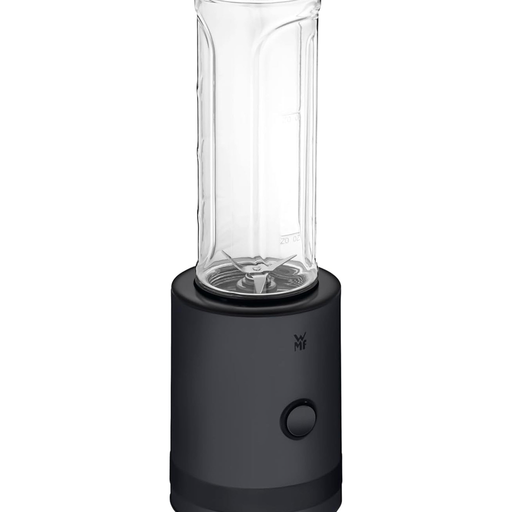
Why this product suits this profile: This compact blender operates at 300 W, comes with two 0.6-litre containers and can be used directly for individual to-go portions. This makes it a good choice for small kitchens and modest everyday needs.
The containers also serve as drinking vessels and come with leakproof screw-top lids. The stated maximum fill level of 600 ml helps prevent portions that are too large.
23,000 rpm according to the product information, four stainless-steel blades, two containers, and dishwasher-safe bottles and lids.
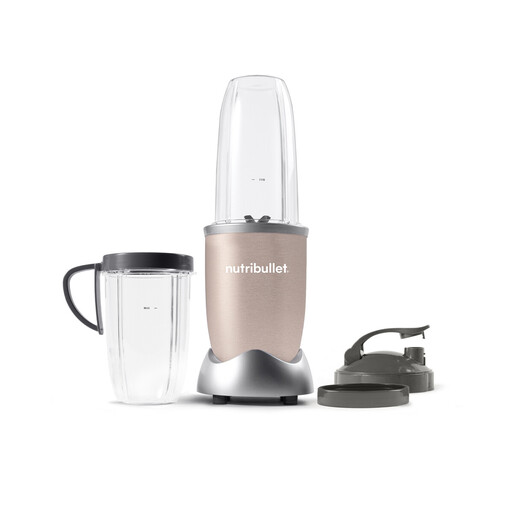
Why this product suits this profile: The 900 W motor, two different-sized cups and one-button operation are designed for regular smoothies, shakes, dips and sauces.
The two BPA-free cups, with capacities of 925 ml and 700 ml, cover individual portions and larger quantities. The appliance is operated by pressing down and twisting the cup.
Six stainless-steel blades, a pulse function, and dishwasher-safe cups, lids and blade assembly.
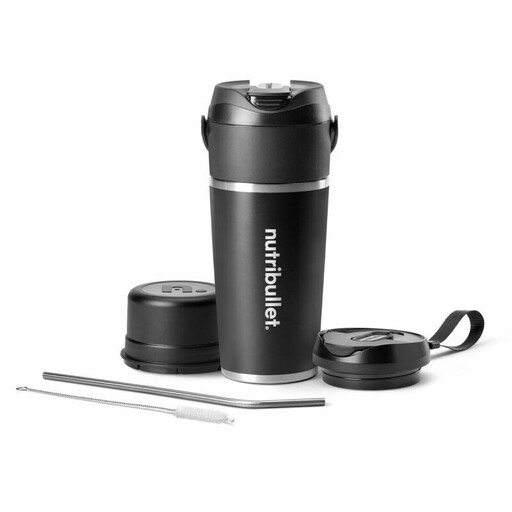
Why this product suits this profile: Battery operation, a USB-C charging port, carry handle and 590 ml stainless-steel cup make it suitable for the office, gym, commute or travel.
The product data states that it can complete more than 14 cycles per full charge, with each cycle lasting 30 seconds. The cup serves as both the blending container and drinking vessel.
11.1 V battery, insulated stainless-steel cup and USB-C charging. The manufacturer states that the appliance can process ice and frozen ingredients.

Why this product suits this profile: This appliance is designed for ice cream, sorbet, gelato, milkshakes and smoothie bowls. It is a good fit for households that want to prepare frozen desserts more frequently and in a variety of styles.
The preparation process is clearly defined: filled containers must be frozen completely for 24 hours. This gives you a realistic idea of the preparation time before buying.
800 W, seven programmes, two BPA-free containers with a total capacity of 0.95 l, and removable dishwasher-safe parts.
We have put together a complete, regularly updated list of products that fully meet these strict selection criteria and the safety regulations applicable in the EU.
For coffee, spices or nuts, a smoothie maker with grinder such as the HoninJoy Smoothie Blender, with its 650 W peak motor, pulse function, two BPA-free cups and additional grinding cup, may be worth considering. The product information also mentions overheat protection, a safety lock and non-slip silicone feet. The permitted quantities and operating times must comply with the instruction manual.
A shaker blender or portable blender is mainly useful when mobility and a single portion matter more than large quantities. If you often prepare several drinks one after another, pay attention to charging times, cooling breaks and the number of containers included.
That depends on how you intend to use it. Compact models with 300 W may be sufficient for soft fruit and liquids. For ice, nuts or frozen fruit, higher power ratings and robust blades are advisable. Wattage should always be considered alongside blade design, pulse function and operating time.
No. Check the manufacturer’s specifications for the model in question. Large or very hard pieces can put strain on the motor. Only use the recommended quantities and observe the MAX marking. With a cordless blender, performance may also depend on the battery charge and the quantity of ingredients.
There is no reliable one-size-fits-all answer. Its lifespan depends on how it is used, cleaning habits, ingredients, operating intervals and compliance with the instruction manual. Short blending cycles, cooling breaks and removing residue immediately can support regular use. Before each use, check the blades for damage and make sure the seals are correctly positioned.