
Lieferung heute & morgen

Qualitätsgarantie

Willkommens-Angebote freischalten: KOSTENLOSE Lieferung | Bis zu 80 % RABATT | Kostenlose 30-Tage-JoyPlus-Testphase
App herunterladen
A smoothie blender should reliably process fruit, vegetables, liquid and, where appropriate, ice. In practice, however, models vary considerably in terms of jug capacity, controls, cleaning and accessories. If you focus solely on a high wattage or eye-catching design, you may end up buying a machine that does not suit your everyday needs.
As a Joybuy Product Recommendation Officer, I filter the relevant product data and explain what households in Germany should consider before buying.
A specification such as 1,000 or 1,300 watts does not automatically describe the actual blending quality. The blade configuration, jug shape, available speed settings and recommended operating time are also important. A personal blender with a lower rated power output may be ideal for individual portions, while a jug blender with a large container meets different requirements.
When blending frozen ingredients and ice, buyers should also look for an explicitly stated pulse or ice-crush function.
A 2-litre jug is suitable for several portions, but requires more storage and cleaning space. For one person, the office or the journey to the gym, a mini blender with a drinking container may be more convenient. It is also important to distinguish between the total capacity and the permitted filling quantity. This must never be exceeded during blending.
Several components of a smoothie blender come into contact with food: the jug, lid, seal and blade attachment. Check the product description carefully to see which parts are dishwasher-safe. The motor unit must never be immersed in water. Sharp blades should only be handled by the plastic base and rinsed immediately after use.
For soft fruit, yoghurt and liquid shakes, a compact smoothie maker is often sufficient. For frozen fruit, ice, nuts or dry ingredients, a sturdy blade assembly and a suitable pulse function are more important.
Look out for:
A blender with an ice crusher is only suitable if the manufacturer explicitly specifies this application. Very hard or dry foods must not simply be processed in every smoothie blender.
A blender with a glass jug is temperature-resistant and generally absorbs fewer odours, but it can be heavier. Plastic containers made from Tritan or comparable materials are usually lighter and more practical for use on the go. The BPA-free label refers to the material used and does not make any promises about health benefits.
For people who work, blenders with on-the-go cups are worth considering. Look for tightly sealing lids, a clearly legible maximum-fill mark and confirmation of whether the container can be used directly as a drinking vessel.
A classic jug blender with a capacity of 1.2 to 2.1 litres is suitable for families, several portions, sauces or frozen drinks. A personal blender is more compact and generally designed for individual portions. A portable, battery-powered blender can be used while out and about, but needs to be charged regularly and has a limited filling capacity.
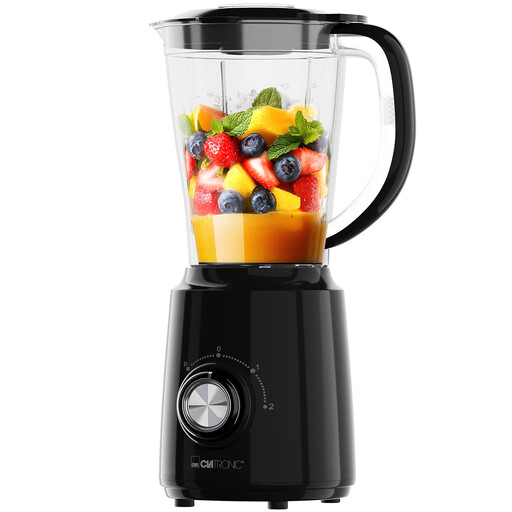
Why this product suits this profile: This jug blender has a 1.5-litre container, three speed settings and pulse and ice-crush functions for everyday drinks and straightforward kitchen tasks.
The product data specifies the filling capacity, speed settings and a removable stainless steel blade unit rather than promoting the motor power alone.
BPA-free 1.5-litre container, four stainless steel blades, safety switch and rubberised feet.
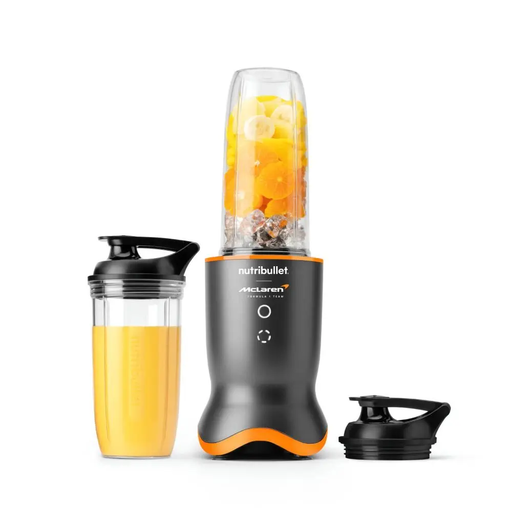
Why this product suits this profile: This personal blender combines a stated 1,200-watt motor with 700- and 900-millilitre cups made from BPA-free Tritan Renew, as well as a pulse function.
The selection takes into account not only the motor rating, but also the container material, two portion sizes, safety clearances and recommended short blending cycles.
Two on-the-go cups, titanium-coated extractor blades, illuminated controls and a non-slip base.
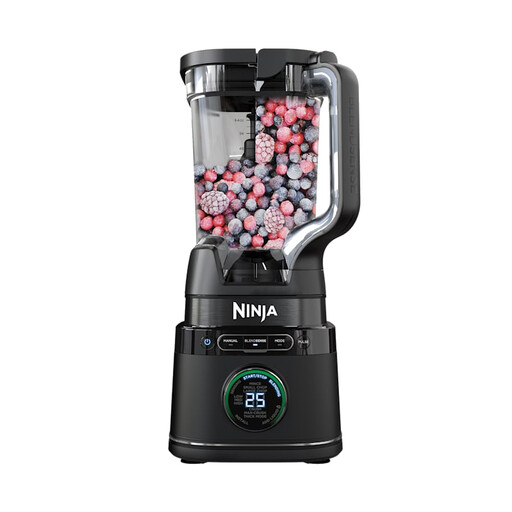
Why this product suits this profile: The large container is designed for several portions. Three speed settings, pulse control and a six-blade stainless steel assembly support different consistencies.
The stated maximum liquid capacity is 1.9 litres, preventing confusion between total capacity and usable filling quantity.
2.1-litre jug, BPA-free polycarbonate or Tritan, removable dishwasher-safe parts and an ice-crush function.
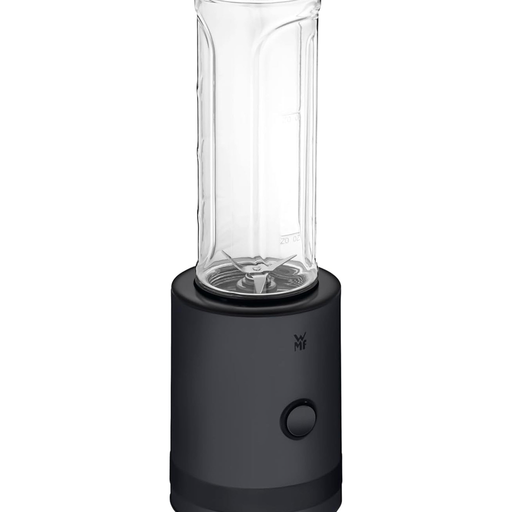
Why this product suits this profile: Two 0.6-litre containers with leak-proof screw-top lids make it easy to prepare individual portions for the office, commute or sports bag.
The compact design and two drinking containers eliminate unnecessary decanting. The 600-millilitre filling limit is clear for individual portions.
0.6-litre Tritan containers, 300-watt motor, four stainless steel blades, safety cut-out and dishwasher-safe containers.
We have put together a complete, regularly updated list of products that fully meet these strict selection criteria and the safety regulations applicable in the EU.
Always read the operating instructions before using the appliance for the first time. The following points are particularly important for safe operation:
A smoothie blender will last longer in everyday use if ingredients are cut into smaller pieces, sufficient liquid is added and hard ingredients are not processed beyond the manufacturer’s approved use. When preparing several portions, it is advisable to take breaks between blending cycles.
That depends on how you intend to use it. Compact appliances may be sufficient for soft fruit and shakes. If you regularly want to process ice, frozen fruit or harder ingredients, you should also look for an ice-crush function, blade design, pulse control and operating intervals. Wattage alone is not a reliable measure of quality.
Yes, provided the product description specifies these applications. A blender for shakes and juices can generally process liquid ingredients without difficulty. When blending fibrous vegetables or frozen ingredients, pay attention to the recommended filling quantity and available power.
Electricity consumption depends on the power rating and actual operating time. A 1,000-watt appliance uses approximately 0.167 kilowatt hours during ten minutes of operation. As smoothies are usually prepared in short intervals, the daily operating time has a greater impact on running costs than the wattage shown on the rating plate.