When shopping for someone with coeliac disease, start with a snack bar whose specific pack is explicitly labelled gluten-free. Under EU Regulation 828/2014, this claim is permitted when a product contains no more than 20 mg of gluten per kg. Packs of five or six can be handy for filling several lunchboxes, provided the bars are portioned appropriately and individually wrapped if needed; a pack of three may be enough for sharing now and then. Whatever the pack size, check the ingredients and allergens for the current variety.
Who is this choice important for?
Households packing lunchboxes
If you regularly pack bars in lunchboxes or share them with others at home, the number of bars, their individual weight and, if relevant, whether they’re individually wrapped all matter alongside the gluten-free labelling.
People with additional allergies
If you need to avoid ingredients other than gluten, check each variety against its current ingredients list and allergen information. The “gluten-free” claim, for example, doesn’t tell you whether a product contains nuts, milk or soya.
Shoppers comparing individual portions
For a small snack, the weight of each bar is more useful than the size of the multipack alone. Check whether an individual portion suits how you plan to use it, rather than treating a bar as a complete meal.
What should you look for when buying?
When choosing snack bar multipacks for coeliac disease, first check that the specific variety is labelled gluten-free. Then compare portion sizes, other allergens and nutritional information.
| What to consider |
What to check |
Who it matters most to |
| Gluten-free labelling |
Does the current pack or product page say “gluten-free”? For bars containing oats, check the labelling on the specific product. |
When I’m shopping for someone with coeliac disease, an explicit gluten-free claim comes before flavour or pack size. Around 33% of consumers put this first. |
| Portion and pack format |
Compare the number of bars and the weight of each one; for lunchboxes, check whether they’re individually wrapped if needed. |
For several lunchboxes or sharing, I need portions I can plan for individually. For around 27% of consumers, pack format is their main concern. |
| Other allergens |
Read the ingredients list, highlighted allergens and relevant may-contain statements for each variety. |
If I also need to avoid nuts, milk or soya, “gluten-free” isn’t enough to help me choose. This additional check is a priority for around 20% of consumers. |
| Nutritional information and speciality bars |
Check the nutritional information per portion and read the ingredients and consumption advice for speciality bars. |
If I’m looking specifically for a protein bar or a particular portion size, I want to compare the information for the specific variety. Around 20% of consumers prioritise this need. |
Common buying misconceptions
-
“Gluten-free” doesn’t mean “free from all allergens”
A bar labelled gluten-free may still contain other allergens. Schär Melto with hazelnut lists hazelnut, milk and soya; it also carries warnings about possible traces of peanuts and other nuts.
If you have additional allergies, check the ingredients and allergen information for the current variety, not just the brand or its gluten-free labelling.
-
Oats alone don’t prove a product is gluten-free
The German Coeliac Society includes commercially available oats among the grains relevant to a gluten-free diet. So, for a bar containing oats, the labelling on the specific product is what matters.
When shopping for someone with coeliac disease, choose a bar containing oats only if it is explicitly labelled gluten-free; check the information again when buying a new pack.
-
A multipack doesn’t make each bar bigger
The pack examples available include individual bars weighing 24 g, 30 g or 45 g. So the number of bars alone won’t tell you whether one portion is enough for the lunchbox you have in mind.
Compare the weight of each bar with how you plan to use it, and add other foods to the lunchbox if needed.
-
Protein information doesn’t replace checking the whole pack
Even with a bar labelled gluten-free, other ingredients and product-specific consumption advice may matter. ALDI SÜD warns that excessive consumption of its Lower-Carb Protein Bar may have a laxative effect.
For the specific variety, check the gluten-free labelling as well as the ingredients, nutritional information and consumption advice.
Brands to consider
These examples showcase different bar formats and ingredient profiles. The information for the specific variety is what matters when making your choice.
Schär
Schär offers sweet bar formats labelled gluten-free. The Melto Chocolat au Lait listed by dm comes in a pack of three, weighing 90 g in total.
- According to dm, the specific Melto Chocolat au Lait product is labelled gluten-free and wheat-free.
- Check the other ingredients and allergens for each Melto variety separately; the properties of one bar don’t automatically apply to the whole range.
MadeGood
MadeGood offers granola bars in multipacks. For example, REWE stocks Chocolate Chip in a pack of 6 × 24 g, while dm lists a Vanilla variety in a pack of five.
- The varieties mentioned are described as gluten-free; dm also describes the specific Vanilla variety as nut-free and soya-free.
- Check the pack format, recipe and allergen information for the variety you choose.
RAWBITE
RAWBITE offers fruit and nut bars, which Rossmann describes as gluten-free, vegan and lactose-free.
- The variety name and information on the specific pack make it easier to check the product before buying.
- Rossmann lists almonds, cashews and peanuts among the ingredients in the bars. If you have any of these allergies, the specific ingredients list is what matters.
ALDI SPORTS
ALDI SÜD describes a gluten-free Lower-Carb Protein Bar from its own brand, in a pack of 3 × 45 g.
- The number of bars and the weight of each one are stated for this specific product.
- For this variety, check for possible traces of other allergens and read the consumption advice. ALDI SÜD says information may vary by supplier.
A Joybuy product for sharing
This pack of three, labelled gluten-free, could be a handy small supply for sharing now and then. If you need individual bars for lunchboxes, also check whether they’re wrapped separately.
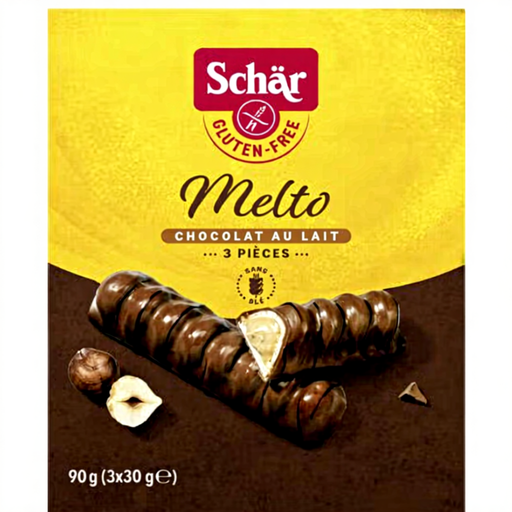 Image unavailable
Schär Melto hazelnut wafer bars, 3 × 30 g
This pack of three, labelled gluten-free, is a handy little supply for sharing.
It contains three bars, each weighing 30 g. The product information lists hazelnut, milk and soya, and possible traces of peanuts and other nuts.
Check the ingredients and allergen information on the current pack. If you’d like to put the bars in lunchboxes individually, check before buying whether each one is wrapped separately.
View on Joybuy
Frequently asked questions
Is a bar with no wheat in the ingredients list suitable for someone with coeliac disease?
No. For this choice, look for an explicit gluten-free claim on the specific pack. Under EU Regulation 828/2014, the claim “gluten-free” is permitted when a product contains no more than 20 mg of gluten per kg; simply having no wheat in the ingredients list is not the same thing.
Can a bar labelled gluten-free contain oats?
Yes. What matters is that the specific oat-containing bar is labelled gluten-free. The German Coeliac Society highlights commercially available oats as a relevant grain, so don’t assume a product is suitable based on “oats” alone.
Should I check for other allergens in a gluten-free bar?
Yes. “Gluten-free” doesn’t rule out nuts, milk, soya or other allergens. If you have additional allergies, read the ingredients list for the current variety and check any may-contain statements that are relevant to you. Lebensmittelklarheit explains that mandatory allergen labelling applies to allergenic ingredients deliberately added to a product.


