For a planned portion on the go
If you want to fit an individual bar into your daily routine, check the weight, energy and sugar per bar. Values per 100 g help you compare recipes, but they don’t tell you directly what’s in the portion you’ll eat.


Choose a snack bar multipack based on the quality you actually need from an individual portion: a size that’s easy to plan around, a stated protein or fibre content, or a dietary label that suits your needs. Compare the nutritional values per bar, along with the ingredients and allergens in each variety. Protein claims or an organic label alone don’t tell you whether a bar is suitable for weight management.
If you want to fit an individual bar into your daily routine, check the weight, energy and sugar per bar. Values per 100 g help you compare recipes, but they don’t tell you directly what’s in the portion you’ll eat.
If you’re specifically looking for a protein bar, compare the stated protein content with the energy per bar and read the ingredients list. The Verbraucherzentrale (German consumer advice centre) emphasises that energy balance and a diet that works in everyday life are key to long-term weight loss.
If you need a bar labelled vegan or gluten-free, or have to avoid certain allergens, check the specific variety. In a pack containing different varieties, check the label for each one.
First, decide whether portion planning, protein, the recipe or a dietary requirement matters most to you. Then compare the values per bar: packs of a similar size can contain different individual portions.
| Criterion | What to check when buying | Who it matters most to |
|---|---|---|
| Energy and sugar per portion | Check the kcal and sugar per bar, as well as its individual weight. | If I want to include a bar in my daily plan when I’m out and about, I need the values for that exact portion. This kind of portion planning is a priority for around 36% of consumers. |
| Protein | Compare the protein and energy per bar, and check the protein source and ingredients. | An explicitly protein-focused snack matters more to me than the claim on the front of the pack. Around 21% of consumers put protein first when choosing what to buy. |
| Fibre and recipe | Check the fibre per bar alongside the sugar, fat and ingredients list. | I want to know how oats or other ingredients, and the stated fibre content, add up in the portion itself. This focus on the recipe comes first for around 29% of consumers. |
| Dietary labels and allergens | Check the gluten-free or vegan label, as well as the ingredients and may-contain information for each variety. | My choice needs to meet a particular dietary requirement, or I need to check allergens carefully. This is the main concern for around 14% of consumers. |
Protein content alone doesn’t determine whether a bar fits into your daily plan. The Verbraucherzentrale identifies energy balance and a diet that works in everyday life as key to long-term weight loss.
Only make protein your main criterion if you want to compare the amount per bar specifically, and be sure to check the energy and ingredients too.
These labels describe specific product qualities, not energy or sugar content. REWE lists 120 kcal and 5,2 g sugar per 25-g bar for its gluten-free and vegan-labelled REWE frei von Bio Haferriegel Schoko.
Compare the nutritional values per portion regardless of the labels.
Ingredients and allergen information can vary from one variety to another. A vegan or gluten-free label also won’t answer every question about allergens.
Before buying, read the ingredients, highlighted allergens and may-contain information for every variety in the pack.
A higher stated fibre content doesn’t mean you can ignore the other nutritional values. REWE lists 5,2 g fibre, 190 kcal and 7,6 g sugar per 45-g bar for its HEJ Bio Haferriegel Choco Banana.
Compare fibre, energy, sugar and fat for portions of the same size.
The CORNY protein bars covered here include a 45-g bar and a pack of four 25-g bars. These are different portion sizes and varieties.
According to REWE, the Bio Haferriegel Schoko covered here is labelled gluten-free and vegan; each bar weighs 25 g.
According to REWE, the Bio Haferriegel Choco Banana covered here is labelled vegan and gluten-free; each portion weighs 45 g.
These multipacks include protein, oat and muesli bars in a range of individual weights. Choose the portion size you need, and check the details for the specific variety when comparing nutritional values.
 No image available
For planning individual protein bars on the go: the pack contains twelve 50-g bars.
Check the allergen information for peanuts, milk and soya; other nuts may also be present.
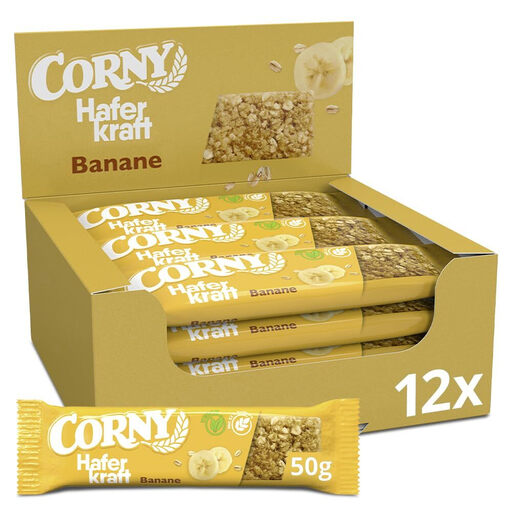 No image available
For stocking up on oat snack bars with a set portion size: the pack contains twelve 50-g bars.
Check the label on the specific pack for gluten and possible traces of nuts, peanuts and milk. If fibre is your main criterion, compare the amount per bar.
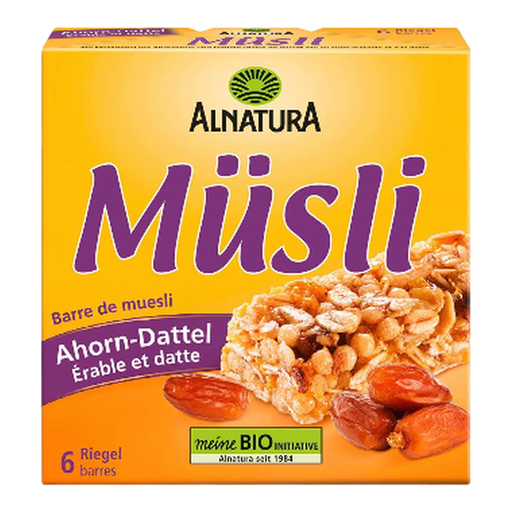 No image available
For smaller, individually portioned muesli bars: the pack contains six 25-g bars.
If you follow a vegan diet, check the label on the specific variety. The bar contains gluten-containing cereals from oats and wheat. For portion planning, compare the energy and sugar per 25-g bar too.
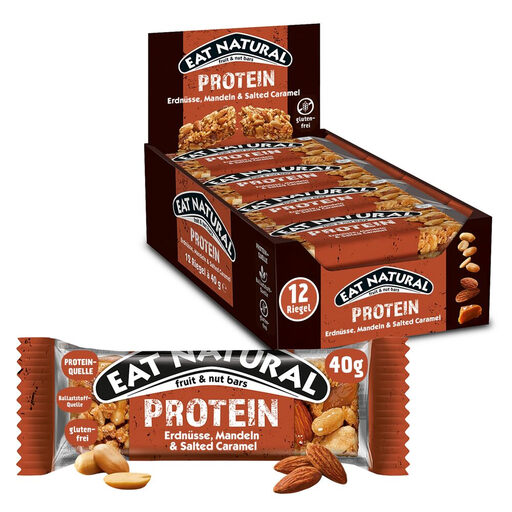 No image available
For comparing individually portioned protein bars: the pack contains twelve 40-g bars.
Check the allergen information for peanuts, soya, milk and almonds; other nuts may also be present. For your daily plan, compare the energy and sugar per 40-g bar.
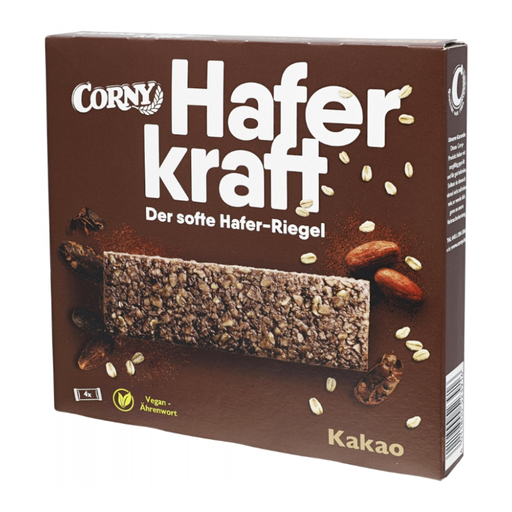 No image available
For oat snack bars in 35-g portions: the pack contains four bars.
Check the label for gluten and milk; nuts and peanuts may also be present. To compare with other portion sizes, check the energy and sugar per bar.
No, a protein bar isn’t essential for weight loss. The Verbraucherzentrale points to energy balance and a diet that works in everyday life as key to long-term weight loss. If you specifically want a protein-focused snack, compare the energy and ingredients per bar as well.
Use both figures for different purposes: values per 100 g make it easier to compare recipes, while values per bar show the amount in the individual portion you’ll actually eat. REWE lists 169 kcal per 45-g bar for its CORNY Proteinriegel Cookie Crunch.
Check the ingredients, allergen information and may-contain statements for every variety in the pack. Don’t assume that different flavours from the same brand have the same ingredients.
No, these labels don’t tell you whether an individual portion contains less energy. Check the nutritional values per bar and compare portions of the same size.
Read the ingredients list rather than relying on the product name or image alone. According to the Federal Office of Consumer Protection and Food Safety, ingredients are listed in descending order by weight; stated percentages for individual ingredients can also help you compare products.