Snack bars are not a blanket substitute for soft, age-appropriate foods for babies in the early stages of complementary feeding. Kindergesundheit-info.de and the Gesund ins Leben network stress that children need to be able to manage solid foods, and that it can be harder to ensure they get enough nutrients if complementary feeding consists only of solid foods. A bar may be suitable as an occasional snack once your child has reached the minimum age stated on the pack, can manage its texture and eats while seated under supervision. The ingredients and nutritional information matter, too.
Who is this choice relevant to?
Parents in the early stages of baby-led weaning
If you want to offer finger foods when you’re out and about, first consider your baby’s development and choose a suitable, soft texture. A bar labelled ‘from 1 year’ isn’t suitable for a younger baby just because it’s easy to hold. This is consistent with kindergesundheit-info.de’s guidance on solid foods and the age recommendations given by individual manufacturers.
Families with children aged 1 and over who feed themselves
An age-appropriate bar can be an occasional snack on outings or when you’re on the move. Before buying, check whether each bar is individually wrapped; a pack containing several bars doesn’t necessarily mean they are. A snack bar is no substitute for a varied complementary diet.
Parents mindful of ingredients and allergens
If you need to consider particular ingredients or keep an eye on sweetness and salt, compare the ingredients list and nutritional information for the specific variety. The Verbraucherzentrale recommends checking the nutritional information rather than relying on marketing claims to assess sugar content.
What should you look for?
Early baby-led weaning
Suitable if: Your baby is just starting complementary feeding and should be able to pick up soft, age-appropriate foods independently.
Consider: This is less convenient on the go than a wrapped bar. If complementary feeding consists only of solid foods, the Gesund ins Leben network recommends seeking individual advice, as it can be harder to ensure an adequate supply of nutrients.
Bars for the age stated on the pack
Suitable if: Your child meets the age recommendation on the specific pack, can manage the texture and eats the bar while seated under supervision as an occasional snack.
Consider: Convenient packaging doesn’t make a bar a substitute for complementary foods or confirm that each bar is individually wrapped. HiPP and Freche Freunde label the bars featured here as suitable for children aged 1 and over.
| Criterion |
What to check before buying |
Who it matters to |
| Age and texture |
Compare the minimum age and feeding guidance on the specific pack with your child’s abilities; look out for hard pieces and whole nuts. |
If my baby can’t yet pick up, chew and swallow solid foods safely, the right texture matters more than convenient packaging. This is the top priority for around 42% of consumers. |
| Ingredients and sweetness |
Compare the ingredients list and the sugar and salt information per 100 g and, where provided, per portion. |
For early complementary feeding, I want to avoid added salt and an overly sweet taste, even if a bar is marketed as containing fruit. This is the main concern for around 25% of consumers. |
| Portions on the go |
Check whether the bars are individually wrapped, and look at the portion size and feeding guidance for the variety. |
When we’re out, I need a handy snack for a child who can already eat it, rather than something to plan as a meal. Portion size is the main consideration for around 17% of consumers. |
| Allergens and grains |
Read the ingredients and may-contain information for each variety; for rice snacks, consider options made with other grains, too. |
If I need to watch out for particular allergens or don’t want to choose rice-based snacks every time, I check the recipe more closely. This is the most important selection criterion for around 16% of consumers. |
Common buying misconceptions
-
Confusing individual wrapping with suitability for baby-led weaning
An easy-to-hold shape doesn’t tell you whether the age recommendation and texture are right for your child. HiPP and Freche Freunde label the bars featured here as suitable for children aged 1 and over.
Check the minimum age for the specific variety before buying. Don’t offer a bar to a younger baby just because it looks small or soft.
-
Assuming ‘no added sugar’ means sugar-free
This claim doesn’t mean that a food contains no sugar. The Verbraucherzentrale recommends checking the nutritional information to assess sugar content; the Gesund ins Leben network advises against added salt and an overly sweet taste in complementary foods for babies.
Read the ingredients list alongside the nutritional information, and look out for concentrated fruit ingredients, too.
-
Making rice-based snacks a daily habit
According to the German Federal Institute for Risk Assessment, rice and rice products can contain comparatively high levels of inorganic arsenic.
Choose suitable snacks made with different grains rather than regularly reaching only for rice bars or rice cakes.
-
Planning to use bars as a substitute for complementary foods
A suitable snack doesn’t tell you whether the rest of your child’s complementary diet is providing enough nutrients. The Gesund ins Leben network highlights this challenge, particularly when complementary feeding consists only of solid foods.
Plan to offer a bar suitable for your child’s age only as an occasional snack, not as the basis of their complementary diet.
Brands to consider
HiPP
HiPP offers snacks for babies and children, including bars labelled ‘12+ months’.
- The HiPP range includes bars for children from the age stated on each product.
- The age recommendation doesn’t mean a bar is suitable for the early stages of baby-led weaning. A HiPP bar for children aged 1 and over featured by Müller comes with guidance to eat it under supervision and not while lying down; check the guidance for each variety individually.
Holle
Holle offers a range of snacks, including puffed products, baby rusks and sticks.
- The different formats make it easy to compare ingredients and how practical each one is on the go.
- The age recommendation and texture need to suit the specific product and your child. Claims about added sugar don’t replace checking the ingredients and nutritional information.
Freche Freunde
Freche Freunde says it offers fruit, muesli and oat bars for children aged 1 and over.
- You can compare the ingredients and portion formats across several types of bar.
- The age recommendation of 1 year and over doesn’t apply to younger babies in the early stages of complementary feeding.
Joybuy bars for on the go
According to their product descriptions, these muesli and fruit bars are intended for children aged 12 months and over, or from 1 to 3 years. For an on-the-go snack, compare the age recommendation, ingredients and texture for each product. The stated number of bars doesn’t confirm that each one is individually wrapped.
 No image available
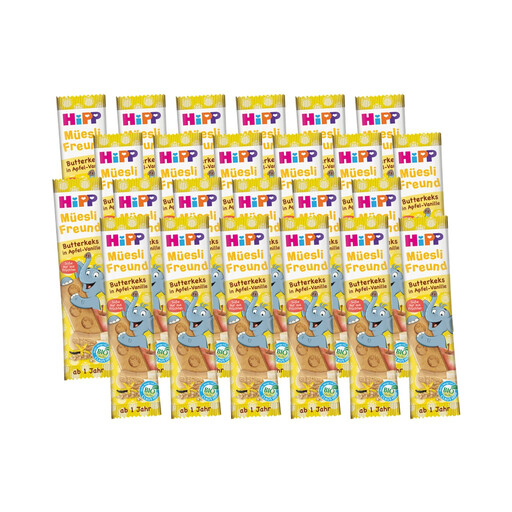
HiPP Organic muesli bar, butter biscuit, apple and vanilla, from 12 months, 24 × 20 g
This muesli bar may be suitable as an occasional snack on the go, but only for a child who meets the age recommendation and can manage the texture safely.
The product description lists 24 bars, each weighing 20 g; check the specific pack to see whether they are individually wrapped. Check the ingredients and nutritional information, and follow the guidance to eat under supervision.
View at Joybuy
 No image available
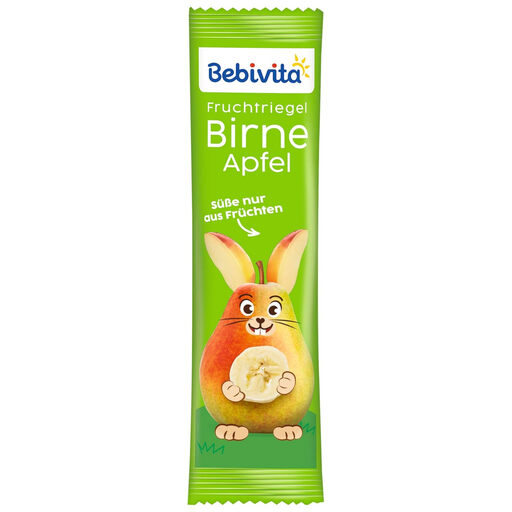
Bebivita fruit bar, apple and pear, 1–3 years, 20 × 25 g
This fruit bar could be an occasional snack on the go for a child within the stated age range, provided they can manage the texture safely.
The product description lists 20 bars, each weighing 25 g. Before buying, check whether they are individually wrapped, along with the ingredients and nutritional information. Before eating, check the pack for instructions.
View at Joybuy
Frequently asked questions
When are snack bars suitable for baby-led weaning?
There isn’t a single age that applies to every child. They need to be able to pick up, chew and swallow solid foods safely, and the bar must be labelled as suitable for their age. The HiPP and Freche Freunde bars featured here are labelled as suitable from 1 year. If complementary feeding consists only of solid foods, the Gesund ins Leben network recommends seeking individual advice about nutrient intake.
Is a bar labelled ‘no added sugar’ automatically a suitable choice?
No. This claim means neither sugar-free nor suitable as a complementary food. Compare the ingredients list and nutritional information for the specific variety; the Gesund ins Leben network advises against added salt and an overly sweet taste in complementary foods for babies.
What should I look out for when it comes to allergens in a bar?
For each variety, read the ingredients list, including any highlighted allergens, and check the current pack for may-contain information. Don’t assume that information for one bar applies to a different recipe.
Are rice bars or rice cakes suitable as a daily snack?
Rice-based snacks shouldn’t become the one-sided everyday choice. The German Federal Institute for Risk Assessment highlights the presence of inorganic arsenic in rice and rice products and recommends choosing products made with other grains, too.


