People who regularly take bars with them
If you keep bars in your gym bag, at work or at home, pack weight, portion size and how many you’ll actually eat matter more than the number of bars alone.


When choosing a pre-training snack, start by considering which type you can tolerate and whether you’ll actually use up the pack. If you’re focusing on carbohydrates before a longer or more intense session, compare the nutrition information per bar; a product isn’t automatically a better choice just because it’s called a protein bar. Check the ingredients and allergens for each variety on the actual pack.
If you keep bars in your gym bag, at work or at home, pack weight, portion size and how many you’ll actually eat matter more than the number of bars alone.
If you’re focusing on carbohydrates before a session like this, compare the information per 100 g and per bar. The German Nutrition Society points out that carbohydrate requirements depend, among other things, on body weight, training volume and intensity.
When choosing a protein bar, allergens, ‘may contain’ warnings and sugar alcohols can all be important. The information for the specific variety matters more than the product range’s general name.
First, decide whether the bar suits your training session and what you can comfortably eat. Then compare the portion size and pack contents with what you’ll actually use.
| What matters | What to check when buying | Who it matters to |
|---|---|---|
| Getting the right amount | Compare the total weight, weight per bar and best-before date with how quickly you plan to use the pack. | If you regularly take bars with you, you won’t want to buy too many of one variety just because it comes in a large multipack. Getting the right amount is the main priority for around 42% of consumers. |
| Carbohydrates before exercise | Compare the carbohydrates per 100 g and, where given, per bar, as well as the portion size. | Before a longer or more intense session, I want to know what’s in an individual bar. This is the main priority for around 33% of consumers. |
| Ingredients and tolerability | Read the ingredients list, highlighted allergens, ‘may contain’ warnings and, where relevant, information about sugar alcohols for the specific variety. | If I need to avoid certain ingredients or am trying a new variety, I check the pack particularly carefully before buying a multipack. Around 25% of consumers put this first. |
Bars can vary in weight, so a pack with more bars doesn’t necessarily contain more overall.
Compare the net weight and weight per bar, and consider whether you’ll use up the variety by its best-before date.
The German Nutrition Society describes carbohydrates as an important part of fuelling sport. So a product marketed as a protein bar doesn’t automatically answer the question of what you’d like to eat before a particular session.
Compare the nutrition information for the specific bars and take your overall diet into account, rather than relying on the name on the front of the pack.
Protein bars may contain relevant allergens and carry ‘may contain’ warnings. The consumer advice centre also points out that sugar alcohols can have a laxative effect when consumed in larger quantities.
Read the labelling for each variety. If it’s new to you, try a small amount first rather than eating it for the first time just before an important training session.
EDEKA notes that the information online for one of its coconut protein bars may differ from what’s on the packaging. ALDI SÜD says that information for one of its high-protein bars may vary depending on the supplier.
Before buying, check the information on the pack actually being offered, particularly the ingredients, allergens and pack weight.
REWE stocks Corny muesli bars and Haferkraft bars in a range of multipack sizes.
REWE lists, among other products, its Peanut & Chocolate protein bar in a pack of 4 × 40 g.
REWE describes PWR as its own brand of protein bars for active people and those with an active lifestyle.
ALDI SÜD stocks a high-protein bar in a pack of 3 × 45 g.
EDEKA stocks, among other products under MAX BALANCE, a 45 g coconut protein bar.
This selection includes muesli bars and oat bars in multipacks for stocking up on snacks. Pack sizes vary; when choosing a bar for before training, the portion size, nutrition information and ingredients for the specific variety are what matter.
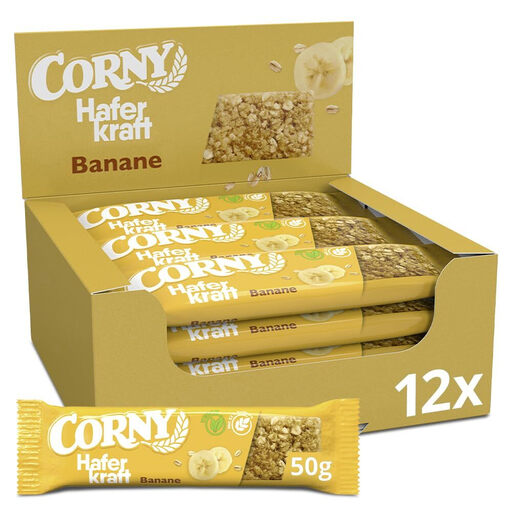 Image unavailable
A larger multipack if you regularly take this variety with you. It contains 12 bars at 50 g each; check the ingredients and allergen information before buying.
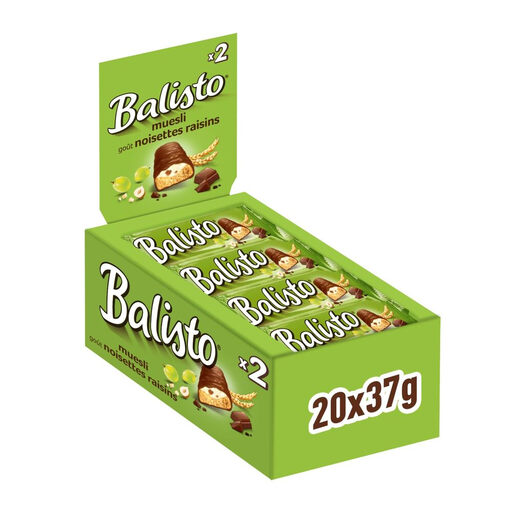 Image unavailable
A good choice if you prefer to stock up on smaller individual portions. The pack contains 20 bars at 37 g each; check the ingredients and nutrition information against your needs.
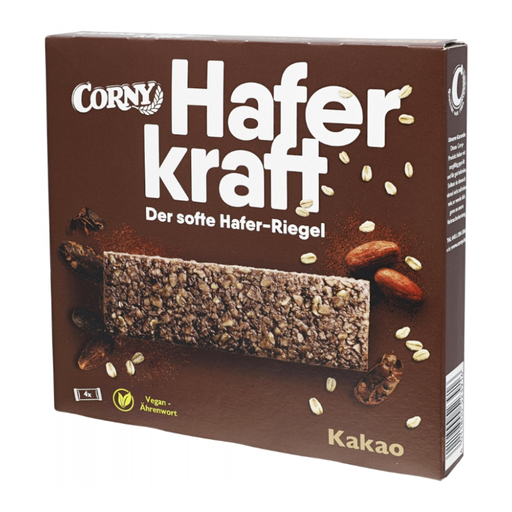 Image unavailable
A smaller pack if you’d like to try this variety before buying more. It contains four bars at 35 g each; check the allergen information on the pack.
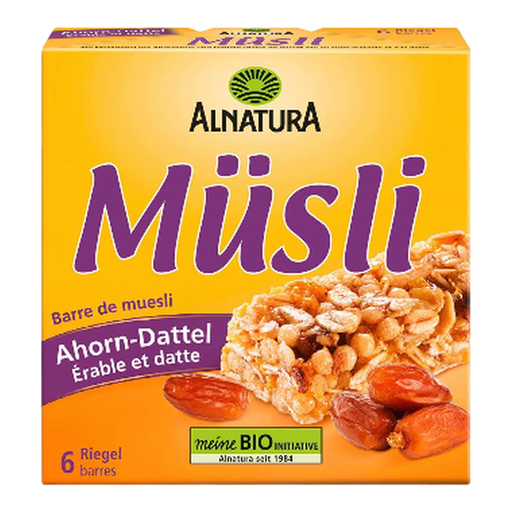 Image unavailable
A small multipack with portions of 25 g each. The six bars weigh 150 g in total; if you have specific dietary requirements, check the ingredients and ‘may contain’ information on the actual pack.
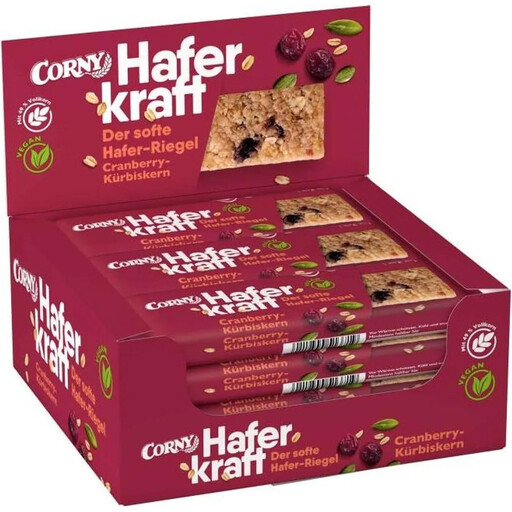 Image unavailable
A larger multipack if you regularly plan to take bars of this variety with you. It contains 12 bars at 50 g each; check the ingredients and ‘may contain’ information.
No. The product name alone doesn’t determine that. The German Nutrition Society highlights the role of carbohydrates in fuelling sport; the amount you need depends, among other things, on your body weight, training volume and intensity. Consider the nutrition information for the specific bar alongside your overall diet.
Compare the total weight and weight per bar, not just the number of bars. This helps you see what portion sizes you’ll be carrying and whether you’re likely to use the whole pack.
Read the ingredients list, highlighted allergens and any ‘may contain’ warnings on the actual pack. The Federal Office of Consumer Protection and Food Safety explains how the main allergens are labelled; information can vary between varieties, even within the same brand.
There’s no general answer. The consumer advice centre points out that sugar alcohols can have a laxative effect in larger quantities; ALDI SÜD gives a similar warning for one of its high-protein bars. Check the ingredients for your chosen variety, and don’t try an unfamiliar bar for the first time just before an important session.