To stock up on snack bars with calories in mind, first compare the energy per bar, then the figures per 100 g: a smaller portion may contain fewer calories without having a lower energy density. Before buying a multipack, also check the ingredients, allergens, best-before date and storage instructions for the specific variety. In the EU, a ‘low energy’ claim for solid foods is limited to products containing no more than 40 kcal per 100 g; having fewer calories per bar is not enough.
Which comparison matters to you?
For those keeping an eye on calories per portion
If you want a bar to fit into your planned snack portion, the energy in the whole wrapped bar is the first figure to compare. Checking the kcal per 100 g as well shows whether the difference is simply down to portion size.
For those interested in protein content
If protein matters to you, compare the stated amount alongside the energy, portion size and ingredients. The term ‘protein bar’ alone does not tell you whether a bar contains fewer calories.
For those with specific ingredient requirements
When buying in bulk, sweeteners, allergen information and storage conditions need to suit the particular variety and your household. Information for a different flavour is no substitute for checking the pack you have chosen.
What should you look for when buying in bulk?
First decide what size bar you actually want to eat. Then check that the pack size, recipe and storage requirements suit how you plan to use it.
| Criteria |
What to check when buying |
Who it matters most to |
| Calories per bar |
Compare kcal per whole bar with kcal per 100 g; if figures are given only per 100 g, check the weight of each bar. |
If I want to plan a specific snack portion, the energy in the bar I actually eat is what matters to me. Around 42% of consumers would put calories per portion first. |
| Stock and storage |
Check the number of bars, best-before date and storage instructions on the specific pack against how quickly you plan to use them. |
A larger stock-up only works for me if I can use the bars in time and store them according to the pack instructions. Around 33% of consumers would prioritise this. |
| Ingredients and nutrition |
Read the ingredients and allergen information for the variety; check protein, sugar and, where relevant, any information about sweeteners. |
If I need to avoid certain ingredients or want to compare protein levels, the specific recipe determines my choice. Around 25% of consumers would check this first. |
Common buying mistakes
-
Assuming a small bar is automatically ‘low energy’
Fewer kcal per bar may simply be down to a lower bar weight. Under EU Regulation (EC) No 1924/2006, a ‘low energy’ claim for solid foods requires no more than 40 kcal per 100 g.
So compare both figures: kcal per bar for your portion, and kcal per 100 g for energy density.
-
Using protein or sugar claims to judge the whole bar
Protein content or a ‘no added sugar’ claim does not tell you how much energy the whole bar contains. Portion size and other nutritional values matter too.
Read the nutrition information for the variety you have chosen before buying a larger quantity.
-
Overlooking allergens and sweeteners in multipacks
The varieties listed differ in their ingredients and allergens. Some individual bars also carry a warning that excessive consumption may have a laxative effect.
Check the ingredients, allergen information and consumption advice on the specific pack. If you have not tried a variety before, it may be sensible to start with a smaller quantity.
-
Planning the number of bars without checking the date or storage space
According to the consumer advice centre, the best-before date applies to unopened food stored correctly. A large pack will not necessarily suit how quickly your household can use it.
Match the number of bars to how quickly you plan to use them, and check the best-before date and storage instructions before stocking up.
Brands and varieties to consider
Nutrition information and ingredients vary between varieties from the same brand. When buying in bulk, always check the label on the specific bar.
FULFIL
FULFIL offers protein bars in 40-g portions, among other sizes. This portion size can be compared with larger individual bars, but it does not tell you the energy density on its own.
- FULFIL Nutrition Deutschland lists 135 kcal and 14 g of protein per 40-g Chocolate & Brownie bar.
- This variety contains milk and soya. The manufacturer lists other potential allergens and warns that excessive consumption may have a laxative effect.
Sportness
The dm own brand includes protein bars made with different recipes. Portion size and nutrition information should therefore be checked for each variety.
- dm lists a weight of 40 g per Yoghurt-Cereal bar, with 374 kcal, 33 g of protein and 13 g of fibre per 100 g.
- For Salty Chocolate Nut, dm lists 470 kcal and 15 g of sugar per 100 g. The figures for Yoghurt-Cereal do not apply to this variety.
Barebells
Barebells also offers larger 55-g protein bars. For a calorie comparison, the energy per whole bar is what matters.
- Barebells lists 193 kcal and 16 g of protein per 55-g Chocolate Cake bar.
- Barebells does not describe its products as low-calorie or reduced-calorie. Ingredients and allergens vary by variety.
Snack bars at Joybuy
This selection includes individually portioned bars and multipacks. For each variety, compare the nutrition information for the version on offer and check the pack size and best-before date before stocking up.
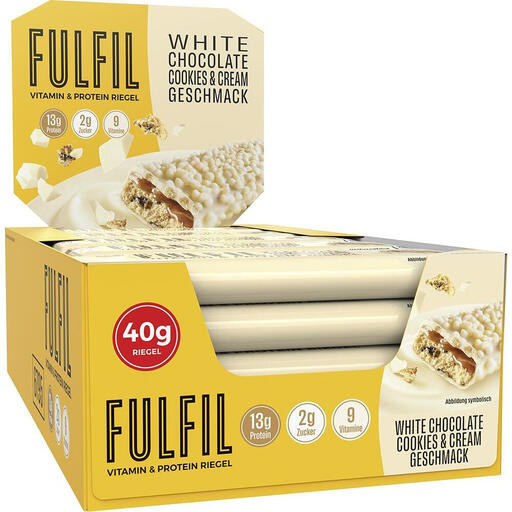 Image unavailable
FULFIL Vitamin & Protein Bar White Chocolate Cookies & Cream, 15 × 40 g
This multipack is handy for stocking up on individual 40-g portions.
Check the nutrition information for this variety when comparing calories; before buying, also check the allergen information and best-before date.
View at Joybuy
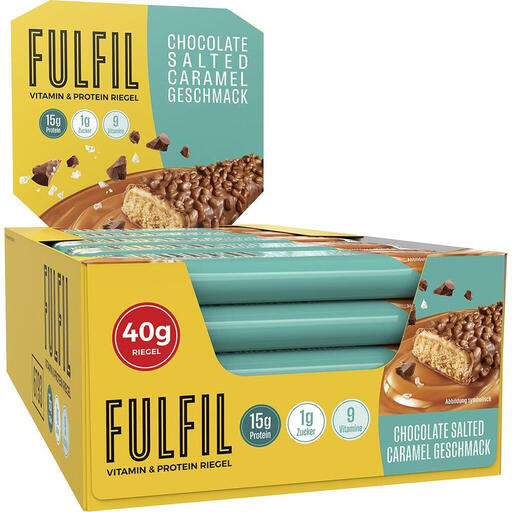 Image unavailable
FULFIL Vitamin & Protein Bar Chocolate Salted Caramel, 15 × 40 g
The pack of 15 bars, each weighing 40 g, is a practical choice if you want a set number of bars in your stock-up.
Compare its nutrition information with other 40-g varieties rather than assuming that the same portion size means the same ingredients. Check the allergen information for this version.
View at Joybuy
 Image unavailable
Corny Protein Crunchy Vanilla & White Choc, 12 × 45 g
The pack of twelve 45-g bars offers a different portion size from the 40-g examples.
To compare calories per snack, you need the energy per bar; figures per 100 g are also useful when comparing bars of different weights. Check the ingredients and allergens for this variety.
View at Joybuy
 Image unavailable
Frankonia Sugar Free Nutrition Bar Chocolate Brownie, 50 g
You can compare this 50-g bar with both smaller and larger individual bars.
Check the nutrition information for this variety rather than relying on the product name. If you want to buy several for a stock-up, check the pack size on offer and the best-before date.
View at Joybuy
 Image unavailable
Barebells Vegan Protein Bar Peanut Caramel, 12 × 55 g
This multipack could suit a stock-up if you want 55-g portions and this particular recipe.
The heavier bar makes it especially important to compare the energy per bar with 40-g varieties. If you have dietary requirements, check the ingredients and allergen information on the specific pack.
View at Joybuy
Frequently asked questions
When can a solid snack bar be described as ‘low energy’?
For a ‘low energy’ claim on solid foods, EU Regulation (EC) No 1924/2006 requires no more than 40 kcal per 100 g. Having fewer calories per bar than a larger bar is not enough.
Should I compare kcal per bar or per 100 g?
For the snack portion you plan to eat, kcal per bar is the key figure; per 100 g lets you compare bars of different sizes. If only the figure per 100 g is given, also take the bar’s weight into account.
Does ‘no added sugar’ mean a bar has fewer calories?
No, the claim alone does not tell you that. Read the energy and other nutrition information for the specific variety, and compare portions of the same size.
What should I check before buying a multipack?
Check the number of bars, the best-before date and the storage instructions on the specific pack, then match the quantity to how quickly you plan to use them. According to the consumer advice centre, the best-before date applies to unopened products stored correctly.
Is a brand’s general description enough if I have allergies?
No, what matters is the ingredients and allergen information for the specific variety. Recipes can differ between flavours, so check the label on the pack you intend to buy.


