
当日/次日达

品质保障

开启新人专享福利: 全场免邮 | 低至 2 折 | 免费试用 30 天 JoyPlus 会员
下载 Joybuy
If you want to buy snack bars online, you’ll find a wide selection, including protein bars, cereal bars, nut bars, chocolate bars and special options for vegan or gluten-free diets. The packaging often promises “no added sugar”, “high in protein” or “natural”. What really matters, however, is the ingredients, nutritional values and serving sizes behind those claims.
A bar labelled “no added sugar” may still contain sugar from dates, honey, fruit juices or milk ingredients. For example, Corny Haferkraft ZERO Peanut Butter lists 1.2 g of sugar per 100 g. At the same time, the product contains maltitol syrup and oligofructose. The nutrition table is therefore more informative than the front of the packaging.
With reduced-sugar bars, you should also look out for sugar alcohols such as maltitol. Larger quantities can have a laxative effect in sensitive individuals. A low sugar content alone does not automatically make a bar suitable for every type of diet.
Protein bars vary considerably in their protein content. A bar may include protein in its name but provide only a few grams per serving. For comparison, according to the product details, BE-KIND Protein Crunchy Peanut Butter contains 12 g of protein per 50 g bar. Maxi Nutrition Muesli Nut Butter Protein Wafer Bar provides 9.7 g of protein per 39 g bar.
Always check:
A bar multipack often reduces the price per item, but it ties up more money and requires enough storage space. Storage can also be an issue with chocolate bars: heat and moisture can affect their texture and flavour. So compare the price per bar and price per 100 g before choosing a larger pack.
In the EU, ingredients are generally listed in descending order by weight. If sugar, syrup or chocolate appears near the top of the list, the product is usually more of a confectionery bar than a fibre- or protein-focused snack.
With a nut bar, peanut bar or caramel bar, allergen information should be read particularly carefully. “May contain traces” indicates possible accidental cross-contamination and should not be taken as confirmation that the product is free from allergens.
For everyday use, the information per serving is often more practical than the information per 100 g. Otherwise, a 25 g cereal bar and a 50 g protein bar are difficult to compare. Pay attention to:
A snack bar for eating on the go should also be individually wrapped and robust enough to carry around. A larger supply may be useful for the office or your desk drawer, while on hikes, the weight per serving is usually the main consideration.
A vegan bar should not contain milk, whey ingredients, honey or any other animal-derived ingredients. For a gluten-free bar, the relevant certification is more important than an ingredients list with no obviously gluten-containing cereals. Oats, for example, can come into contact with cereals containing gluten.
“Reduced sugar” does not automatically mean low in calories either. Nuts, chocolate and fats can increase the energy content. A reliable comparison is only possible using the complete nutrition table.

Why this product suits the profile: The pack of 12 contains 12 individually portioned 50 g bars for the office, university or your pantry. The stated sugar content is 1.2 g per 100 g.
The nutrition information explicitly highlights the naturally occurring sugars it contains. This helps prevent “no added sugar” from being confused with “sugar-free”.
49% oat flakes, 12 individual bars and a total weight of 600 g. The product is vegan, but contains oats and peanuts.
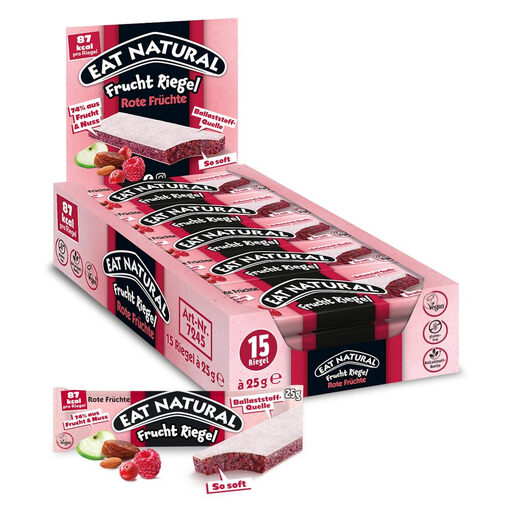
Why this product suits the profile: According to the product details, this fruity cereal bar combines 74% fruit and nuts. The 25 g portion is ideal for a smaller snack on the go.
The product information specifies the proportions of individual ingredients as well as the allergens. Although the bar is gluten-free and vegan, it contains almonds and may contain traces of other nuts, milk and soya.
15 individually wrapped bars, a total weight of 375 g, 4.4 g of protein and 48.1 g of sugar per 100 g.
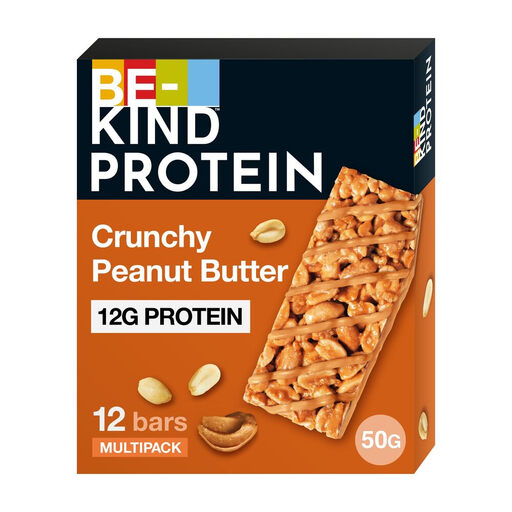
Why this product suits the profile: The bulk pack of 12 individual bars is aimed at people who regularly plan a protein-focused snack for training, their commute or work.
The protein content is stated per individual bar: 12 g for a 50 g bar. The product also lists 7.5 g of sugar and 256 kcal per serving.
Gluten-free according to the product details, with 24 g of protein per 100 g and 18 g of fibre per 100 g. Contains peanuts, milk, soya and other possible nut ingredients.
We’ve put together a complete, regularly updated list of products that fully meet these strict selection criteria and the safety regulations applicable in the EU.
For commutes, school, the office and hiking, individually wrapped bars weighing 25 to 50 g are practical. Cereal bars and nut bars are often less prone to melting than chocolate bars. In warm temperatures, products with chocolate or caramel coatings should be stored somewhere cool and dry.
No. Despite their high protein content, protein bars may contain significant amounts of sugar or sweeteners. Always compare protein and sugar per serving. A bar containing 20 g of protein per 100 g provides around 8 g of protein in a 40 g serving.
The best-before date is shown on the relevant packaging. Unopened bars should be stored in accordance with the storage instructions, in a cool, dry place away from direct sunlight. Once opened, products with a soft or crunchy texture should ideally be eaten promptly.