Canteen diners who fancy a little extra
If your canteen meal is already your main meal, the kcal per whole bar can help you choose an additional snack portion. The information per 100 g makes bars of different sizes easier to compare.


If you’re having a bar alongside your canteen lunch, start by checking the energy content of the portion you’ll actually eat. To compare bars of different sizes, check the nutritional information per 100 g too, as explained by the German Food Federation. A protein bar isn’t automatically a small energy portion just because of its name; ingredients and allergens may also affect your choice.
If your canteen meal is already your main meal, the kcal per whole bar can help you choose an additional snack portion. The information per 100 g makes bars of different sizes easier to compare.
Protein information may matter if you’re choosing a bar to eat between lectures or after exercise. Check the energy per bar and the ingredients too, rather than assuming that the word “protein” tells you everything else you need to know.
If you need to avoid certain allergens or sweeteners, read the labelling for the specific variety. A suitable kcal figure alone says nothing about whether it will agree with you.
Choose a bar to go with your canteen lunch based on what matters most to you. Then check the other information on the pack.
| Criteria | What to check | Who it matters most to |
|---|---|---|
| Energy per portion | kcal per whole bar and per 100 g; for multipacks, check the size of an individual bar. | After my canteen meal, I only want a small extra snack and need to judge the portion I’ll eat. For around 40% of consumers, this predictable energy per portion is the main priority. |
| Protein | Protein per bar, alongside its energy information. | On a long day at university, I’m specifically looking for a protein-focused snack without losing sight of the kcal. Protein is the main selection criterion for around 30% of consumers. |
| Ingredients and allergens | The ingredients list, highlighted allergens and any information about sweeteners on the specific pack. | If I need to avoid certain ingredients, a bar isn’t suitable for me, whatever its portion size. For around 20% of consumers, checking this information comes first. |
| Availability | Whether the variety you want is actually available before you plan to eat it. | For my regular canteen break, I need a variety I can get in time. Practical availability comes first for around 10% of consumers. |
The protein content alone doesn’t tell you how much energy is in the whole bar. REWE lists 135 kcal per 40 g bar for Premier Protein Chocolate Caramel, compared with 199 kcal per 40 g bar for Nature Valley Salted Caramel.
Decide whether you’re mainly looking for a small addition or a protein-focused bar, then check both figures per bar.
Sugar content alone doesn’t tell you the bar’s total energy or what else it contains.
Compare the energy per bar and per 100 g, and check the information on sugar, protein and ingredients if you need to.
Information varies from one variety to another. For the Premier and Sportness bars described by REWE and dm, ingredients and information about polyols are relevant to your choice; there is also a warning that excessive consumption may have a laxative effect.
Check the allergen labelling and information on the pack of the variety you’re planning to buy.
A small bar may seem modest per portion but still contain a lot of energy per 100 g. EDEKA lists 531 kcal per 100 g for its Bio-Knusperriegel Sesam.
Use the portion value for the snack you have in mind and the per-100-g value to compare it with other bars.
The Chocolate-Caramel protein bar described by REWE is an example of an individually portioned bar with nutritional values provided per bar.
The Hazelnut-Spread protein bar shows why it’s useful to consider the portion size and the per-100-g value side by side.
According to dm, the Sportness bar range includes different types of products. It’s the information for each individual variety that matters, not just the brand name.
The Salted-Caramel protein bar described by REWE shows why a product containing nuts should be assessed based on its specific portion.
These bars could work as a portioned snack alongside your canteen lunch. The pack size is shown for each one; before choosing, compare the nutritional information and ingredients for the specific variety.
 No image available
If you’re planning to have one bar with your canteen meal, the 50 g portion gives you a clear point of reference. Check the kcal per bar, as well as the ingredients and allergens on the pack, before choosing.
 No image available
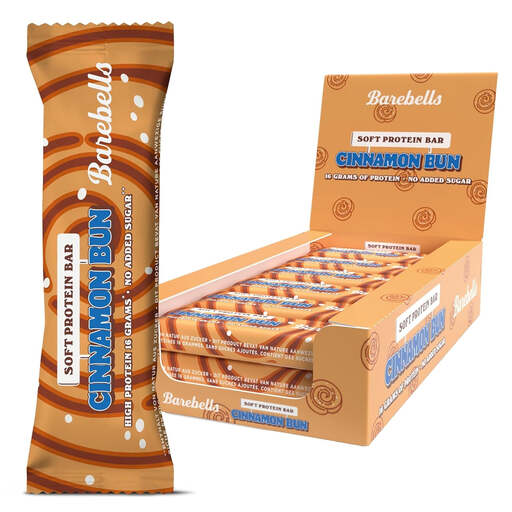
The pack contains twelve 55 g bars and could be a good option if you regularly want to take a portion with you for your canteen break. Compare the energy in one 55 g bar with that in smaller portions.
 No image available
If protein matters to you as well as energy per portion, compare both per 55 g bar. The pack contains twelve bars; don’t assume the information for the Cookies & Cream variety also applies to other Barebells varieties.
 No image available
The 45 g bar is a clearly defined portion for your canteen break, and the pack contains twelve bars. Check the energy per whole bar and the ingredients for this specific variety.
 No image available
If you’re considering this Peanut Caramel variety, check the ingredients and energy per 55 g bar in particular. The pack contains twelve bars; the product name doesn’t replace checking whether the ingredients meet your personal requirements.
No. Information about added sugar doesn’t tell you the bar’s total energy content. For a snack with your canteen meal, compare the kcal per bar and per 100 g too.
First compare the nutritional information per 100 g on the same basis, then check the energy in the portion you actually plan to eat. The German Food Federation explains how per-100-g information makes products comparable.
Read the ingredients list and any consumption advice for the specific variety. REWE lists 9,6 g of polyols per Premier Protein Chocolate Caramel bar; warnings about a possible laxative effect apply to excessive consumption.
A protein bar isn’t essential for an extra snack. If protein matters to you, compare the amount per bar alongside the kcal; the consumer advice centre points out that most people don’t need products with an extra portion of protein.