If fat content is your main priority
When choosing a handy bar for your lunch break at home, fat content matters more than terms such as ‘zero’ or ‘protein’. Compare similar bars per 100 g and check any claim about reduced fat separately.


If you’re looking for a snack with less fat for your lunch break at home, start by comparing the fat content of similar bars per 100 g, then check the amount per bar. Claims such as ‘zero’, ‘no added sugar’ or ‘protein’ don’t tell you how much fat a bar contains. Sugar, ingredients and portion size also matter.
When choosing a handy bar for your lunch break at home, fat content matters more than terms such as ‘zero’ or ‘protein’. Compare similar bars per 100 g and check any claim about reduced fat separately.
If you’re choosing a sweet bar, check the ingredients list as well as the ‘of which sugars’ figure. Lebensmittelklarheit points out that products with no added sugar may still contain sweeteners.
If you need a bar to tide you over until your next meal, compare protein, fibre and portion size too. These figures don’t replace checking fat and sugar.
Start by comparing the nutritional values of similar bars per 100 g. Then check the portion size to see how much you’ll be eating in one snack.
| Criterion | What to check | Who it matters to |
|---|---|---|
| Fat content | Compare fat and saturates per 100 g across similar bars. If a reduced-fat claim is made, check which comparable product it refers to. | If fat is my main consideration for lunch, a ‘zero’ label isn’t enough. Around 42% of consumers put this comparison first. |
| Sugar and sweeteners | Check ‘of which sugars’, the ingredients and, where applicable, polyols separately. Follow any consumption guidance provided. | I want a sweet bar, but I also want to make my own decision about sugar and the sweeteners used. Around 33% of consumers put this question first. |
| Portion size and other nutritional values | Compare the portion weight, protein, fibre, fat and sugar per bar and per 100 g. | If I want a bar to tide me over until my next meal, I look beyond a single marketing claim. Around 25% of consumers put this priority first. |
This claim doesn’t tell you how much fat the bar contains. According to REWE, Corny Free Schoko contains 1.5 g of sugar per 100 g, but also 9.4 g of fat and 42 g of polyols.
Compare the fat content separately. If a variety tastes sweet, check the ingredients and the information about polyols too.
Protein and fat are different nutrients. REWE lists 22 g of protein and 21 g of fat per 100 g for the RAWBITE Protein Crunchy Almond bar.
If lower fat is your priority, check the fat content first, then consider protein and fibre according to your needs.
Different bar weights make it harder to compare portions directly. The Verbraucherzentrale recommends comparing products within the same category or with the same intended use.
Start with the figures per 100 g, then check the weight of the bar you actually plan to eat.
For allergies and intolerances, the label on the product you’ve chosen is what matters, not just the brand name.
Before buying, check the latest ingredients list, allergen information and any ‘may contain’ warnings on the packaging.
A cereal bar brand with a range of oat, chocolate and protein varieties. The specific variety determines which nutritional values to compare.
Fruit, nut and protein bars for shoppers who want to compare ingredients and protein as well as fat content.
A cereal bar brand with an oat-flake variety made with maple syrup and dates, listed by EDEKA24.
These oat and cereal bars could make handy, portioned snacks for a break while working from home. To compare fat content, check the latest nutritional information for each variety. The product name alone doesn’t prove that it contains less fat.
 No image available
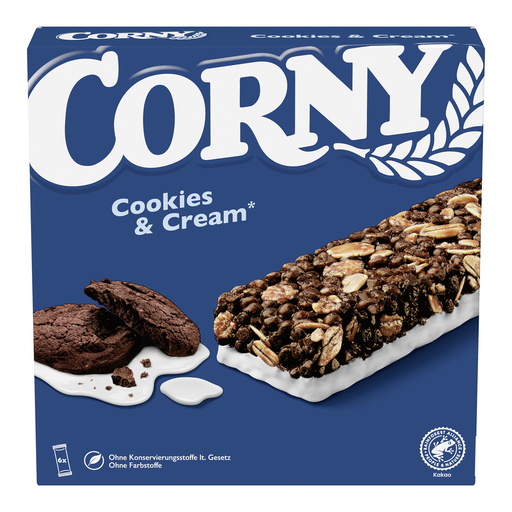
This oat and cocoa bar is a portioned snack option for a break while working from home. Check the latest packaging for fat, sugar and, where applicable, polyols. Before buying, also check the bar and pack sizes, and if you have allergies, read the product label.
 No image available
The individual portion size shown in the product title can help you plan a snack for a short break from work. Before choosing, compare fat and other nutritional values per 100 g and per bar. If you have allergies, check the latest packaging information.
This claim describes a reduction compared with a similar product; it doesn’t tell you the bar’s overall nutritional value. EU Regulation (EC) No 1924/2006 sets a minimum reduction of 30% for this type of claim. You should still check sugar, other nutritional values and portion size separately.
No. The claim doesn’t refer to fat content. Lebensmittelklarheit points out that such products may contain sweeteners; to check fat, look at the nutritional information for the specific variety.
If a Nutri-Score is shown, use it to compare similar products or products with the same intended use. The Verbraucherzentrale recommends this approach. The ingredients list and nutritional information are still important when choosing an individual bar.
Check the ingredients list, allergen information and any ‘may contain’ warnings for the specific variety on the latest packaging. A familiar brand name is no substitute for checking the label.