Parents planning for nursery days
You’re looking for a small portion for a lunchbox, day out or after-school club, and want to compare ingredients, sugar levels and portion sizes first.


For a nursery snack stash, occasional bars in suitable portions can work well, as long as their ingredients, nutritional information and texture are right for your child. Check for allergens and your nursery’s rules before packing them. A fruit or cereal bar is no substitute for a varied snack.
You’re looking for a small portion for a lunchbox, day out or after-school club, and want to compare ingredients, sugar levels and portion sizes first.
You need to check each variety against your child’s allergy requirements and the nursery’s guidelines. Texture and your child’s ability to chew are important too.
You’d like to add a little variety without making sweet bars a daily snack. The German Nutrition Society lists savoury snacks as one possible option for snacks at nursery.
For every variety, check allergens, texture and nursery rules first. Then compare the ingredients and nutritional information. For a snack stash, it’s also worth checking whether the portions can be packed as planned.
| Criteria | What to check | Who should pay particular attention |
|---|---|---|
| Sugar and ingredients | Compare the sugar per 100 g and per bar. Read the ingredients list; according to Lebensmittelklarheit, ingredients are listed in descending order by weight. | If I want to pack a sweet bar only occasionally, I want to judge what’s in it rather than how the packaging looks. Around 42% of consumers put this first. |
| Allergens and texture | Check the declared allergens against your child’s needs, and consider the texture and nursery rules. | If there are allergy requirements or your child is not yet a confident chewer, I need a variety that works for both my child and the nursery. Around 33% of consumers prioritise this. |
| Portion and variety | Check the portion size and whether each bar is individually wrapped. If appropriate, include less sweet or savoury snacks alongside sweet varieties. | For trips and lunchboxes, I want a handy portion without always packing the same sweet snack. Around 25% of consumers put this first. |
A children’s name or cartoon on the pack tells you nothing about the nutritional value of a particular variety. The consumer advice centre Verbraucherzentrale highlights that some snacks for children are high in sugar or salt.
Compare the ingredients list, nutritional information and portion size instead of judging the product by the front of the pack.
Fruit ingredients also contain sugar. So a no-added-sugar claim does not replace the sugar information in the nutrition table.
Compare the sugar per 100 g and per bar, and treat fruit bars as an occasional snack.
Tree nuts and peanuts may not be suitable for children with relevant allergies. Kindergesundheit-info.de also notes that young children can easily choke on small or hard foods.
Check allergens, your child’s ability to chew and the nursery’s rules before choosing a variety containing nuts or hard pieces.
If you only keep sweet varieties to hand, you may overlook less sweet options for snack time. The German Nutrition Society lists savoury snacks as an alternative.
Choose a few bar varieties you’ve checked in advance, and add suitable less sweet or savoury options if needed.
Freche Freunde offers fruit, cereal and oat bars, and describes its bars as suitable for children aged one and over.
Corny makes oat and cereal bars, including its Haferkraft range. These offer a point of comparison with bars marketed specifically for children.
RAWBITE describes its products as fruit and nut bars. For a nursery lunchbox, the exact ingredients in the variety you choose are what matter most.
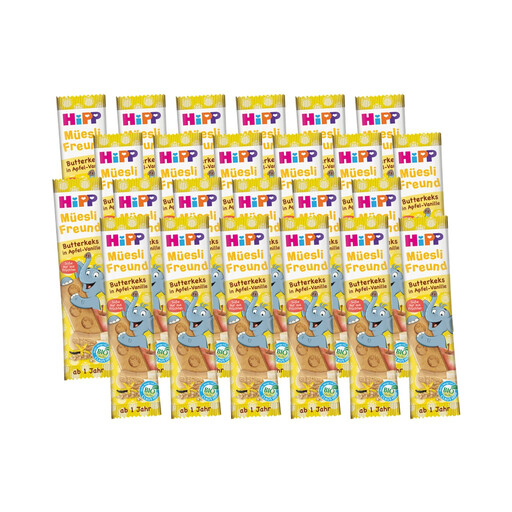
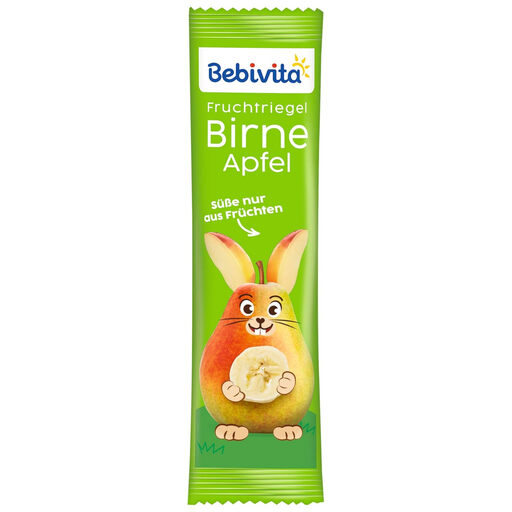
This selection includes a cereal bar and a fruit bar in multipacks. If you want to put individual bars in your nursery snack stash, check before buying whether each one is wrapped separately and whether the texture is suitable.
 No image available
A cereal bar for an occasional small snack on the go, provided the ingredients, texture and nursery rules are suitable.
According to the product name, the pack contains 24 bars weighing 20 g each. Check the sugar information and any allergens on the current packaging, and see whether each bar is individually wrapped. Children should be supervised while eating.
 No image available
A fruit bar for an occasional lunchbox snack, if the variety meets your child’s needs and the nursery’s rules.
According to the product name, the pack contains 20 bars weighing 25 g each. Compare the ingredients, sugar information and allergens on the current packaging, and check whether the bars are individually wrapped and easy to chew.
Yes, a suitable bar can be a handy addition now and then, but it shouldn’t replace a varied snack. Check the portion, ingredients, sugar information, texture and nursery guidelines. The consumer advice centre Verbraucherzentrale recommends limiting sweets and snacks for children.
No. Fruit ingredients can contain sugar even when no sugar has been added. So compare the sugar information in the nutrition table and read the ingredients list for the specific variety.
Read the highlighted allergenic ingredients and check them against your child’s needs. Lebensmittelklarheit explains how the 14 most common allergens are labelled; for a new variety, also check any ‘may contain’ warnings and the nursery’s rules.
Follow the storage instructions and best-before date on each pack, and check that individual portions are undamaged. If there is a food recall, compare the product name and batch number with the published notice.