What to look for when buying
Start with the bar’s weight and kcal per bar. Then use the ingredients and allergen information to decide whether that particular variety is suitable for the school break.
Small bar with no added sugar
A good fit if: You want a small portion that’s easy to plan for. REWE lists CORNY Free Schoko as containing 68 kcal per 20-g bar.
Consider: According to REWE, the bar contains 339 kcal per 100 g and includes sugar substitutes. The Verbraucherzentrale generally does not consider such products a suitable alternative for children.
Gluten-free oat and fruit bar
A good fit if: You’re looking for a variety labelled gluten-free and vegan. REWE lists its frei von Organic Oat Fruit Bar as containing 100 kcal per 25-g serving.
Consider: According to REWE, the serving contains 6.1 g of sugar and may contain traces of peanuts and tree nuts. Gluten-free doesn’t mean free from other allergens.
Protein bar
A good fit if: Protein content is an important factor in your choice. REWE lists 10.4 g of protein per 40-g bar for the Nature Valley Protein Bar Salted Caramel.
Consider: According to REWE, the same bar contains 199 kcal per serving. If you want to limit the kcal in the portion you pack, don’t let the word “protein” distract you from this figure.
| What to check |
Check when buying |
Especially important for |
| Calories per serving |
Compare the bar’s weight, kcal per bar and number of bars you plan to pack. |
I pack one bar for a short break and want to know exactly how many kcal it contains. For around 33% of consumers, energy per serving is the top priority. |
| Sugar and sweeteners |
Check the sugar per serving and ingredients such as maltitol or maltitol syrup alongside the kcal. |
When choosing a snack for a child, I want to decide whether a product with sugar substitutes is suitable at all. Around 27% of consumers prioritise checking these ingredients. |
| Allergens and dietary requirements |
Check the specific pack for labelled allergens, precautionary allergen information and any required claims such as “gluten-free”. |
If a bar needs to meet particular dietary requirements, the product type alone doesn’t tell me enough. This is the main concern for around 20% of consumers. |
| Protein and bar size |
Compare protein, kcal and weight for the same bar portion. |
I’m considering a protein bar for the break, but want to plan for its larger or smaller portion size. This comparison is also a priority for around 20% of consumers. |
Brands to help you compare
The information below relates to specific bar varieties, not every recipe from each brand.
CORNY
The Free Schoko variety shows the difference between a small individual serving and the energy content per 100 g.
- REWE lists 20 g and 68 kcal per bar.
- REWE also lists 339 kcal per 100 g. The variety contains sugar substitutes, milk and cereals containing gluten.
REWE frei von
The Organic Oat Fruit Bar is a 25-g variety specifically labelled gluten-free and vegan.
- REWE lists 100 kcal per 25-g bar.
- According to REWE, the serving contains 6.1 g of sugar and may contain traces of peanuts and tree nuts.
GOLDEN BRIDGE
The Haferriegel Kakao Zero offers another specific nutritional figure to compare per 100 g.
- ALDI SÜD lists 340 kcal and 0.4 g of sugar per 100 g for this variety.
- ALDI SÜD notes that figures may vary because of different suppliers. The information on the pack is what matters for the variety you buy.
GUT&GÜNSTIG
The Muesli Bar Chocolate No Added Sugar shows why you should check sugar and kcal separately.
- EDEKA lists 2.1 g of sugar per 100 g for this variety.
- EDEKA also lists 349 kcal per 100 g and includes maltitol, peanuts, milk and cereals containing gluten in the product information.
Snack bars at Joybuy
This selection includes individually portioned cereal bars and a savoury beef protein bar. For a school-break snack, start by comparing the actual bar weight. These product types and ingredients aren’t interchangeable.
 Image unavailable
Corny Free White Chocolate No Added Sugar, 6 × 20 g
The 20-g bars are easy to pack individually for a short break. As well as checking the kcal per bar, check the ingredients and allergens on the pack; “no added sugar” alone doesn’t tell you how much energy a serving contains.
View at Joybuy
 Image unavailable
Corny Haferkraft Zero Peanut Butter Oat, 12 × 50 g
If you’re considering a 50-g oat bar as an individual break-time portion, compare its kcal per bar with those of smaller bars. For the Peanut Butter variety, pay particular attention to the ingredients and allergen labelling.
View at Joybuy
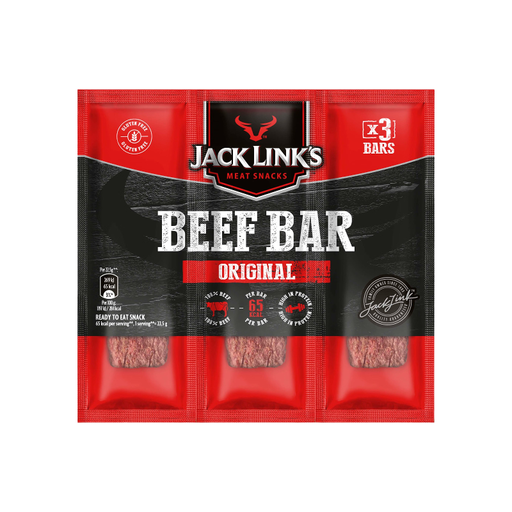 Image unavailable
Jack Link's Original Beef Protein Bars, 3 × 22,5 g
This savoury beef protein bar is a different type of snack from sweet cereal bars. If you’re considering it for a break, compare the kcal in the 22,5-g piece and check the sugar, salt and allergen information too.
View at Joybuy
 Image unavailable
Corny Haferkraft Zero Cocoa, 4 × 35 g
To compare portions with calorie content in mind, first check the actual bar weight for this Cocoa variety: the stated weights for each bar don’t match. Check the weight and kcal per bar on the specific pack before deciding on a break-time portion.
View at Joybuy
Frequently asked questions
When can a bar be called “low energy”?
For solid foods, EU Regulation (EC) No 1924/2006, as documented on EUR-Lex, limits this claim to products containing no more than 40 kcal per 100 g. A small bar may contain few kcal per serving and still exceed this limit per 100 g. So compare both figures, without confusing the energy content per serving with the legal claim about the product.
Is “no added sugar” the most important thing to look for in a school snack bar?
No. The claim doesn’t replace checking the kcal or the ingredients. REWE lists CORNY Free Schoko as containing 68 kcal per 20-g bar and 339 kcal per 100 g. According to the Verbraucherzentrale, products with sweeteners or sugar substitutes are generally not a suitable alternative for children.
Is “gluten-free” enough if allergies are also a concern?
No. Also check the allergens and precautionary allergen information on the specific pack. For example, according to REWE, REWE frei von’s gluten-free Organic Oat Fruit Bar may contain traces of peanuts and tree nuts.
How can you plan a sweet bar into the school day?
Treat it as a limited snack, not a replacement for a balanced break-time meal. The Verbraucherzentrale recommends that children have no more than one portion of sweets or snacks per day in total. When packing a bar, it’s worth checking what other snacks are planned for that day too.


