People who want to share snacks in their flat
You’re putting snacks together for several people. Individual portions, a suitable number of bars and a range of flavours can help you avoid assuming that everyone likes the same thing.


Individually wrapped cereal bars are one place to start when putting together a snack bag for a shared-flat move-in; choose any additional varieties based on what the people sharing them would like. Compare the number of bars and the nutritional information, and check the ingredients and allergens for each variety. Protein bars and savoury meat snacks are not suitable alternatives for everyone.
You’re putting snacks together for several people. Individual portions, a suitable number of bars and a range of flavours can help you avoid assuming that everyone likes the same thing.
You’re specifically looking for a bar with a stated protein content. Check the ingredients and allergens for the product you’re considering, rather than assuming that all protein bars are the same.
You need to be able to tell the different varieties apart before sharing them. The European Commission lists ingredients, highlighted allergens and nutrition information as important details on prepacked foods; the labelling on the specific bar is what matters.
First, find out who in the flat will be eating the snacks and whether any ingredients need to be avoided. Then you can compare pack sizes, types of bars and nutritional information more effectively.
| What to consider | What to check when buying | Who it matters most to |
|---|---|---|
| Sharing and variety | Check the number of bars and whether they’re individually wrapped; distinguish between single-flavour packs and mixed varieties. | If several people will be reaching for snacks on moving days, I want to share out portions without opening a communal pack. Around 31% of consumers might prioritise this. |
| Dietary requirements and allergens | Read the ingredients, highlighted allergens and any precautionary allergen warnings for each variety. | When people in the flat have different dietary requirements, I need to be able to identify unsuitable varieties before sharing them. Around 25% of consumers might put suitability first. |
| Protein content | Check the protein content and ingredients for each individual bar. | If I’m specifically looking for a protein bar with a stated value, the name alone isn’t enough. Around 19% of consumers might see this as their main reason for choosing one. |
| Sugar and ingredients | Compare the nutrition information per 100 g and take the size of each bar into account. | When bars look similar, I want to compare their sugar and ingredients rather than relying on the wording on the front of the pack. Around 25% of consumers might prioritise this comparison. |
A vegan label doesn’t tell you whether a bar contains gluten-containing cereals or nuts, or whether precautionary allergen warnings are relevant.
Check the information for each variety and keep bars for people with specific requirements separate.
According to the Verbraucherzentrale, ingredients such as glucose syrup, fructose and fruit juice can also contribute to a product’s sugar content. The wording on the front of the pack doesn’t replace the nutrition information.
Compare the stated sugar content per 100 g and read the ingredients list.
A protein bar meets a specific preference, but that alone doesn’t tell you whether it’s suitable for people with particular dietary requirements or allergies.
Choose one for anyone who’s interested and check the ingredients and allergens for the specific product.
REWE lists BiFi Original XXL as a sausage snack, and its product information says it contains pork and beef. That makes it unsuitable as a vegetarian alternative to a cereal bar.
Only include savoury meat snacks as a clearly separate option if they’re specifically requested.
REWE stocks CORNY cereal bars, oat bars and other varieties in a range of pack sizes.
Barebells offers protein bars for people who consider protein content when choosing. According to Barebells, its Favourite Bar Box contains 12 bars, each with 15–20 g of protein.
Here, BiFi is a savoury addition, not a cereal bar brand: REWE lists BiFi Original XXL as a sausage snack.
This selection includes oat and cereal bars in multipacks, as well as a protein bar labelled vegan. For a shared snack bag in a flat, the number of bars and the variety are just the start: before buying, check whether they’re individually wrapped, the current labelling and the best-before date on the specific pack.
 No image available
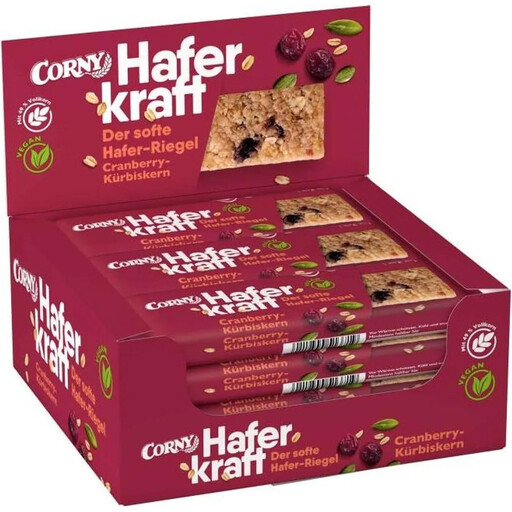
An option if everyone in the flat wants to stock up on several oat and cranberry bars of the same variety. The pack states that it contains 12 bars, each weighing 50 g; before sharing, check in particular for information about gluten-containing oats and possible allergen traces.
 No image available
For a flat that wants to share out lots of bars of the same variety. The pack states that it contains 24 cereal bars, each weighing 40 g; check the ingredients and allergen information for gluten-containing cereals and milk when choosing.
 No image available
An oat and cocoa bar to keep in the cupboard for several snack breaks. The pack states that it contains 12 bars, each weighing 50 g; check whether the bars are individually wrapped and read the allergen information on the specific pack.
 No image available
For a flat considering adding an oat and peanut bar to its selection. The pack states that it contains 12 bars, each weighing 50 g; check whether they’re individually wrapped, and read the information about peanuts, gluten-containing oats and possible traces before sharing them.
 No image available
A specific choice for flatmates who want a protein bar labelled vegan, rather than assuming everyone wants a protein bar. The pack states that it contains 12 bars, each weighing 55 g; check the protein content per bar and the information about peanuts, wheat and soya on the specific pack.
In particular, check the ingredients, highlighted allergens, nutrition information and best-before date on the specific pack. The European Commission lists these as relevant mandatory information for prepacked foods in the EU; if you have a mixed variety pack, check every variety it contains.
Not just because it’s labelled vegan. Check the ingredients, highlighted allergens and precautionary allergen warnings for the specific bar; “vegan” doesn’t mean “gluten-free” or “nut-free”.
Start by comparing the nutrition information per 100 g, then take the size of each individual bar into account. The Verbraucherzentrale notes that sweetening ingredients such as glucose syrup, fructose and fruit juice are also relevant when assessing the ingredients list.