When choosing a packaged bar for a street festival, compare fat and energy on the same basis: per 100 g and per bar you actually plan to eat. A high-protein claim or a small bar alone doesn’t mean it’s low in fat. Check the ingredients, allergens and serving guidance too before choosing a flavour.
Who should compare these bars?
Festival-goers keeping an eye on fat and energy
You want to compare a packaged bar with your usual snack. To do that, look at the nutritional values per 100 g and per portion you’ll actually eat, rather than relying on the claims on the front of the pack.
Festival-goers looking for a bar to eat on the go
You want something you can eat without preparing it during a longer festival visit, and you also consider protein or fibre when choosing. Fat content is a separate factor to check.
People with specific ingredient requirements
Information about milk, soya, cereals containing gluten, nuts, peanuts or sugar substitutes may be important to you. So check the label for the specific variety.
What should you look for when buying?
When comparing packaged bars, start with the nutritional values and portion size. Then check whether the ingredients and availability suit your festival plans.
| Criteria |
What to check when buying |
Who it matters to |
| Fat and energy |
Compare fat and energy per 100 g and per bar; if portions vary in size, don’t look only at the values per bar. |
If I’m planning to have a bar alongside other food, I want to know how its fat and energy content compares. This comparison is a priority for around 33% of consumers. |
| Portion size and eating on the go |
Check the bar’s weight, packaging and the protein or fibre information for the specific variety. |
For a longer festival visit, I’m looking for a bar I can eat without preparing it; protein or fibre may also influence my choice. This need comes first for around 33% of consumers. |
| Ingredients and dietary suitability |
Read the ingredients list, allergen and ‘may contain’ information, and any guidance about sugar substitutes on the pack. |
If certain ingredients aren’t suitable for me, the specific variety needs to meet my requirements. This is the top priority for around 20% of consumers. |
| Availability |
Check whether the variety you want is available at your chosen retailer; if it’s a promotional item, have another suitable option in mind. |
If I’m shopping just before the festival, I need a bar I can actually take with me. Around 14% of consumers put availability first. |
Common mistakes when choosing
-
Assuming “protein” means low in fat
Protein and fat are separate nutritional values. The High-Protein and Lower-Carb bars listed by ALDI SÜD have different fat contents, so the product name alone doesn’t tell you how they compare.
Compare fat and energy per 100 g and per bar before choosing a portion.
-
Reading only the claims on the front of the pack
Terms such as “Lower Carb” don’t tell you how much fat and energy a bar contains. The Verbraucherzentrale (German consumer advice centre) notes that “low carb” is not an expressly authorised nutrition claim.
Use the full nutritional information and ingredients list for the specific variety to help you choose.
-
Overlooking serving guidance for sugar substitutes
The German Federal Institute for Risk Assessment explains that excessive consumption of sugar alcohols can have a laxative effect. The ALDI SÜD bars described carry relevant warnings.
Follow the serving guidance on the pack, particularly if you’re planning to take several bars with you for the festival.
-
Counting on a particular variety being available
ALDI SÜD labels some bars as promotional items, while EDEKA notes that a product may not be available in every store.
Check the specific pack when you shop and, if necessary, choose another variety using the same nutritional and ingredient criteria.
Brands and related snack categories
ALDI SPORTS, REWE PWR and MAX BALANCE offer protein bars as alternatives to compare. The products considered here from BiFi and Knack & Back belong to other snack categories.
ALDI SPORTS
ALDI SÜD’s own brand, with High-Protein and Lower-Carb bars, including packs of three 45 g bars.
- The nutritional information provided by ALDI SÜD lets you compare specific varieties.
- “High Protein” and “Lower Carb” don’t mean the same fat content. Check the ingredients and serving guidance for your chosen variety too; some products may be promotional items.
REWE PWR
REWE’s own brand of protein bars; REWE introduced six bars when the range launched in September 2026.
- The 45 g bars have a stated individual portion size, making them easy to compare.
- The label on each bar will tell you whether that particular variety suits your preferred fat content and ingredient requirements.
MAX BALANCE
EDEKA brand of protein bars; the Stracciatella variety is a 45 g bar.
- For Stracciatella, EDEKA lists 9.7 g of fat and 50 g of protein per 100 g – figures for comparing this specific variety.
- According to EDEKA, this variety contains milk and soya, as well as sweeteners; check the pack for further ‘may contain’ information. It may not be available in every store.
BiFi
The BiFi Original variety described by REWE is a salami stick, not a protein, muesli or cereal bar.
- An option if you’re specifically looking for a savoury meat snack rather than a bar.
- BiFi Original isn’t a comparable bar if you’re comparing reduced-fat snack bars; check the nutritional values on the specific pack separately.
Knack & Back
A brand of fresh dough and bake-at-home products, including snack recipes, rather than ready-packaged snack bars.
- Could be useful if you’re making your own snack before the festival.
- These products need to be prepared, so they aren’t directly comparable with ready-packaged bars on nutritional values.
Savoury bars on Joybuy
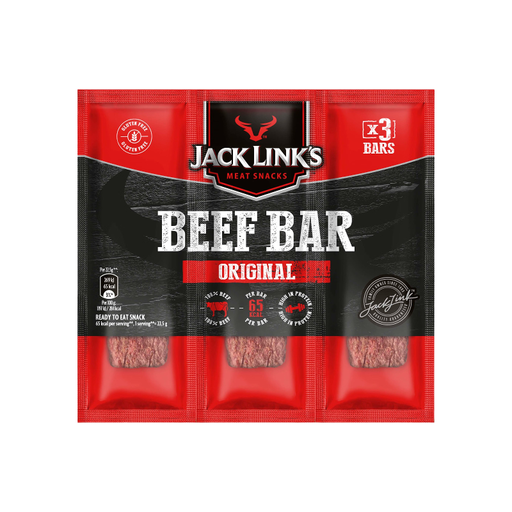
This beef bar is a savoury option in bar form. If you’re specifically looking for a lower-fat snack, compare the information on its pack with your other options; the bar shape alone doesn’t tell you how it measures up.
 No image available
Jack Link's Original Beef Protein Bars, 3 × 22.5 g
An option if you fancy a savoury beef bar rather than a sweet bar at the festival. The pack contains three 22.5 g bars; check the fat, energy, salt and ingredients on the specific pack before comparing it with other snacks.
View on Joybuy
Frequently asked questions
Is a High-Protein bar automatically low in fat?
No. Protein content alone doesn’t tell you how much fat a bar contains. ALDI SÜD lists different fat contents for the High-Protein and Lower-Carb varieties described, so compare the nutritional information for the specific bars using the same basis.
Is “no added sugar” enough to help me choose a bar?
No, this claim doesn’t tell you how much fat or energy a bar contains. Check the nutritional information and ingredients list as well, and factor the portion you’ll actually eat into your comparison.
What should I look out for in bars with sugar substitutes?
Check the ingredients list and serving guidance on the specific pack. The German Federal Institute for Risk Assessment says excessive consumption of sugar alcohols can have a laxative effect; the ALDI SÜD bars described also carry a relevant warning.
Does “low carb” mean a bar is low in fat?
No, the term doesn’t tell you how much fat a bar contains. The Verbraucherzentrale (German consumer advice centre) also notes that “low carb” is not an expressly authorised nutrition claim. To compare bars, check the fat and energy information on the specific pack.


