When choosing a snack bar for the evening, first compare the energy per 100 g, then calculate it for the amount you actually want to eat. Protein figures or claims such as “Lower Carb” won’t tell you how much energy is in your portion, and a bar isn’t automatically a substitute for dinner. You should also consider the pack size, ingredients and, where relevant, allergen information.
Who should take care when choosing?
Anyone keeping an eye on energy per portion
If you’re planning to have a bar as a small snack, the energy per 100 g makes it easier to compare different products. You’ll also need to check the weight of each bar to work out what’s in your portion. The German Federation for Food Law and Food Science explains that nutritional values per 100 g provide a common basis for comparison.
Students looking to tide themselves over until their next meal
If there’s a while to go until your next meal, portion size, protein and fibre may all influence your choice. But these details alone can’t tell you whether a single bar is right for dinner: the German Federation for Food Law and Food Science points out that energy and nutrient needs vary from person to person.
Anyone who needs to avoid certain ingredients
If allergens or sweeteners are a deciding factor for you, check the ingredients and information on the current packaging. The German Federal Institute for Risk Assessment highlights how important allergen labelling is for people with food allergies; a product photo isn’t a substitute for the information on the pack.
What should you look for when buying?
If you’re having a bar as an evening snack, it’s best to decide on your portion first, then check the nutritional values, pack contents and ingredients.
| Criterion |
What to check |
Who is it important for? |
| Energy per portion |
For similar bars, compare the kcal per 100 g, then check the weight and energy content of the bar you’d eat. |
If I only want a small snack, the energy in the amount I actually eat is what matters to me. This is the top priority for around 36% of consumers. |
| Nutritional profile |
Look at protein and fibre alongside the other nutritional values; don’t judge a bar by its name alone. |
If my snack needs to tide me over until my next meal, I want to consider more than just a low kcal figure. Around 29% of consumers give this need priority. |
| Pack contents |
Check the total weight, as well as the number and weight of the individual bars. |
If I’m planning snacks for several evenings, I need to know how many portions are in the pack. This kind of planning is a priority for around 21% of consumers. |
| Ingredients and allergens |
Check the current ingredients list, declared allergens and any ‘may contain’ warnings. If needed, check which sweeteners are used too. |
If I need to avoid certain ingredients, checking them comes before my other selection criteria. It’s the main concern for around 14% of consumers. |
Common comparison mistakes
-
Assuming “Lower Carb” tells you how much energy a bar contains
A claim about carbohydrates doesn’t tell you on its own how many kcal are in a bar. Different bar sizes can make comparisons even more misleading.
Compare the energy per 100 g, then check the amount you actually want to eat.
-
Confusing “no added sugar” with calorie-free
Lebensmittelklarheit explains that polyols provide energy. So “no added sugar” doesn’t tell you which sweeteners are used or how much energy the bar contains.
Check the ingredients list and nutritional values on the current pack, including any guidance on consumption.
-
Comparing the number of bars without checking their weight
The number of bars in a multipack doesn’t tell you much about the size of each portion.
Check the total weight, number of bars and weight per bar together before planning portions for several days.
-
Checking allergen information using only the product photo
EDEKA says that its EDEKA Bio Sesame Crunch Bar contains sesame; the product information also states that it may contain traces of peanuts and tree nuts. This information matters when choosing the specific product.
Before eating it, check the ingredients and information on the current pack rather than relying on an older image.
Brands to help you choose
ALDI SPORTS
ALDI SÜD offers various protein bars under the ALDI SPORTS brand, including options labelled High Protein and Lower Carb.
- The product information for the options covered here includes nutritional values and pack sizes, making them easier to compare.
- ALDI SÜD notes that nutritional values may vary depending on the supplier. Always check the current pack when making your choice.
EDEKA Bio
The EDEKA Bio Sesame Crunch Bar is an option if a sesame bar matters more to you than choosing one with the lowest declared energy value.
- EDEKA lists 53% roasted sesame in the ingredients for this product.
- EDEKA states that it contains 531 kcal per 100 g. The bar contains sesame and, according to the product information, may contain traces of peanuts and tree nuts.
GUT&GÜNSTIG
EDEKA describes this own-brand chocolate biscuit bar as a pack of nine individually wrapped bars, with a total weight of 300 g.
- The number of bars and total weight help you plan your portions.
- If you’re choosing based on energy per portion, check the nutritional information on the specific pack.
Bars and snacks on Joybuy
This selection includes cereal bars, another packaged bar and a savoury beef snack. When planning your evening snack, compare the portion size and information on each pack; these products aren’t all the same type.
 Image unavailable
Corny Free Chocolate No Added Sugar cereal bars, 6 × 20 g
The individually sized 20 g portion could suit you if you want to decide how much to have as a small snack in advance. To compare energy, check the nutritional values per 100 g and per bar on the pack.
View product on Joybuy
 Image unavailable
Frankonia Sugar Free Nutrition Bar Chocolate Brownie, 50 g
If you’re considering a single 50 g bar, make sure you take the whole portion into account. Check the ingredients and other nutritional values on the pack as well as the energy content, rather than relying on the product name alone.
View product on Joybuy
 Image unavailable
Corny Free White Chocolate No Added Sugar cereal bars, 6 × 20 g
Six individually sized 20 g bars make it easier to decide how much you’re planning to snack on. To compare them with other bars, check the energy and ingredients on the current pack.
View product on Joybuy
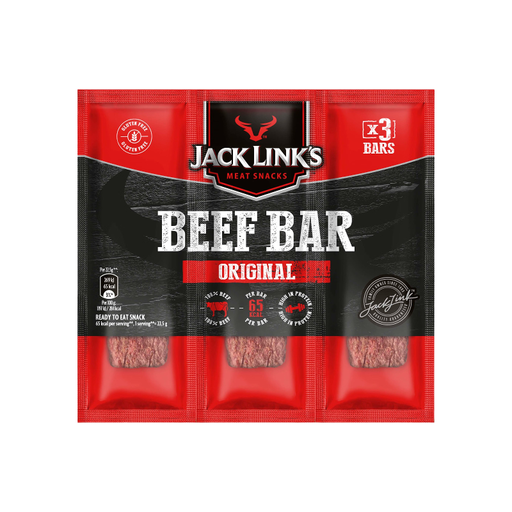 Image unavailable
Jack Link's Original Beef Protein Bars, 3 × 22,5 g
These beef bars could be a good option if you’re looking for a savoury snack rather than a cereal bar. Compare the 22.5 g portion using the current nutritional information and read the ingredients list; it’s a different type of product from sweet bars.
View product on Joybuy
Frequently asked questions
How do I compare snack bars of different sizes?
For similar bars, start by using the nutritional values per 100 g as a common basis, then check the weight and energy content of your actual portion. The German Federation for Food Law and Food Science explains that values per 100 g are the basis for nutritional labelling; a smaller bar doesn’t necessarily have a lower energy density.
Does “no added sugar” also mean calorie-free?
No. This claim doesn’t mean that a portion is calorie-free. Lebensmittelklarheit points out that polyols can provide energy, so check the ingredients list and nutritional values for the specific bar.
Can I have a bar instead of dinner?
A bar isn’t automatically a suitable replacement for dinner. The German Federation for Food Law and Food Science explains that energy and nutrient needs vary from person to person, so don’t decide what to have for your meal based solely on the kcal in a snack.
What should I check if I have a food allergy?
Read the ingredients and allergen information on the current pack of the specific bar. The German Federal Institute for Risk Assessment highlights the importance of allergens for people with allergies; don’t rely on product names or pictures alone when choosing.
Is the Nutri-Score enough to help me choose a bar?
No. The Nutri-Score doesn’t replace the ingredients list, nutritional values or a check of the portion size. The Verbraucherzentrale recommends using it only to compare foods within the same product group.


