Travellers keeping to a set calorie allowance
You want to plan a portioned snack for your journey. The bar’s weight and kcal per bar you’ll actually eat matter more than a prominent claim on the front of the pack.


If you’re looking for a snack bar with a set energy limit for your train journey, start by comparing the kcal per bar and the size of the portion you actually plan to eat. Low sugar or high protein alone won’t answer that question; ingredients, allergens and information about sugar alcohols may also affect your choice.
You want to plan a portioned snack for your journey. The bar’s weight and kcal per bar you’ll actually eat matter more than a prominent claim on the front of the pack.
You want to compare the protein in a handy bar without losing sight of the energy per serving. Check the grams of protein and kcal for the same bar.
If you react to certain ingredients or need to avoid allergens, check the details on the specific pack before you travel. For the bars covered here, milk, soya, almonds and sugar alcohols are among the ingredients to look out for.
Start with the energy in the portion you plan to eat. Then compare protein, ingredients and pack information according to what matters most for your journey.
| Criterion | What to check | Who it matters to |
|---|---|---|
| Energy per bar | Check the serving weight and the kcal per bar and per 100 g. | If I only want a small snack that fits my daily allowance, the energy in the portion I’ll actually eat is what counts. Around 36% of consumers put this need first. |
| Protein per serving | Compare the grams of protein per bar and the kcal in the same serving. | On a long journey, I want to know how much protein I’m getting, even if the bar isn’t the lowest in energy per serving. For around 29% of consumers, protein is their main reason for buying. |
| Ingredients and suitability | Read the ingredients, allergen information and details about polyols on the pack. | If I need to avoid certain ingredients or am sensitive to sugar alcohols, the pack labelling takes priority over the calorie count. This is the most important criterion for around 21% of consumers. |
| Availability and packaging | Check which variety is available and its current nutrition information; have an alternative in mind if you’re buying a special offer. | Before an imminent departure, I need a bar I can actually get hold of and assess using its packaging. Around 14% of consumers put this practical consideration first. |
A low sugar figure doesn’t tell you how much energy the whole bar contains. The serving size and the rest of the recipe also affect the figure.
Start by comparing the kcal per bar and per 100 g. Then look at sugar, protein and ingredients in light of your other priorities.
The Verbraucherzentrale notes that sugar substitutes can have a laxative effect in larger quantities. Some of the protein bars covered here carry a warning about this on the product page.
Look for “polyols” in the nutrition information and read the warning on the pack, especially if you’re sensitive to these ingredients.
A percentage and a figure in grams don’t mean the same thing. In its 2025 market review, Verbraucherzentrale NRW highlighted how protein content can be presented in different ways on snacks.
Compare the grams of protein per bar you eat with its serving weight and energy information.
ALDI SÜD notes that its High-Protein bar may vary between suppliers; one documented Lower-Carb bar was marked as a special offer.
Check the nutrition information and ingredients on the pack you’re buying, and plan to take another suitable variety for an important journey.
The product lines covered here include Lower-Carb and High-Protein bars in 45 g portions.
The Chocolate-Caramel protein bar covered here lets you compare protein, sugar and energy per 40 g serving.
The Dark Chocolate Salted Almond covered here is a protein bar whose protein content and energy can be assessed separately.
REWE introduced its own-brand range in September 2026, with several protein bars.
This selection includes portion-sized snack bars in a range of sizes for eating on the go. Check the energy information on each pack to decide which bar suits the portion you’re planning for your train journey.
 Image unavailable
This individually portioned bar could be a good choice if you’re planning a snack for your journey and want to compare its energy per 50 g serving with other bars using the information on the pack.
Also check the ingredients and information about polyols if these are important to your choice.
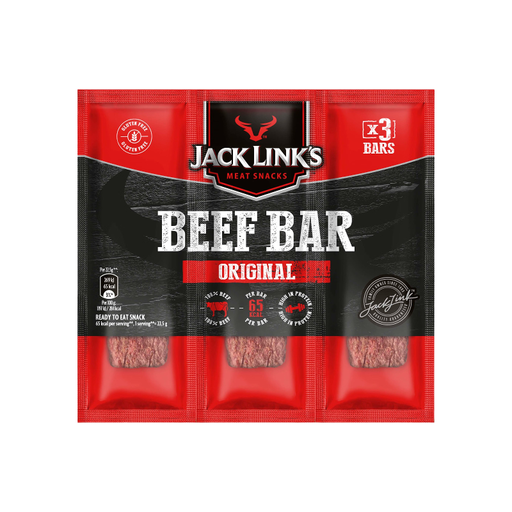 Image unavailable
The pack contains three 22.5 g bars, making it handy if you want a small, individually portioned snack to take with you.
When comparing calories per snack, check the energy information for a single bar, not just the figure per 100 g.
 Image unavailable
This multipack contains twelve 45 g bars, making it a handy option if you’re planning portioned snacks for several journeys.
Compare the energy per 45 g bar on the pack. Also check the ingredients and allergen information, along with any details about polyols.
No. The sugar figure alone doesn’t tell you how many kcal a bar contains. Compare the energy per portion you’ll actually eat and per 100 g to account for bars of different sizes.
The figure in grams per bar is useful when comparing the portion you’ll eat. Verbraucherzentrale NRW points out that percentages and gram figures can be confused on protein snacks; also check the kcal and ingredients for the same portion.
As Verbraucherzentrale explains, sugar alcohols can have a laxative effect if eaten in larger quantities. If a bar contains them, read the information about polyols and the warnings on the pack, especially if you’re sensitive to them.
Use the ingredients and allergen information on the specific pack to guide your choice. The bars covered here include ingredients such as milk, soya and almonds; also check for possible traces on the variety you choose.
No, it doesn’t replace the nutrition information or ingredients list. If you mainly want to limit the energy in your snack, compare the kcal in the portion you’ll eat.