Shoppers focused on fat content
You compare fat figures per 100 g and would choose individual crisps over a snack mix if they have a lower figure. Energy content remains a separate consideration.


If fat content matters more to you than variety when you’re snacking at Christmas, compare oven-baked or protein crisps with snack mixes – but don’t treat crisps as a mix. If you’d like to serve several types of snacks together, check the fat and salt content and allergens on the specific pack of a genuine mix. Less fat doesn’t automatically mean fewer calories, as the North Rhine-Westphalia Consumer Advice Centre explains.
You compare fat figures per 100 g and would choose individual crisps over a snack mix if they have a lower figure. Energy content remains a separate consideration.
You want to serve several types of snacks together and weigh up variety against the mix’s fat and salt content and ingredients.
Before buying, you need to find out whether the pack you’ve chosen contains peanuts, cereals containing gluten, milk or sesame, for example.
A good choice if: One type of crisps is enough and you mainly want to compare fat content per 100 g.
The trade-off: These aren’t a snack mix. funny-frisch lists 9.2 g of fat and 405 kcal per 100 g for its Oven Chips Paprika; for Protein Chips Barbecue Style, the manufacturer lists 15 g of fat and 443 kcal per 100 g. These figures apply to the specific varieties named.
A good choice if: You want to offer several types of snacks in one pack for a group.
The trade-off: Fat isn’t the only factor – salt and allergens matter too. EDEKA lists 16.2 g of fat and 2.9 g of salt per 100 g for its GUT&GÜNSTIG Snack Mix. This doesn’t allow you to make a general claim about other mixes.
| Criteria | What to check before buying | Who it matters most to |
|---|---|---|
| Fat content | Compare fat and energy per 100 g; if a product claims to have “less fat”, check which product it’s being compared with. | If my main aim is to reduce fat, I need to consider whether crisps might be an option instead of a mix. Around 42% of consumers put fat content first. |
| Ingredients and allergens | Read the ingredients list and highlighted allergens on the actual pack you’re buying. | If you need to avoid certain ingredients, you’ll need to know exactly what each component contains before serving it to a group. Around 33% of consumers prioritise this check. |
| Choice for a group | Decide whether you need a genuine mix; for mixes, also check fat and salt per 100 g. | If one pack needs to cater for different tastes, variety may matter more than the lowest fat content. Around 25% of consumers put having a selection for everyone first. |
A comparatively lower fat content doesn’t automatically meet the criteria for a “low-fat” claim. According to the European Commission, solid foods in the EU must contain no more than 3 g of fat per 100 g to be labelled “low fat”. Less fat also doesn’t necessarily mean fewer calories, as the North Rhine-Westphalia Consumer Advice Centre explains.
Compare fat and energy per 100 g on the pack, and check what a claim such as “less fat” refers to.
Fat content alone tells you nothing about salt levels or ingredients. For example, EDEKA lists 16.2 g of fat and 2.9 g of salt per 100 g for its GUT&GÜNSTIG Snack Mix.
Check the fat, energy, salt and ingredients for the same pack, then decide which factor matters most for your occasion.
Out-of-date or different product information can lead you to make the wrong decision about ingredients and allergens. Lorenz warns that the recipe and labelling of Snack-Hits may change.
Just before buying, check the ingredients list, allergen information and nutrition details on the specific pack.
Its oven-baked and protein crisps are alternatives for anyone who doesn’t necessarily need a mix when snacking.
Snack-Hits is a mix designed for sharing several types of snacks.
The Snack Mix is a savoury snack mix whose nutritional values can be compared with other mixes per 100 g.
The ja! Knabberbox gives you another option to compare among classic savoury snack mixes.
The GeNuss mixes combine nuts and dried fruit, so they’re not the same type of product as a savoury snack mix.
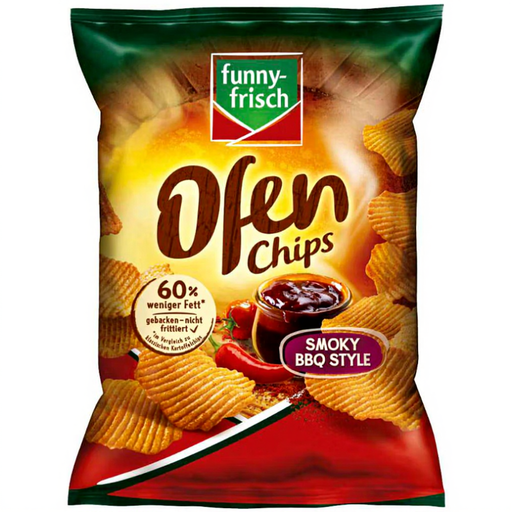
This selection features oven-baked crisps for when one type of crisps is enough instead of a snack mix. Check the nutrition information for the specific variety on the pack before choosing it for its fat content.
 No image available
For shoppers who are happy with individual oven-baked crisps instead of a varied snack selection.
The pack size is 115 g, according to the product name. Check the fat, energy, ingredients and allergens on the pack for this variety; figures for Oven Chips Paprika without the Smoky BBQ description can’t automatically be applied to it.
No. “Less fat” refers to a comparison, whereas according to the European Commission, solid foods in the EU must contain no more than 3 g of fat per 100 g to be labelled “low fat”. The specific fat content and the product being compared with are therefore more important than how similar the claims sound.
No. The North Rhine-Westphalia Consumer Advice Centre points out that a lower fat content doesn’t automatically mean a correspondingly lower calorie content. Compare energy and fat per 100 g for the specific varieties.
First, check the ingredients and highlighted allergens on the specific pack. The Lorenz and EDEKA mixes described here contain peanuts, cereals containing gluten, milk or sesame, among other things; exactly which ones are present depends on the product.
Follow the storage instructions on the specific pack. For Nordthy Hot Snack Mix, REWE recommends storing it in a dry place, not too warm and out of direct sunlight; don’t assume this guidance applies to every other mix.