Large packs of whole nuts or seeds, along with salty snack mixes, are not a suitable choice for a toddler’s regular snack time. First, check that the ingredients and piece size are appropriate for your child’s age. For snacks served regularly, the nutrition information and recommended portion matter more than the size of the multipack.
Who is this selection for?
Parents who pay attention to piece size
If you’re looking for a snack your child can eat independently, it’s important to distinguish whole nuts, peanuts and seeds from age-appropriate forms. Kindergesundheit-info.de warns that whole nuts pose a choking risk to toddlers.
Families planning to buy larger packs
If you need snacks regularly, stocking up can be practical. But a larger pack of salty snack mixes doesn’t make them a suitable everyday snack. The North Rhine-Westphalia Consumer Advice Centre recommends offering children this type of snack only in very small amounts.
Parents looking for a snack between meals
If you’re planning a morning or afternoon snack, you’ll want more than something crunchy. The Hesse Consumer Advice Centre lists fruit, vegetables and wholegrains among the building blocks of children’s snacks.
What should you look for when buying?
When choosing a snack for a toddler, check the ingredients and piece size first, followed by the nutrition information and intended use. Once you’ve found a suitable product, pack size is a useful next point of comparison.
| Criterion |
What to check |
Who should pay particular attention |
| Whole nuts and seeds |
Check the ingredients and piece size. Don’t choose mixes containing whole nuts, peanuts or seeds as snacks for toddlers to eat independently. |
If my toddler will be helping themselves, I want to rule out solid pieces of nuts and seeds. This safety concern comes first for around 46% of consumers. |
| Regular snack time |
Check the salt and sugar figures in the nutrition information per 100 g and for the planned portion. Consider whether a crunchy snack mix is really the kind of between-meal snack you’re looking for. |
For an everyday afternoon snack, I don’t want to simply offer a large bag of salty nibbles. Around 36% of consumers put suitability as a regular snack first. |
| Pack size and portions |
Compare the pack contents with the portions you actually plan to serve, and store opened products according to the pack instructions. |
If I’m shopping for several snack times, I want to be able to portion the food appropriately. Planning ahead is the main concern for around 18% of consumers. |
Which common mistakes can you avoid?
-
Assuming unsalted means suitable for toddlers
An unsalted nut mix may still contain whole nuts. Kindergesundheit-info.de warns against giving toddlers whole nuts, and similar warnings appear on nut mixes listed by REWE.
Don’t choose a mix containing whole nuts or seeds for toddlers to eat independently. If you offer nuts, make sure they’re prepared in a form suitable for children.
-
Judging a large pack before checking what’s inside
A large bag may contain many portions of salty snacks. EDEKA lists 2.9 g of salt per 100 g for its GUT&GÜNSTIG Snack Mix; the GUT&GÜNSTIG Salt Pretzels are a different product, with 4.4 g per 100 g.
For the specific mix you’re considering, check the ingredients, nutrition information and recommended portion first. Don’t plan to serve salty snacks regularly between meals.
-
Guessing the nutrition information from the packaging
Child-friendly packaging or a prominent claim about a particular ingredient is no substitute for the nutrition information. When choosing a snack, check what the pack says about the product’s ingredients and nutritional values as a whole.
Read the ingredients list and compare the figures per 100 g with the portion your child would actually eat.
Brands and ranges to help you choose
The ranges mentioned here can help you distinguish between different types of product. A brand name or large pack size alone tells you nothing about whether a particular mix is suitable for toddlers.
Lorenz
Lorenz also sells NicNac's in larger pack sizes.
- A larger pack may be useful for a separately planned snack for older members of the household.
- According to Lorenz, NicNac's Original contains 51% peanuts and wheat. These coated peanuts are not suitable for toddlers to eat independently.
funny-frisch
According to funny-frisch, the range includes crisps, crackers and pretzel sticks, among other things.
- Each type of product can be assessed separately by checking its ingredients and nutrition information.
- A wide range doesn’t mean a product is suitable for toddlers. Kindergesundheit-info.de advises against crisps and similar salty snacks for children, or recommends offering them only occasionally and in small amounts.
REWE
REWE lists both salted and unsalted nut mixes.
- The ingredients lists for individual products let you check which types of nuts they contain.
- An unsalted mix may still contain whole nuts. REWE includes warnings on relevant products about the risk of children choking.
EDEKA
The GUT&GÜNSTIG range includes snack mixes and savoury baked snacks in different pack sizes.
- EDEKA provides pack sizes and nutrition information for individual products.
- According to EDEKA, the 300 g GUT&GÜNSTIG Snack Mix contains 2.9 g of salt per 100 g. A larger pack doesn’t make salty snacks suitable as a regular snack for toddlers.
Lidl / Alesto
According to Lidl, Alesto includes both natural nuts and dried fruit, as well as seasoned party snacks.
- You can choose between the different types of product by checking their ingredients and how they’re prepared.
- Whole natural nuts are not suitable for toddlers to eat independently because of their firm texture.
ALDI SÜD
ALDI SÜD sells snack and nut mixes; availability of special-buy products may vary by store.
- If you’re planning a shopping trip, you can check availability at a specific store where this service is offered.
- Snack mix isn’t one specific type of product: a dish described as a pan meal isn’t a crunchy snack mix. Check the ingredients and piece size of nut mixes separately.
Portioned alternatives at Joybuy
These multipacks contain fruit purée, fruit and quark portions, or snack bars. They are not snack mixes. Compare the age recommendation, portion size and labelling of each product with how you plan to use it.
 No image available
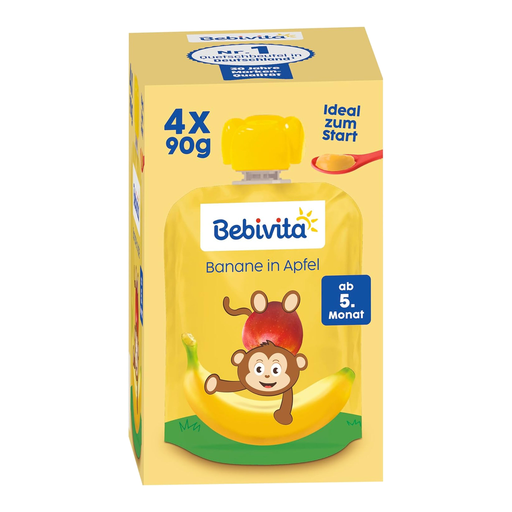
Bebivita Banana in Apple Fruit Purée Pouch, 4 × 90 g
A portioned fruit purée option for snack time from one year, but not a substitute for a varied snack.
Four pouches, 90 g each. Follow the storage instructions for opened pouches.
View at Joybuy
 No image available
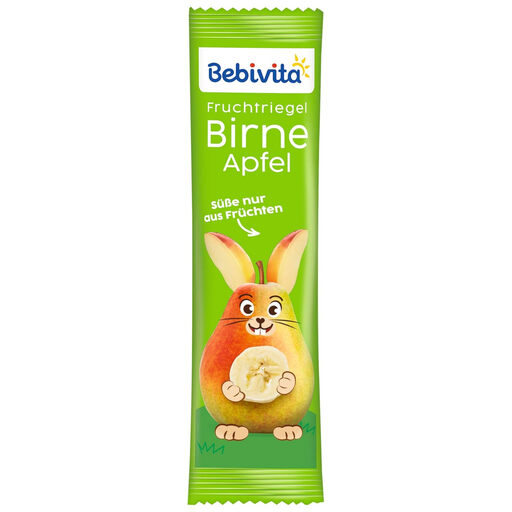
Bebivita Apple and Pear Fruit Bars, 1–3 years, 20 × 25 g
An individually portioned fruit bar for snack time at the stated age, not a snack mix.
The pack contains 20 bars, 25 g each. Check the sugar content and allergen information on the current pack before planning to serve them regularly.
View at Joybuy
 No image available
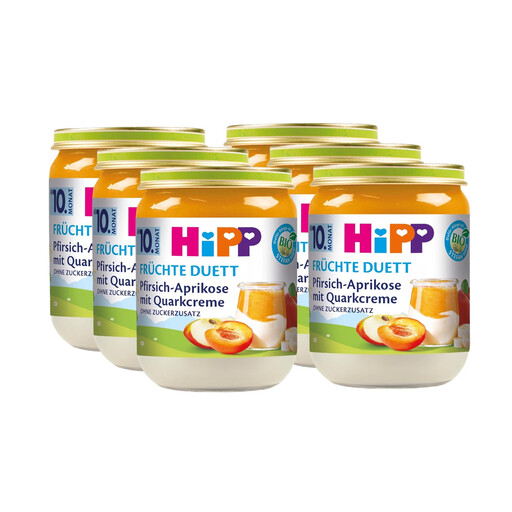
HiPP Fruit Duo Peach and Apricot with Quark, from 10 months, 6 × 160 g
A fruit and quark portion for snack time from the stated age, instead of a dry crunchy snack mix.
Six jars, 160 g each. Opened jars must be refrigerated and used within one day.
View at Joybuy
 No image available
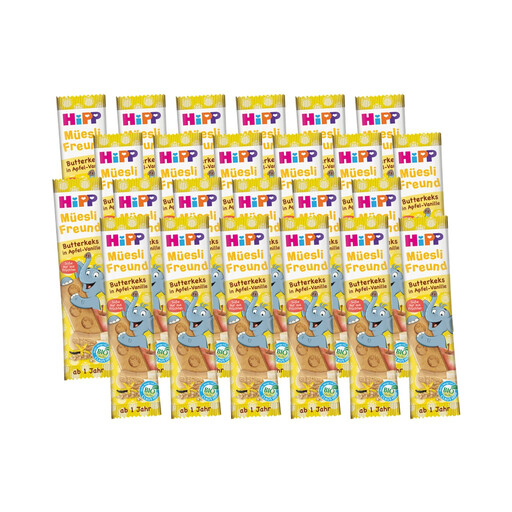
HiPP Organic Muesli Bars with Butter Biscuit, Apple and Vanilla, from 12 months, 24 × 20 g
A portioned muesli bar for snack time from the stated age, not a crunchy snack mix.
The pack contains 24 bars, 20 g each. Supervise your child while they’re eating; don’t give them the bar while they’re lying down or walking. Check the sugar content and allergen information on the current pack.
View at Joybuy
Frequently asked questions
Can my toddler eat a snack mix containing whole nuts?
Whole nuts, peanuts and seeds are not suitable as snacks for toddlers to eat independently. Kindergesundheit-info.de warns of the risk of choking and suggests child-friendly forms of nuts, such as smooth nut butter, as an alternative.
Are salty snack mixes suitable for every day?
Salty snack mixes should not be a daily snack for toddlers. The North Rhine-Westphalia Consumer Advice Centre recommends offering children salty snacks only in very small amounts, while kindergesundheit-info.de recommends serving crunchy snacks only occasionally.
How do I check for allergens in a snack mix?
Carefully read the ingredients list and allergen information on the exact pack you intend to use. Depending on the mix, it may contain peanuts, wheat, sesame or milk ingredients, for example. Information for another product from the same brand doesn’t automatically apply to this variety.
Does a large pack make an unsuitable mix suitable?
No. Pack size doesn’t change the size of whole nuts or the ingredients in a salty snack mix. First check whether the specific product is right for the planned snack time, then work out how many portions you need.


