People sharing snacks during breaks
For the office, home or a get-together, having enough suitable portions matters. If you also want to put bars in lunchboxes, check whether they are individually wrapped and how the pack should be stored.


For several coffee breaks, sharing or lunchboxes, choose a multipack based on the number of bars and the weight of each one. Check whether the bars are individually wrapped if you need them to be. Then compare the nutritional information, ingredients and allergens for the specific variety: ‘no added sugar’ does not mean sugar-free, and an organic label tells you nothing about the sugar content.
A multipack is especially handy when you need several portions. How well it suits a coffee break depends on the weight of each bar, its recipe and, where relevant, whether each bar is individually wrapped.
For the office, home or a get-together, having enough suitable portions matters. If you also want to put bars in lunchboxes, check whether they are individually wrapped and how the pack should be stored.
If you need to avoid peanuts, tree nuts, milk, soya or cereals containing gluten, check the ingredients and allergen information for the exact variety. The recipe for another version from the same brand is no substitute.
If you want to compare sugar or protein, check the information per 100 g and the amount in each bar. Only by considering these alongside the ingredients and portion size can you decide which variety suits your planned break.
First, work out how many portions you actually need. Then you can check the specific variety and its nutritional information. The table groups shoppers’ reasons for buying according to their main priority.
| What to consider | What to look for | Who it matters most to |
|---|---|---|
| Portions to share | Compare the number of bars and the grams per bar; if they’re for lunchboxes, check whether they’re individually wrapped too. | If I’m planning snacks for several breaks or people, I want to know how many suitable portions are in the pack. Around 31% of shoppers put this need first. |
| Ingredients and allergens | Read the ingredients list and highlighted allergens for the specific variety; check precautionary ‘may contain’ statements too, if relevant. | If I need to avoid certain ingredients, the exact recipe determines whether a bar is suitable for me. Around 31% of shoppers make this their top priority. |
| Sugar and nutritional values | Compare ‘of which sugars’ per 100 g and for the weight of one bar; check the ingredients list as well. | If I choose my break-time snack based on its nutritional profile, a claim on the front of the pack isn’t enough. Around 25% of shoppers prioritise sugar and nutritional values. |
| Protein content | Consider the protein per 100 g and per bar alongside the pack size, ingredients and allergens. | For a protein-focused break, I want to know the actual amount in each bar and check that I can eat its ingredients. Around 13% of shoppers put this need first. |
The terms muesli bar, cereal bar and protein bar don’t describe the same recipe. Portion weights and ingredients can also vary within each category. The figures per 100 g are useful for comparing packs, while the amount per bar also matters for your planned coffee break.
Multipacks can contain different numbers of bars, and the bars can vary in weight. A pack isn’t automatically better just because its total price is lower.
Compare the unit price per kilogram, the number of bars and the weight of each one. Also consider how many portions you’ll need for coffee breaks or lunchboxes.
An organic bar containing fruit can still contain sugar. EDEKA24 lists 23 g of sugar per 100 g for the Alnatura Organic Muesli Bar Maple & Date.
Check ‘of which sugars’ in the nutritional information and work out how that figure relates to the weight of one bar. Also check which sweetening ingredients it contains.
Recipes vary between bars from the same brand too. The ingredients and possible traces listed for one variety don’t automatically apply to another.
For each specific variety, read the ingredients list, highlighted allergens and any ‘may contain’ statement, especially if you need to avoid peanuts, tree nuts, milk, soya or cereals containing gluten.
A low sugar value doesn’t tell you what other ingredients the bar contains. The Corny Nuts & Protein Chocolate sold by EDEKA24, for example, contains peanuts and soya ingredients.
Compare protein and sugar alongside the ingredients, sweeteners and allergens. Also check that the number of bars and their weight suit your needs for breaks.
The examples below cover different multipack formats and recipes. The information applies to the specific products named, not to every bar from each brand.
CORNY offers muesli bars and other varieties in a range of pack sizes.
The Organic Muesli Bar Maple & Date is an oat and fruit variety sold in a multipack.
The Peanut Sweet & Salty Muesli Bar sold by REWE comes in a pack of eight small bars.
ALDI SÜD sells a peanut muesli bar under its own brand in a pack of eight portions.
This selection includes muesli bars, cereal bars and organic muesli bars in packs of six or eight. Choose according to the variety and portion size you want; if you plan to take or share the bars individually, check the wrapping details for each product.
 No image available
A handy option for coffee breaks when you want smaller portions and a bar labelled ‘no added sugar’. This doesn’t mean it’s sugar-free, so compare the sugar value in the nutritional information. Check the wrapping if you want to share the bars individually.
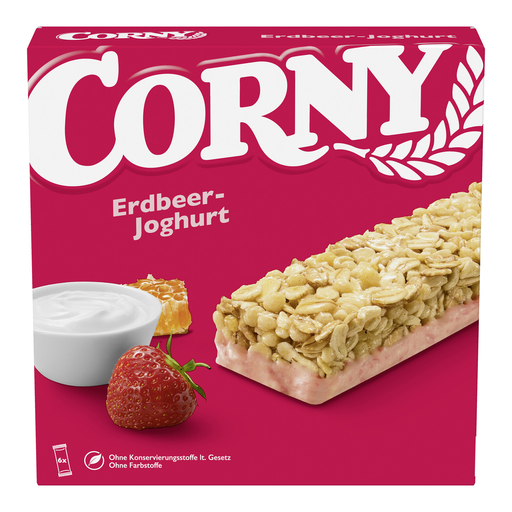 No image available
Six portions for several breaks or to share. Before planning to serve this strawberry and yoghurt variety to others, check its nutritional information, ingredients and allergen labelling.
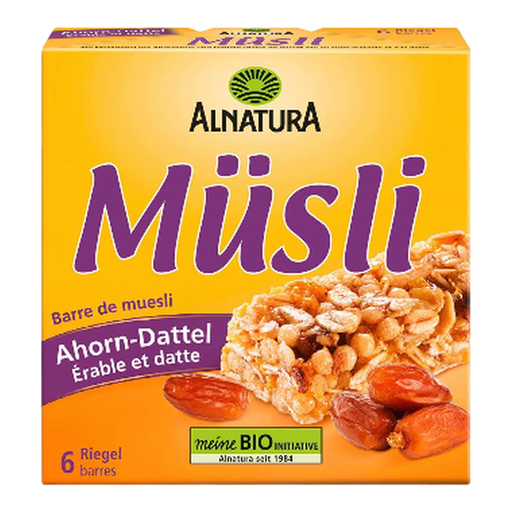 No image available
An oat and fruit variety in six portions. EDEKA24 lists 23 g of sugar per 100 g for the Maple & Date bar, so the organic label doesn’t replace checking the nutritional information. If relevant, check for cereals containing gluten and other allergen information too.
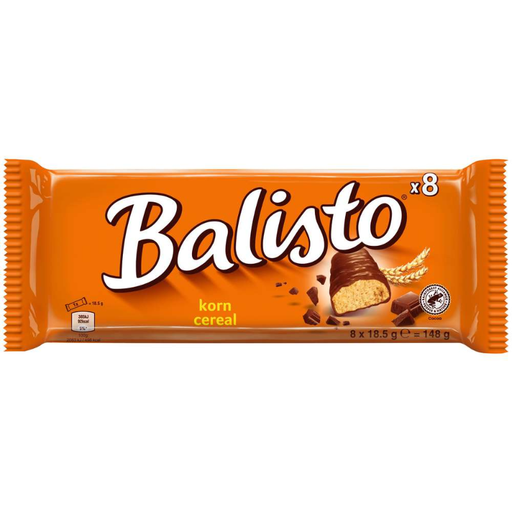 No image available
Eight small bars can see you through several coffee breaks. This cereal bar isn’t the same as a muesli bar, so check its nutritional information and ingredients separately. If you want to put the bars in lunchboxes individually, check how each one is wrapped.
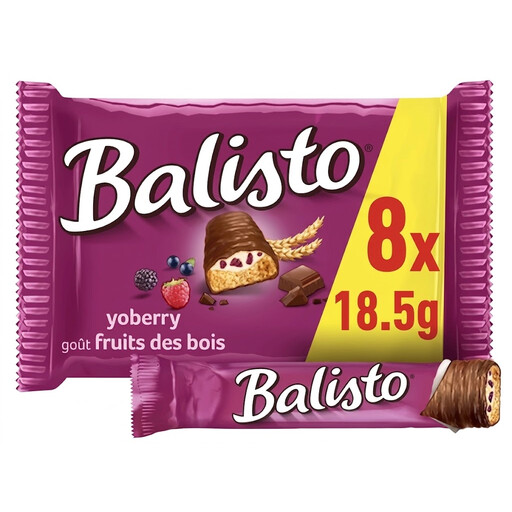 No image available
The forest berry variety gives you eight small portions for breaks. When comparing it with other varieties, look at the nutritional information for the specific pack rather than relying on the fruit description alone. Before sharing, check the ingredients and allergens, and whether the bars are individually wrapped if needed.
Read the ingredients list for the specific variety: allergens that must be declared and have been deliberately added should be highlighted there. Lebensmittelklarheit includes cereals containing gluten, peanuts, soya, milk and tree nuts among the examples. If relevant, also check ‘may contain’ statements about possible accidental traces.
No. ‘No added sugar’ and ‘sugar-free’ mean different things. As Verbraucherzentrale explains, a product with no added sugar can still contain sugar from its ingredients. So compare ‘of which sugars’ per 100 g and the weight of each bar.
Compare the number of bars, total weight and grams per bar, rather than just the number on the pack. For example, the Alnatura variety sold by EDEKA24 contains 6 × 25 g, while REWE lists the ja! Peanut Bar mentioned as 8 × 25 g. What matters for your break is how many portions you need in the right size.
Follow the storage instructions on the specific pack and check the best-before date. If you want to pack the bars individually in lunchboxes or share them over several days, check whether each one is wrapped separately too.