
Lieferung heute & morgen

Qualitätsgarantie

Willkommens-Angebote freischalten: KOSTENLOSE Lieferung | Bis zu 80 % RABATT | Kostenlose 30-Tage-JoyPlus-Testphase
App herunterladen
For enthusiasts and collectors, sneakers are more than just footwear—they are valuable assets and an expression of personal identity. Proper storage is therefore essential to protect them from dust, yellowing, and damage. However, the market for sneaker boxes is overwhelming, and many products fail to deliver on their promises. This guide will help you avoid common purchasing pitfalls and find a solution that optimally protects your collection and presents it in style.
Before you invest, you should be aware of the typical flaws in cheaper models that often only become apparent after a few months and can diminish the value of your shoes.
To avoid these problems, you should check three key features before buying. These define the quality and longevity of a shoe organizer.
The choice of plastic is crucial. Look for boxes made of robust hard plastic (like ABS for the frame and clear polystyrene for the doors) instead of soft, milky polypropylene (PP). High-quality materials offer better stability and a crystal-clear view of your collection, similar to a sneaker display case. A good transparent shoe storage solution also means the material should be UV-stabilized to slow down the oxidation process.
A reliable system for shoe storage boxes must be securely stackable. Look for models with integrated locking mechanisms or deep grooves that prevent the boxes from shifting. This is the foundation for building a stable shoe wall. A magnetic shoe box with a front-drop door also offers the advantage of accessing any shoe without having to dismantle the stack.
Measure your largest shoes (length, width, and height) and compare these measurements with the internal dimensions of the boxes. For collectors of basketball shoes or boots, XL shoe boxes are often the only viable option. Also, look for small ventilation holes on the back. These prevent the build-up of moisture and odours without allowing dust to enter.
Based on these objective criteria, we have identified several products suitable for different types of collectors and requirements.
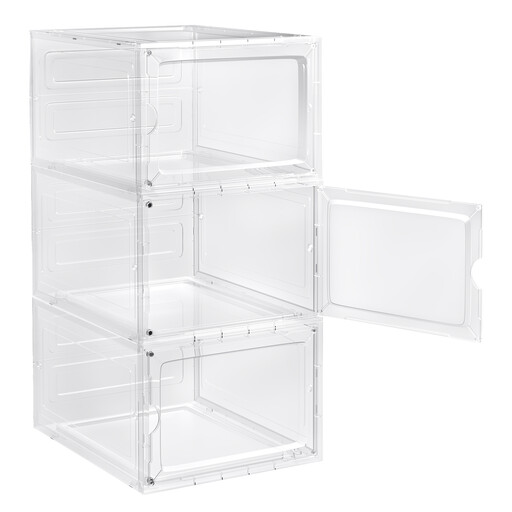
Why it's a good fit: This set is ideal for getting started. It allows you to build a small, organized system that can be flexibly expanded as your collection grows. The combination of vertical and side connection options offers design freedom.
The locking mechanism provides a more stable connection than loosely stacked boxes, counteracting the risk of an unstable shoe wall.
Made from hard plastic (ABS and PP) for a more robust frame. The magnetic front-drop door makes accessing shoes easy.
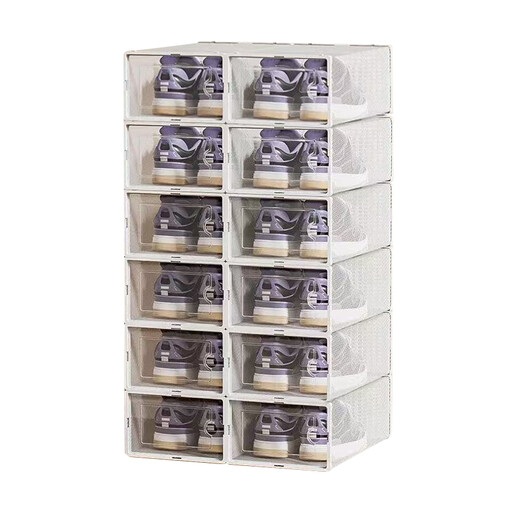
Why it's a good fit: This 12-pack is specifically designed for collectors with many high-tops or oversized shoes. The generous internal dimensions provide ample space without crushing the shoes, allowing for the construction of a large, uniform shoe wall.
The "Extra-Large" label directly addresses the problem of undersized boxes. The sturdy construction is designed for the weight of larger shoes and for building high stacks.
According to the manufacturer, the material is designed to protect against oxidation. The magnetic self-closing mechanism of the door ensures a clean look and easy handling.
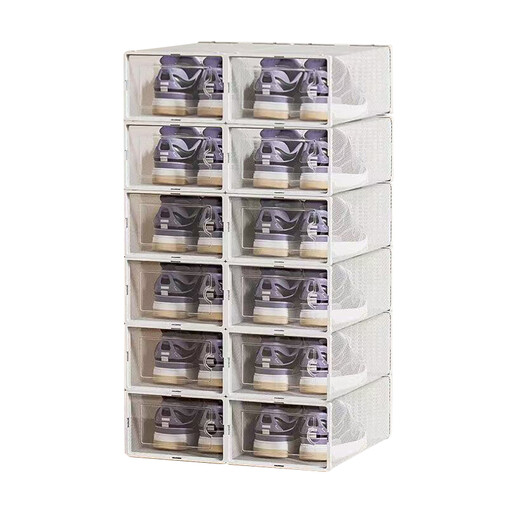
Why it's a good fit: For anyone who wants to create a complete and visually appealing sneaker display right away. The standard-size 12-pack is perfect for low- and mid-top sneakers and ensures a flawless, uniform appearance in any room.
The clear plastic material is designed for presentation and is more resistant to yellowing than simple PP boxes. The solid frame prevents the boxes from sagging.
The set allows for the immediate setup of a complete, organized shoe wall. The magnetic closure offers a premium feel and functionality.
We have compiled a comprehensive, up-to-date list of products that meet these strict selection criteria.
Use only a soft microfiber cloth and a mild soap solution for cleaning. Abrasive cleaners or rough sponges can cause fine scratches on clear plastic surfaces like polystyrene or acrylic, which will impair transparency.
Most high-quality boxes are not completely airtight. They feature small, strategically placed ventilation holes that allow for minimal air circulation. This is important to prevent the build-up of moisture and mould. A completely sealed environment is not recommended for long-term shoe storage, as materials need to "breathe."
The maximum load capacity depends heavily on the specific model and its construction. Look for products with a sturdy frame and a secure locking system. Manufacturer specifications often include recommendations for the maximum stacking height. As a rule of thumb, always place heavier shoes in the bottom boxes to ensure the stability of the entire structure.