
Lieferung heute & morgen

Qualitätsgarantie

Willkommens-Angebote freischalten: KOSTENLOSE Lieferung | Bis zu 80 % RABATT | Kostenlose 30-Tage-JoyPlus-Testphase
App herunterladen
A soap dispenser is more than just a container. It's a daily-use accessory that significantly influences the aesthetics and hygiene of your bathroom and kitchen. But the selection is vast, and not every model delivers on its promise. Many buyers get frustrated with leaky pumps, rusty surfaces, or hard-to-clean containers. Before you make a decision, you should know the typical weak points that can quickly turn an apparent bargain into a daily annoyance.
This guide will show you what really matters and how to avoid the three most common purchasing pitfalls to find a dispenser that is both functional and durable.
An attractive design alone is no guarantee of quality. Flaws often only reveal themselves after a few weeks of use. Pay special attention to these three points:
To avoid a bad buy, you should focus on the technical and material fundamentals. These three parameters are crucial for the longevity and functionality of your new soap dispenser.
The material determines not only the look but also the durability and maintenance required.
A good pump dispenser operates smoothly and dispenses precisely. The pump head should ideally be made of real stainless steel or high-quality, solid ABS plastic to prevent corrosion. A sufficiently long tube that reaches the bottom of the container ensures you can use up the contents completely. For special liquids like disinfectants, there are dedicated dispensers for sanitiser, which often feature a spray mechanism to ensure a finer mist.
Consider where and for what you want to use the dispenser. A single lotion dispenser on a nightstand has different requirements than a soap dispenser set in the bathroom, which might include a dispenser, a tumbler, and a soap dish for a cohesive look. In the kitchen, a set of two dispensers—one for hand soap, the other for washing-up liquid—can be very practical. Look for a sufficiently large opening for refilling and a stable base to prevent the dispenser from tipping over during use.
Here are some recommendations tailored to different needs and interior styles that meet the quality criteria mentioned.
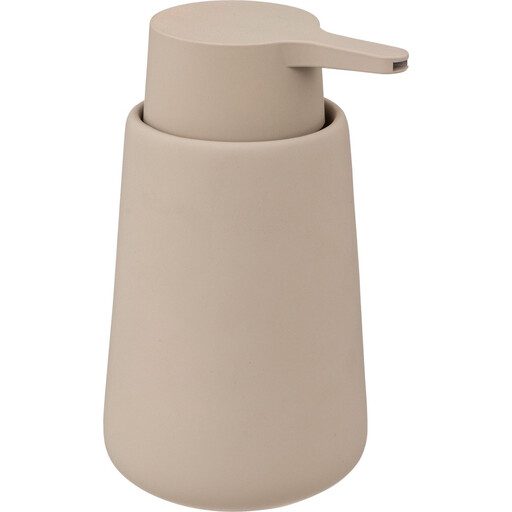
Why it's a great fit: Ideal for anyone looking for a stylish and functional solution without a big budget. The compact design fits perfectly on small sinks or in guest bathrooms.
The polyresin (artificial stone) body is more break-resistant than ceramic, and the matte finish is resistant to fingerprints. The plastic pump head is corrosion-free.
Offers a high-quality, stone-like feel at an affordable price, while being robust and low-maintenance.
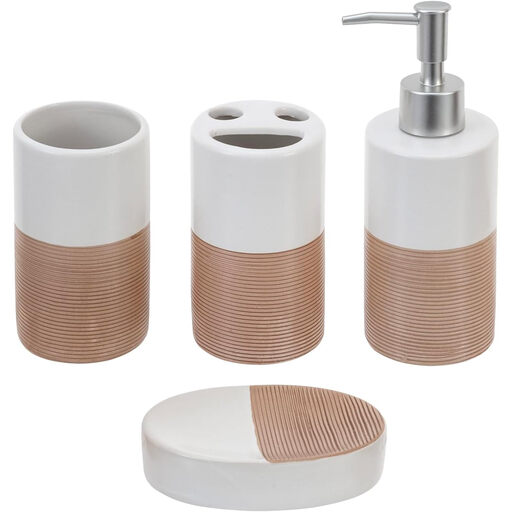
Why it's a great fit: Perfect for those who appreciate a harmonious and organised look in their bathroom. This set offers an all-in-one solution for organisation at the sink.
As a complete soap dispenser set made of high-quality ceramic, it ensures a cohesive style. The solid construction of the material and the pump mechanism is designed for durability.
The set includes a pump dispenser, a soap dish, a tumbler, and a toothbrush holder in a modern, two-tone design that instantly creates order and style.
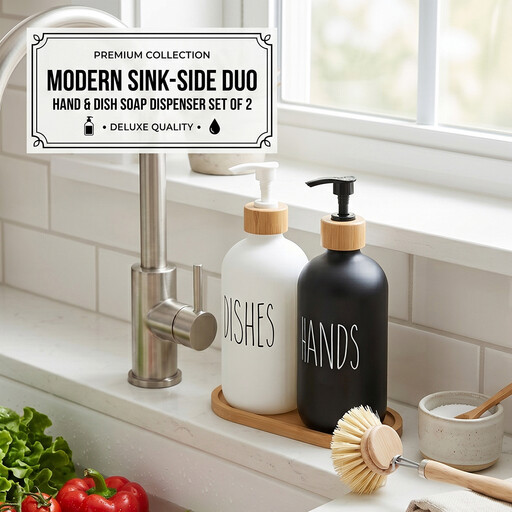
Why it's a great fit: This set is extremely versatile and ideal for the kitchen. It can be used for washing-up liquid, hand soap, oil, or vinegar, and the tray keeps your countertop tidy.
The clear glass dispensers are hygienic, easy to clean, and won't discolour. The leak-proof pumps allow for controlled dispensing, and the tray protects the work surface from drips.
The large 500 ml capacity per bottle reduces the frequency of refills. The minimalist design complements any interior style.
We have compiled a complete, up-to-date list of products that meet these strict selection criteria and applicable standards.
1. What's the best way to clean a soap dispenser? For regular cleaning, simply rinsing the container with warm water is usually sufficient. To clear the pump mechanism of soap residue, pump clear, warm water through the system several times. For stubborn clogs, the pump head can be disassembled and soaked. Avoid harsh cleaners or abrasive sponges, especially on painted or ceramic surfaces.
2. Can I use any soap dispenser for hand sanitiser? Not necessarily. Alcohol-based sanitisers can corrode certain plastics and seals, leading to leaks or material damage. Check the manufacturer's specifications or choose an item explicitly designated as a dispenser for sanitiser. These are often made from more resistant materials and sometimes feature a spray head for a finer distribution.
3. What material is best for a soap dispenser in the kitchen? For a kitchen soap dispenser, materials like glass or stainless steel are particularly suitable. They are robust, food-safe, and easy to clean of grease and other grime. A model with a wide, stable base is advantageous to prevent it from tipping over while cooking. A soap dispenser set for washing-up liquid and hand soap can also create a tidy look at the sink.