
Lieferung heute & morgen

Qualitätsgarantie

Willkommens-Angebote freischalten: KOSTENLOSE Lieferung | Bis zu 80 % RABATT | Kostenlose 30-Tage-JoyPlus-Testphase
App herunterladen
A good socket set, often called a ratchet set, is the cornerstone of any well-equipped workshop. Whether for car repairs, motorcycle maintenance, or general household tasks, the right tool is the difference between success and frustration. However, the market is crowded and full of products that promise more than they deliver. Before you invest, it's crucial to understand the common pitfalls that often lead to a poor purchase.
Many buyers are dazzled by the sheer number of pieces in a tool case. A 200-piece set at a bargain price seems tempting, but it often hides inferior quality. Another common mistake is overlooking the ratchet mechanism. A ratchet with few teeth requires a wide swing arc and is practically useless in the tight confines of an engine bay. Finally, choosing the wrong drive sizes can render the set unsuitable for your intended projects, leaving you without essential sockets or adapters.
This guide will help you navigate these mistakes. We focus on the critical technical features that define a durable and functional socket set, ensuring your investment pays off in the long run.
To find the right socket set, don't be swayed by marketing promises; focus on verifiable facts. Three technical features are of central importance.
The material is the most important criterion for the longevity of your tools. Look for the designation Chrome Vanadium Steel (Cr-V). This alloy is the industry standard for high-quality hand tools.
The drive size, specified in inches, determines the size of the ratchet and its corresponding sockets. Each size has its specific application. A good automotive tool kit often combines multiple sizes.
The number of teeth inside the ratchet head determines how finely the ratchet operates. A higher tooth count means a smaller return swing angle—the angle you need to move the handle to engage the next tooth.
Instead of making a one-size-fits-all recommendation, we have selected products for different user profiles.
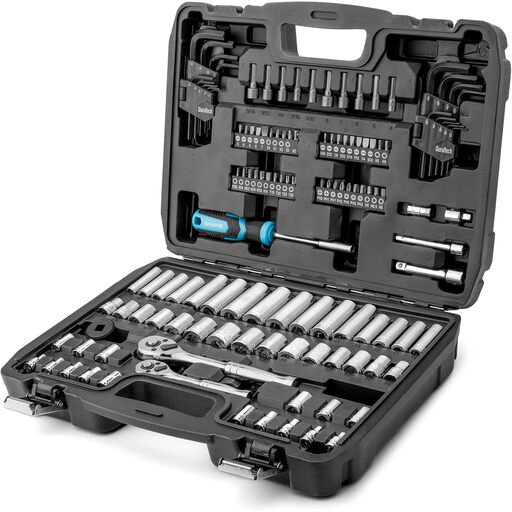
Why This Fits Their Persona: Ideal for beginners and all-rounders looking for a comprehensive yet affordable complete tool kit for various repairs on cars, motorcycles, and around the home.
This set prioritises quality over sheer quantity. All tools are made from heat-treated Chrome Vanadium Steel. It combines the common 1/4-inch and 3/8-inch drives, thus avoiding the pitfall of mismatched sizes.
Includes metric and SAE sizes, a magnetic screwdriver with 40 bits, and a sturdy carrying case. The ratchets feature a quick-release button for efficient work.
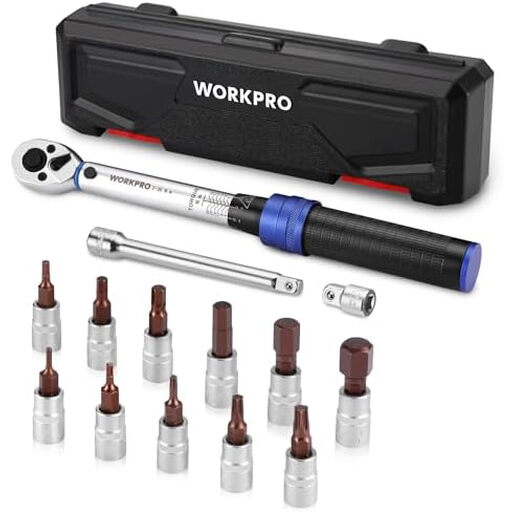
Why This Fits Their Persona: Perfect for discerning bike mechanics and precision engineers who need to adhere to exact torque values to avoid damaging sensitive carbon or aluminium components.
This set focuses on precision rather than an overwhelming number of parts. The integrated bicycle torque wrench prevents over-tightening of bolts—a costly mistake on modern bikes. The 72-tooth ratchet is ideal for tight spaces.
Calibrated torque range of 2-26 Nm with an accuracy of ±3%. The set includes the most important hex and Torx bits for bicycle maintenance, as well as an extension bar.
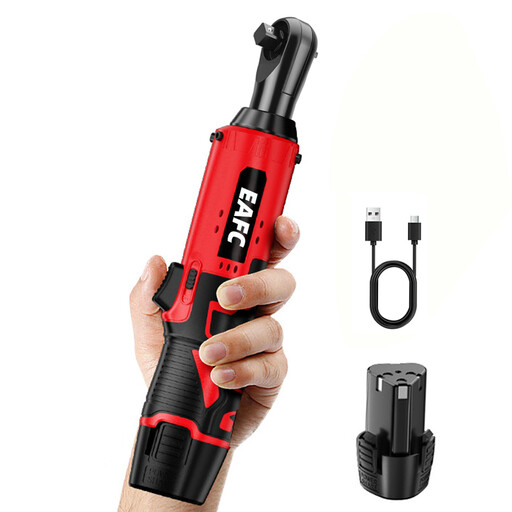
Why This Fits Their Persona: For hobby mechanics and semi-professional users who frequently work in cramped engine bays or other hard-to-reach areas and want to save time and effort.
This specialised tool radically solves the problem of a limited swing arc. Instead of a manual mechanism, it uses an electric drive that loosens and tightens bolts even without moving the handle.
The slim 3 cm head can reach extremely tight spots. With 45 Nm of torque, variable speed control, and an integrated LED light, it makes working in poorly lit areas significantly easier.
If you need a tool for a very specific application or want to compare more alternatives, you can find a wider selection that meets our quality criteria in our main category.
1. Which socket set is suitable for a car? For general automotive work, a socket set with a 3/8-inch drive is an excellent choice. For suspension components or wheel changes, you should also consider a 1/2-inch drive. Look for a good range of metric sockets (typically 8 mm to 22 mm), at least one extension bar, and ideally a universal joint for angled access.
2. What does the tooth count on a ratchet mean? The tooth count indicates how many engagement points the mechanism inside the ratchet head has per 360-degree rotation. A higher number (e.g., 72 or 90 teeth) results in a smaller return swing angle (e.g., 5° or 4°). This is a significant advantage when working in tight spaces, as you only need to move the ratchet minimally to turn the bolt.
3. Do I need a torque wrench? A torque wrench is not strictly necessary for many simple fastening jobs. However, it is essential for safety-critical components like lug nuts, cylinder head bolts, or brake parts. For sensitive materials like carbon (e.g., on a bicycle) or aluminium, a torque wrench is also necessary to precisely apply the manufacturer's specified torque values and prevent costly damage from over-tightening.