
Lieferung heute & morgen

Qualitätsgarantie

Willkommens-Angebote freischalten: KOSTENLOSE Lieferung | Bis zu 80 % RABATT | Kostenlose 30-Tage-JoyPlus-Testphase
App herunterladen
A well-equipped socket set, often called a ratchet set, is the cornerstone for countless repair and maintenance tasks on your car, motorcycle, or around the house. But the market is crowded and confusing, filled with products that promise more than they deliver. Before you invest in a new tool case, it's crucial to understand the common pitfalls that often lead to frustration and unnecessary expense.
As your Joybuy Product Recommendation Officer, I'll help you separate marketing hype from hard facts. We'll shine a light on the critical features that define a reliable socket set and show you what to look for to make an informed decision.
Many buyers focus on superficial features, overlooking critical quality defects. These three mistakes are particularly costly:
To avoid these traps, you should focus on three core technical features. These determine the durability, functionality, and range of applications for your future tool set.
The material specification is the most important indicator of quality. Look for the following terms:
The drive refers to the square connection point between the ratchet and the socket, measured in inches. Choosing the right size is crucial for power transmission and accessibility.
A versatile mechanic's tool kit often includes ratchets and sockets in at least two of these sizes.
The number of teeth in the ratchet mechanism determines the "swing arc"—how far you need to move the handle back to get to the next "click."
Based on these objective criteria, we have selected a few products from our range that are suitable for specific user profiles.
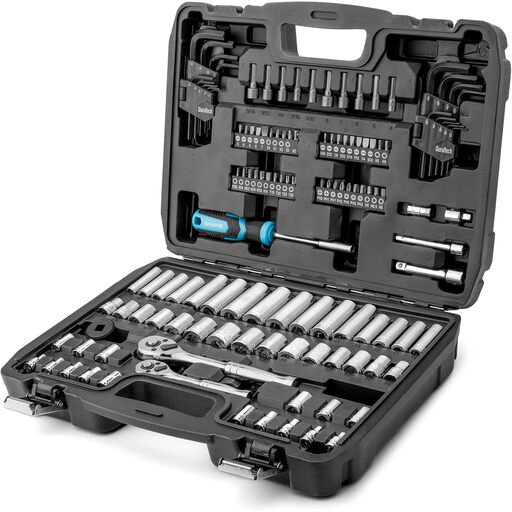
Why this set is a great fit: Ideal for getting started and for general repairs around the house or on the car. It offers a thoughtful selection of the most common tools without being overloaded with unnecessary parts. Perfect for anyone looking for a reliable starter set.
Instead of sheer quantity, this set focuses on a practical assortment. The tools are made from heat-treated Chrome Vanadium steel, which avoids the trap of inferior materials.
Combines 1/4" and 3/8" drives, covering a wide range of applications. Also includes a magnetic screwdriver with 40 bits for versatile use.

Why this set is a great fit: Designed for demanding use on vehicles. This set is ideal for mechanics and DIY enthusiasts who regularly perform maintenance and repairs and need a durable, heavy-duty tool set.
This set explicitly focuses on high-quality materials: The ratchets and sockets are made from heat-treated Chrome Vanadium steel, while all bits are crafted from superior S2 steel. This prevents premature wear during tough jobs.
Combines 1/2" and 1/4" drives to cover both high-torque jobs (like changing a wheel) and fine adjustments. The sturdy case with clear labeling ensures organization and prevents tool loss.
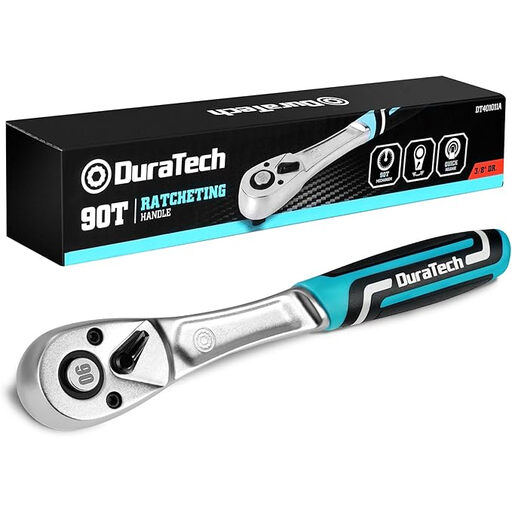
Why this tool is a great fit: This isn't a complete set, but a specialized tool for professionals and ambitious mechanics who often work in hard-to-reach places. It's the perfect addition to an existing tool case.
This tool directly addresses the trap of imprecise mechanics. The 90-tooth mechanism provides an extremely small swing arc of just 4 degrees, enabling efficient work where standard ratchets fail.
Maximum efficiency in tight spaces. The quick-release button allows for rapid socket changes, and the ergonomic handle reduces fatigue during long jobs.
We've compiled a comprehensive, up-to-date list of products that meet these strict selection criteria.
The difference lies in the swing arc. A 72-tooth ratchet has a 5-degree arc, while a 90-tooth ratchet only needs 4 degrees to engage the next tooth. The smaller the angle, the less space you need to move the ratchet. For work in very tight areas, like the engine bay of a modern car, a 90-tooth ratchet is therefore more advantageous.
For high durability and strength, you should look for tools made from Chrome Vanadium Steel (Cr-V). This material is the standard for high-quality sockets and ratchets. For bits that are exposed to high torsional forces, S2 Steel is an even better choice, as it is harder and more wear-resistant.
For vehicles from European and Asian manufacturers, you will almost exclusively need metric sockets (specified in millimeters). Imperial sizes (specified in fractions of an inch) are mainly found on older American vehicles, some British classics, and specific components like oxygen sensors or spark plugs. A good automotive tool set should therefore include a comprehensive set of metric sockets.