
Lieferung heute & morgen

Qualitätsgarantie

Willkommens-Angebote freischalten: KOSTENLOSE Lieferung | Bis zu 80 % RABATT | Kostenlose 30-Tage-JoyPlus-Testphase
App herunterladen
A stripped bolt head or a ratchet that has no room to turn in a tight engine bay—these situations are not only frustrating, but they can also needlessly complicate simple repairs. The selection of socket sets is vast, but not every tool case delivers on its promise. Before you make a purchase, you should be aware of the three most common pitfalls that often lead to a poor investment.
To avoid making a bad purchase, it helps to focus on the technical fundamentals that define a good socket set. These three parameters are crucial for the functionality and longevity of your tools.
The quality of the material is the foundation of any reliable tool. With sockets and ratchet sets, you will mainly encounter two types of steel:
tool set used for manual tasks around the home or on a vehicle, this is an excellent choice.The square connection between the ratchet and the socket is called the drive and is measured in inches. Choosing the right size is critical for the intended application:
automotive tool kit for ambitious DIY mechanics should definitely include this size.The ratchet is the heart of any ratchet set. Its quality is largely measured by the fineness of its gearing.
A 72-tooth mechanism is a common standard for high-quality ratchets today. It allows for a very small return swing arc of just 5 degrees. This means you need only minimal clearance to tighten or loosen a bolt—a decisive advantage in the tight and confined spaces of modern vehicles. Ratchets with a lower tooth count (e.g., 48 teeth) require a larger arc and are often unusable in such situations.
Based on these objective criteria, we have identified several products that offer a suitable solution for specific user profiles.
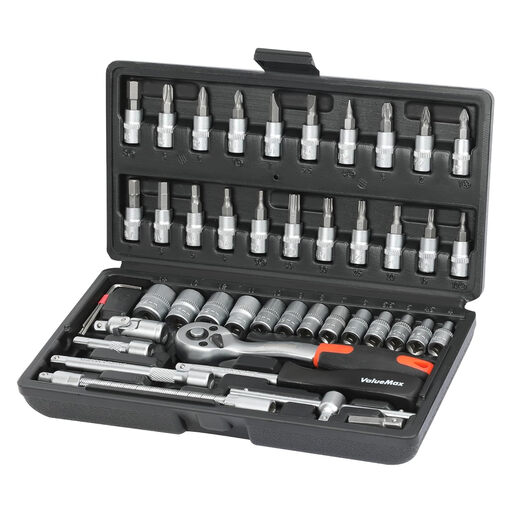
Why this set is a good fit: Ideal for basic maintenance tasks around the home, on a bicycle, or for minor car repairs. Its compact size makes it easy to store and transport.
Focuses on the most common metric sizes with a 1/4-inch drive, instead of including unnecessary filler pieces. The 72-tooth ratchet works even in tight spaces.
Made from Chrome Vanadium steel for durability. The set includes essential bits and extensions alongside the sockets, all in an organised case.
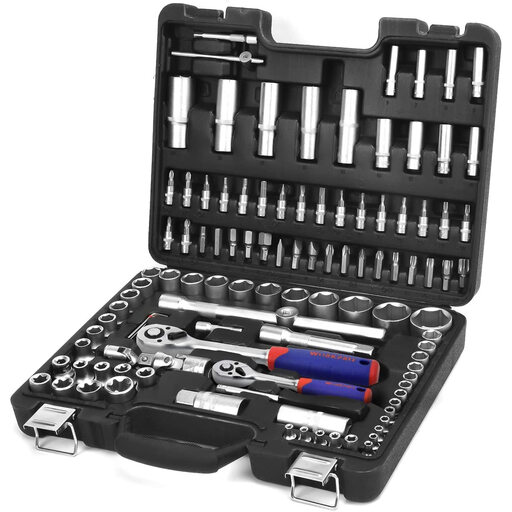
Why this set is a good fit: This complete socket set covers a wide range of applications with its 1/4- and 1/2-inch drives, from fine adjustments to high-torque jobs on the suspension.
Offers a thoughtful selection of sockets and accessories in two crucial drive sizes. The quality of the Cr-V steel and the 72-tooth ratchets prevent material fatigue and frustration in tight spaces.
Comprehensive equipment for almost any mechanical task on a car. Includes spark plug sockets and various extensions for maximum flexibility.
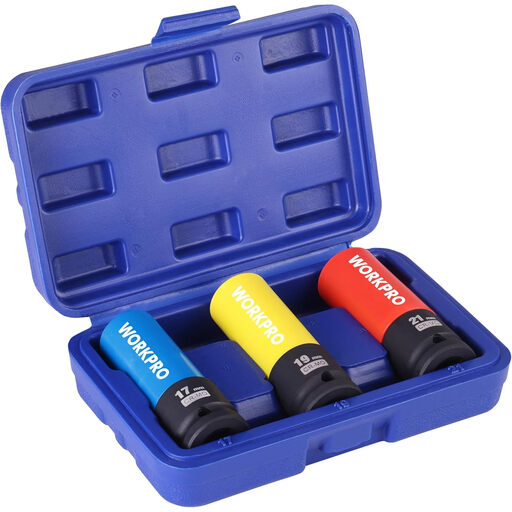
Why this set is a good fit: Specifically designed for safe and damage-free wheel changes. An essential accessory for anyone who regularly swaps between summer and winter tyres.
Instead of a general-purpose set, this specialised tool provides exactly what's needed. Made from Cr-Mo steel, it's designed for use with impact wrenches and prevents damage.
Plastic sleeve and insert to protect alloy wheels. Thin-wall design for use in tight lug nut wells.
We have compiled a complete, up-to-date list of products that fully meet these strict selection criteria and rigorous safety regulations.
What is the difference between Cr-V and Cr-Mo steel in sockets? Cr-V (Chrome Vanadium) is the proven standard for hand tools, as it is hard and wear-resistant. Cr-Mo (Chrome Molybdenum) is tougher and more ductile, making it the necessary choice for impact sockets used with impact wrenches. It absorbs the impacts without shattering.
Which drive size (1/4", 3/8", or 1/2") do I need for my car? That depends on the task. For work in the engine bay and interior, a 3/8-inch drive is often a good all-round solution. For high-torque jobs on the suspension, brakes, or for changing wheels, a 1/2-inch drive is essential. A 1/4-inch drive is suitable for very small bolts and trim pieces. A comprehensive automotive tool kit ideally includes a combination of 1/4- and 1/2-inch.
How do I properly maintain a socket set to prevent rust? Clean the tools with a dry cloth after each use to remove dirt, oil, and moisture. Always store the ratchet set closed in a dry place. An occasional drop of resin-free oil on the ratchet mechanism will ensure it continues to function smoothly and protects it from corrosion.