
Lieferung heute & morgen

Qualitätsgarantie

Willkommens-Angebote freischalten: KOSTENLOSE Lieferung | Bis zu 80 % RABATT | Kostenlose 30-Tage-JoyPlus-Testphase
App herunterladen
A well-equipped socket set, often called a ratchet set, is the foundation for countless repair and maintenance jobs on vehicles, machinery, and around the home. But the market is overwhelming and full of offers that promise more than they deliver. Choosing the wrong set leads not only to frustration but also to unnecessary expenses.
As your Joybuy Product Recommendation Officer, I'll help you identify the common pitfalls and make an informed decision. We'll focus on the facts that truly matter, ensuring you get a tool that reliably gets the job done.
Many buyers focus on superficial features and fall into well-disguised marketing traps. Pay close attention to these three points:
To avoid a bad purchase, you should focus on three core technical features. These determine the durability, practicality, and versatility of your tool.
For durable and resilient tools, the choice of material is crucial. Chrome Vanadium Steel (Cr-V) is the established standard for quality tools. This alloy offers high hardness and toughness, ensuring excellent resistance to high torque. Furthermore, the chrome plating provides effective corrosion protection. A good automotive tool set should exclusively be made from this material to reliably loosen even seized bolts.
The efficiency of a ratchet is determined by the number of teeth inside its head.
Socket sets are available in three common drive sizes, defined by a square measurement in inches:
A well-designed socket set focuses on the most common metric sizes (e.g., 8 mm to 24 mm) and usefully supplements them with extensions and universal joints, rather than being filled with useless, exotic sizes.
Instead of making a one-size-fits-all recommendation, we have identified products tailored to specific user profiles.
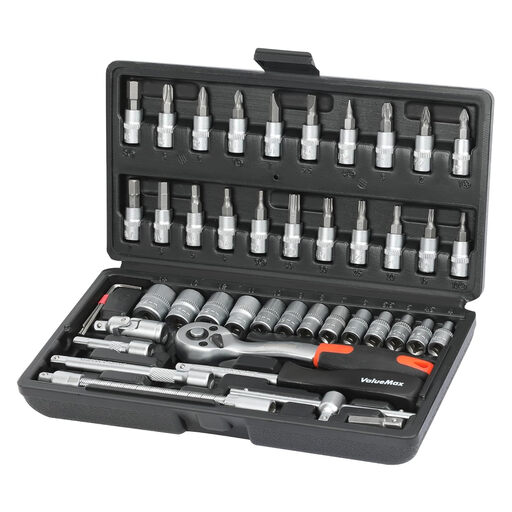
Why This Fits Their Persona: Ideal for DIY enthusiasts and occasional mechanics who need a solid basic kit for repairs around the house, on a bicycle, or for minor jobs on a car without investing a large budget.
This set bypasses the quantity trap by focusing on the versatile 1/4-inch drive and offering a practical selection of sockets and bits. The 72-tooth ratchet is practical for most scenarios.
Comprehensive equipment with sockets, bits, and extensions in a compact case. The chrome vanadium steel material offers good durability for its intended range of use.
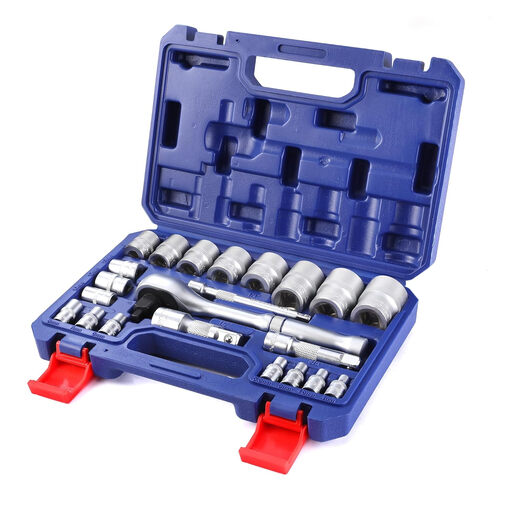
Why This Fits Their Persona: Perfect for ambitious hobby mechanics who regularly work on their own vehicle and need a flexible tool that covers all common drive sizes without having to buy three separate ratchets.
Instead of focusing on a high piece count, this set relies on a smart solution: the 3-in-1 ratchet combines 1/4", 3/8", and 1/2" drives in a single tool. This means maximum flexibility with a minimal footprint.
The 72-tooth ratchet made of Cr-V steel is robust and practical. The set includes the most important metric sockets (4-24 mm) and extensions for hard-to-reach areas.
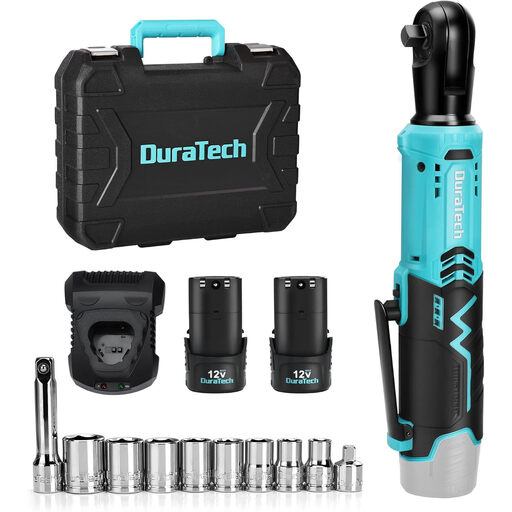
Why This Fits Their Persona: For users who frequently perform repetitive fastening tasks or simply want to maximize their work efficiency. A cordless ratchet significantly speeds up loosening and tightening bolts and is easier on the joints.
This tool focuses on a single function: fast, powered fastening. It's not an all-in-one set, but a specialized addition that offers a clear efficiency advantage where it's needed most.
Delivers 65 Nm of torque and speeds up work tremendously. The set includes two batteries for uninterrupted work, a charger, and the most common sockets for the 3/8-inch drive.
We have compiled a complete, real-time updated list of products that fully meet these strict selection criteria and German safety regulations.
1. What is the difference between a 72-tooth and a 90-tooth ratchet mechanism? The main difference is the swing arc. A 72-tooth ratchet requires 5 degrees of movement to engage the next tooth, while a 90-tooth ratchet needs only 4 degrees. In very tight spaces, like when working on an engine or transmission, that single degree can be crucial, as it allows you to work with very small hand movements.
2. Is chrome vanadium steel really necessary for a socket set? For anyone who plans to use their tools for more than just occasional light tasks, Chrome Vanadium Steel (Cr-V) is highly recommended. The material is significantly more resistant to deformation under load (high torque) and is better protected against corrosion thanks to the chrome plating. Tools made of simple steel can quickly reach their limits and become unusable when dealing with seized bolts.
3. Which drive size (1/4", 3/8", or 1/2") do I need for my work? That depends on your primary use case: