
Lieferung heute & morgen

Qualitätsgarantie

Willkommens-Angebote freischalten: KOSTENLOSE Lieferung | Bis zu 80 % RABATT | Kostenlose 30-Tage-JoyPlus-Testphase
App herunterladen
If you’re looking to buy socks online, you’ll find a wide choice of no-show socks, trainer socks, cotton socks and sports socks. But product names alone don’t tell you whether a pair will really suit you day to day. The key things to consider are size, material, construction and how you plan to wear them.
No-show socks and short trainer socks can be barely visible in your shoes. But that only works if the opening holds securely around your foot and you’ve chosen the right size. If the opening is too loose, the sock may slip under your heel. If it’s too tight, it can leave pressure marks.
Ankle socks and business socks come higher up the ankle or calf, so they’re better suited to shoes and outfits where a visible cuff is fine.
Cotton is often associated with breathability and comfort. It can absorb moisture, but how quickly it dries depends on the fabric’s density and fibre blend. Synthetic fibres such as polyester, nylon and microfibre can be lightweight and quick-drying. So when choosing sports socks, it’s not just the fibre name that matters — the way they’re made matters too.
Check the specific material composition. For example, a 76% cotton content is quite different from 100% cotton. For winter socks, a blend of wool, polyester, acrylic and elastane combines warmth with shape retention and stretch.
Terms such as “antibacterial”, “moisture-wicking” and “compression” should be considered alongside the product description and technical details. They’re no substitute for medical advice.
For compression socks, the stated mmHg value is important. aZengear models are described as offering 20–30 mmHg graduated compression. According to the product details, the strongest pressure is at the ankle and decreases towards the calf. If you have circulation problems or vascular conditions, or need medical support, seek advice from a doctor before use. These products aren’t automatically suitable for everyone.
Don’t rely on S, M, L or XL alone. Always check the product’s EU size chart. Sizing varies between brands and models. For example:
For children’s socks, pay particular attention to the age range and the actual EU size. Socks that are too big can bunch up, while a pair that’s too small may feel tight around the toes and cuffs.
A flat or seamless toe can help reduce rubbing around the toes. Reinforced heels and toes are useful for frequent wear, as these areas take the most wear inside shoes. A 3D heel can help keep the sock securely in place.
For socks without an elasticated cuff, look for a secure fit that doesn’t dig in. Browse the comfort socks without elasticated cuffs category to find a suitable pair.
No-show socks or invisible socks are a good choice for trainers. For the office and leather shoes, try thin business socks. For sport, look for moisture management, a secure fit and, where appropriate, a cushioned sole. Winter socks should leave enough room inside your shoes, as thicker styles can make them feel too tight.
Check the care instructions. Some socks can be washed in cold water or at 30 °C, while others should be kept away from bleach, high temperatures or tumble drying. Care can affect their shape, stretch and durability.
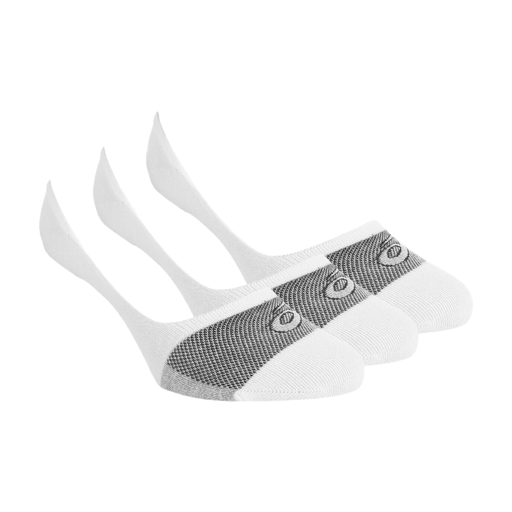
Why this product suits this need: This three-pack is designed for everyday wear and running. Its short, discreet style is ideal for wearing with trainers.
The EU sizes are clearly stated. The product description also specifies a seamless toe and moisture-wicking construction.
Three pairs, a short cut and a material composition of 76% cotton and 24% synthetic fibres.
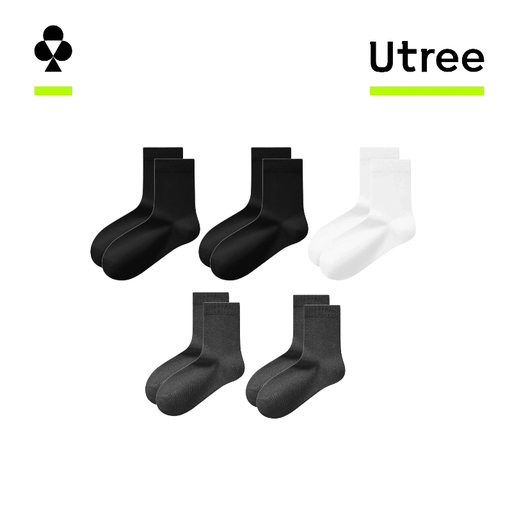
Why this product suits this need: The mid-length, understated design is suitable for the office, commuting and leather shoes. Check the size details before buying.
The description mentions a flat toe seam, an elasticated opening and a shaped heel. These features help tackle common issues such as rubbing and slipping.
According to the product description, these socks are made from 100% cotton with no elastane. They’re available in a multipack of dark colours.
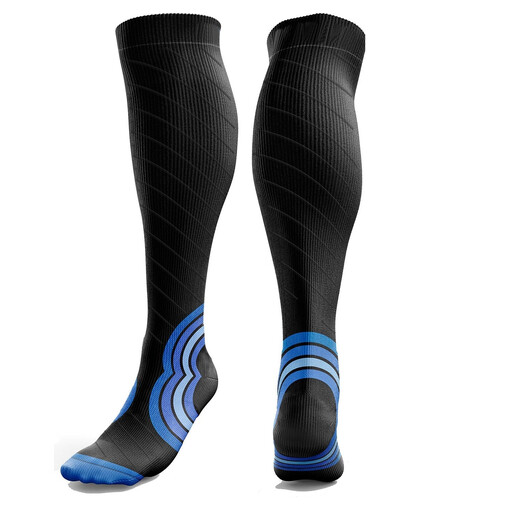
Why this product suits this need: This knee-high style is aimed at people who want to pay close attention to the stated compression level when travelling or sitting or standing for long periods.
The compression level is clearly stated as 20–30 mmHg. The size, seamless toe, cushioned sole and heel are also described.
Graduated compression, reinforced high-wear areas and a blend of 65% nylon, 20% polyester and 15% elastane.
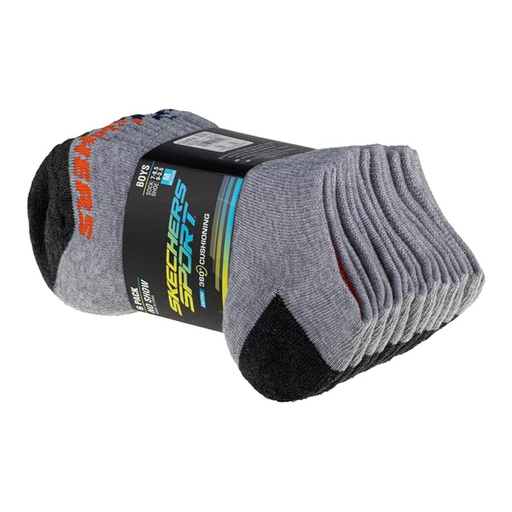
Why this product suits this need: This six-pack is designed for children’s sizes and is suitable for school, leisure and everyday wear with trainers.
The size chart includes EU 27.5–35.5, as well as larger standard sizes. This makes it easier to choose a size that matches the child’s actual foot size.
Six pairs, a short no-show cut and, according to the product details, 100% polyester.
We’ve put together a complete, regularly updated list of products that meet these strict selection criteria and fully comply with the safety regulations in force in the EU.
For trainers, consider no-show socks, trainer socks and other short styles. Check that the heel stays in place and that the socks don’t show above your shoes. If you’ll be moving around a lot, a flat toe seam and good moisture management are also worth looking for.
How long socks last depends on how often you wear them, the fit of your shoes, the material and how you care for them. Reinforced heels and toes can help them stand up to more wear. Follow the care label and avoid unnecessarily high temperatures. Rotating between several pairs also reduces the daily wear on each pair.
No. Socks rated at 20–30 mmHg apply a specific level of pressure, so it’s important to choose the right size. If you have symptoms, a pre-existing condition or a medical reason for wearing them, speak to a healthcare professional. For everyday wear without any specific needs, standard cotton socks, sports socks or business socks are often enough.