
Lieferung heute & morgen

Qualitätsgarantie

Willkommens-Angebote freischalten: KOSTENLOSE Lieferung | Bis zu 80 % RABATT | Kostenlose 30-Tage-JoyPlus-Testphase
App herunterladen
A good sofa bed is a versatile solution for various living spaces: it saves space in small apartments, transforms a home office into a guest room, and provides a flexible sleeping option for unexpected visitors. However, the market is saturated with models that often fail to deliver on their promises in practice. Many buyers discover after just a few months that the mechanism jams, the sleeping comfort is subpar, or the piece of furniture is simply impractical.
This guide will show you which critical features to look for to make an informed decision. We will highlight the three most common pitfalls and explain the technical parameters that determine durability and comfort.
Before looking at specific models, it's important to understand the typical weak points that often only become apparent after the purchase.
To avoid the problems mentioned above, you should carefully examine three technical aspects. These are the primary determinants of the quality, functionality, and longevity of your new furniture.
The type of conversion mechanism is crucial for daily use. Common systems include:
A high-quality mechanism is characterised by smooth-running castors, sturdy metal rails, and precisely engineered joints.
For sleeping comfort, not only the upholstery but also the underlying construction is decisive.
Especially in small apartments, additional storage space is invaluable. A sofa bed with storage offers space in an integrated compartment for pillows, blankets, and bedding. This keeps everything within reach and the living room tidy in no time. For a corner sofa with a sleep function, the flexibility of the chaise is also an important factor. Models where the chaise can be mounted on either the left or right side adapt to different room layouts.
Based on the criteria above, we have identified some models that are suitable for specific user profiles.
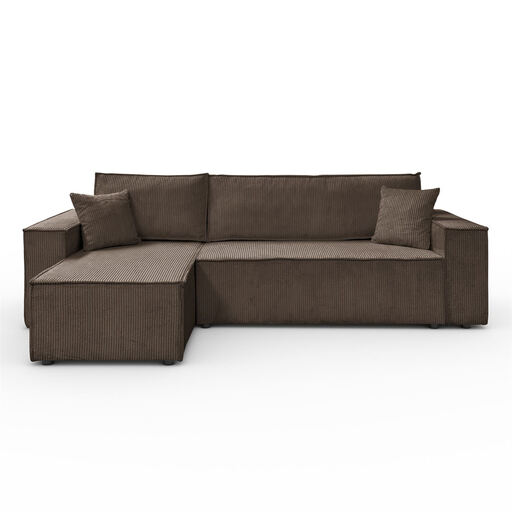
Why This Fits Their Persona: Ideal for living rooms that regularly double as guest rooms. The L-shape creates a cosy seating area, while the large sleeping surface and storage space offer maximum functionality for overnight guests. The universally mountable chaise adapts flexibly to the room.
The combination of serpentine springs and T30 foam addresses the pitfall of poor sleeping comfort. The 200x130 cm sleeping surface is continuous and offers ample space. The integrated storage compartment solves the problem of storing bedding.
Offers a fully-fledged sleep function, generous storage, and a flexible, reversible chaise. The manufacturer states the upholstery fabric has high abrasion resistance (Class A, >35,000 Martindale cycles).

Why This Fits Their Persona: Perfect for students, shared flats, or a first apartment. This small sofa bed functions as an armchair, a recliner, and a bed without taking up valuable floor space. Ideal for anyone looking for a multifunctional solution for a very limited area.
The simple pull-out mechanism on castors bypasses the trap of a complex or unstable conversion process. The clear dimensions for the sofa (132 cm width) and bed (184 cm length) help to plan space requirements accurately and avoid mis-purchases.
3-in-1 functionality in a minimal footprint. The continuously adjustable backrest (90° to 180°) offers customised comfort. According to the manufacturer, the steel frame ensures a high load capacity of up to 360 kg.
We have compiled a complete, real-time list of products that fully satisfy these strict selection criteria and UK safety regulations.
1. How long does a good sofa bed last with daily use? The lifespan heavily depends on the construction and materials. A model with a solid wood frame, serpentine springs, and high-density cold foam upholstery (35 kg/m?+) can last 5 to 8 years or more with daily use. Cheaper models with a chipboard frame and simple foam upholstery often show significant signs of wear, such as sagging cushions or a jamming mechanism, after just 1 to 2 years.
2. Does a sofa bed need a mattress topper? While most integrated systems do not accommodate a separate mattress, a topper can significantly improve sleeping comfort. A topper (approx. 4–8 cm thick) smooths out gaps between cushion sections, creates a uniform surface, and can adjust the firmness to personal preference. It is particularly recommended for models where the sleeping surface is perceived as too firm.
3. What is the difference between a sleeper sofa and a sofa bed? The terms are often used interchangeably in retail. Traditionally, a sofa bed referred to a piece of furniture with an integrated, often separate mattress and a more elaborate folding mechanism, designed for continuous use as a bed. A sleeper sofa or sleeper couch was often of a simpler construction. Today, the lines are blurred. Instead of focusing on the name, it is more important to examine the construction of the sleeping surface, the type of upholstery, and the mechanism.