
Lieferung heute & morgen

Qualitätsgarantie
App herunterladen
Kategorien
A sofa bed is a functional solution for living spaces where flexibility and space utilisation are key criteria. It combines the function of a seating area with that of a bed, addressing the need for multifunctional furniture, especially in smaller apartments, shared living spaces, or when furnishing a home office or guest room. Choosing the right model requires an analysis of its mechanism, material, dimensions, and upholstery.
The decision to purchase a sofa with a sleeping function should be based on objective parameters. The following aspects are relevant for evaluating a model's functionality and durability.
The type of conversion mechanism determines the furniture's ease of use and space requirements.
The upholstery fabric significantly influences the feel, appearance, and maintenance requirements.
The sitting and sleeping comfort is largely determined by the internal construction.
The measurements are crucial for integrating the sofa into your space. It is important to consider both the dimensions in its folded state (Width x Depth x Height) and the dimensions of the unfolded sleeping surface (Length x Width). A small sofa bed is suitable for studio apartments, while a 3-seater offers more space and often serves as the main sofa in the living room.
Based on an analysis of technical specifications and functional features, here are a few models we recommend.
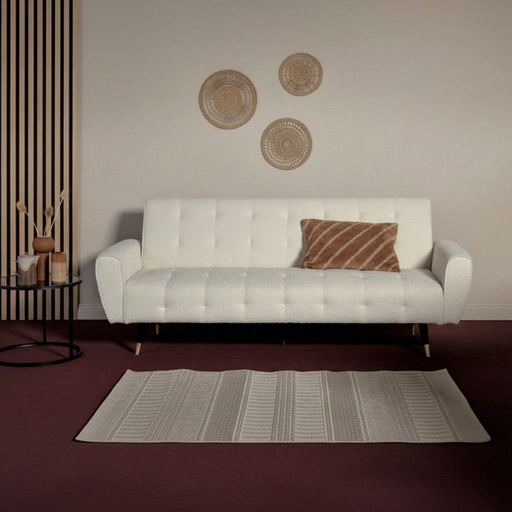
Why we recommend this product: This model combines a modern design with practical details. The bouclé cover and gold-coloured feet give it a premium appearance, while the integrated side pockets offer a thoughtful solution for storing remote controls or tablets. It converts into a guest bed via a fold-down mechanism, which is supported by fold-out metal feet for stability.
Pros:
Who it's for: Individuals looking for a stylish yet functional modern sofa bed for their living room, who appreciate design accents like gold-coloured elements and textured fabrics.
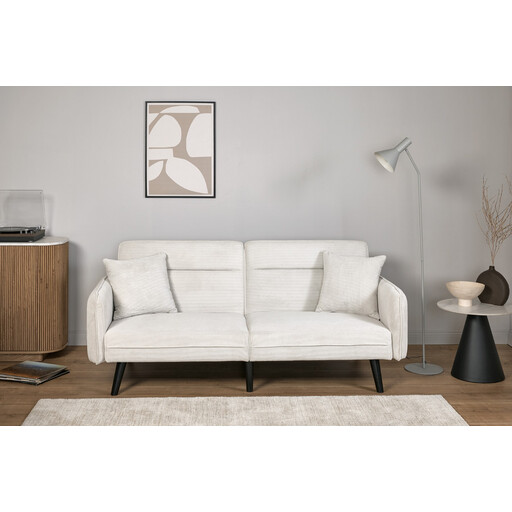
Why we recommend this product: This compact fold-down sofa is designed for maximum flexibility in smaller rooms. A special feature is the separately adjustable backrests, which allow for individual sitting or reclining positions for two people. The corduroy cover and included decorative cushions create a cosy atmosphere.
Pros:
Who it's for: Users with limited space, such as in studio apartments or shared flats, who are looking for an adaptable and space-saving solution with a modern design.
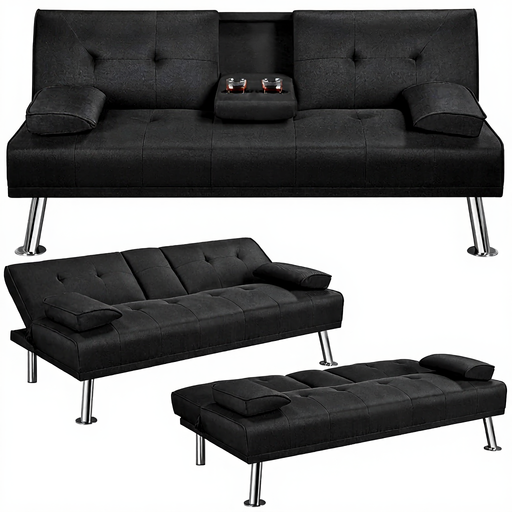
Why we recommend this product: This model focuses on maximum functionality and excellent value for money. The "click-clack" mechanism allows for quick conversion, while the central fold-down armrest with two cup holders offers a practical benefit for home cinema nights. Its high load capacity makes it a robust option.
Pros:
Who it's for: Budget-conscious buyers who need an extremely practical and versatile sleeper sofa for a guest room, teenager's room, or hobby room and appreciate functional features like the integrated cup holders.
The models presented here are a selection that covers specific design and functional requirements. For a wider range of multifunctional seating furniture, you can browse our main category for Armchairs & Sofas to compare more options.
1. How much weight can an average sofa bed support? The load capacity varies depending on the construction and materials. Compact models are often designed for approx. 200–250 kg, while more robust 3-seater models, like the Yaheetech sofa, can have a static load capacity of up to 350 kg. The manufacturer's exact specifications, which refer to an even weight distribution, are the key reference here.
2. What is the difference between a sofa bed and a sleeper sofa? In modern usage, the terms sofa bed and sleeper sofa are used largely synonymously. Both refer to an upholstered piece of furniture that can be used for both sitting and sleeping. Historically, the term "couch" was more likely to refer to a daybed without a full back or armrests, but this distinction is no longer common today.
3. Which upholstery is easy to care for on a sofa bed? Upholstery made from synthetic fibres like polyester is generally considered very easy to care for. They are abrasion-resistant, less prone to wrinkling, and can often be cleaned with a damp cloth. Fabrics like corduroy are also relatively low-maintenance. According to the manufacturer's care instructions, regular vacuuming with an upholstery attachment is usually sufficient. Harsh cleaning agents and direct sunlight should be avoided for all fabric types.