
Lieferung heute & morgen

Qualitätsgarantie

Willkommens-Angebote freischalten: KOSTENLOSE Lieferung | Bis zu 80 % RABATT | Kostenlose 30-Tage-JoyPlus-Testphase
App herunterladen
A sofa bed combines seating with an extra sleeping space. It’s particularly useful in small flats, guest rooms or homes that only need to accommodate overnight guests occasionally. However, models vary considerably in their mechanisms, upholstery, footprint and assembly requirements.
If you focus only on colour and price, you could miss some important details. Three common buying pitfalls are worth looking out for:
Measure not only the available wall width, but also the depth and the space in front of the sofa. With a corner sofa bed or an L-shaped sofa, you’ll also need to account for the chaise dimensions.
Key details to check include:
For small rooms, a compact two-seater sofa or a small sofa bed may be a better choice than a large corner model. For families or regular guests, sleeping areas measuring 140 × 198 cm or more offer extra room.
The seat construction affects how the sofa feels day to day and how easy it is to care for. Common materials include foam, zigzag springs, pocket springs or a combination of these. Details such as T30 foam, high-density foam or pocket-sprung construction describe how the sofa is made, but don’t tell you on their own whether it will feel comfortable to you.
Also check:
A fabric with a stated abrasion rating is easier to assess objectively than general claims such as ‘particularly hard-wearing’. If you have children or pets, easy-care surfaces and good access underneath the sofa can be useful.
Check how the sofa converts into a bed. Does the seat pull out, lower down or reveal a separate guest bed on wheels? With a sofa bed, the mechanism should be easy to reach and have enough room to move.
What’s included with delivery matters too. Some sofa beds arrive ready assembled, while others come in several packages and need two people to put them together. If you’re considering a sofa bed with storage, check how the storage compartment opens and whether you need to lift the seat fully.

Why it suits this profile: At 132 cm wide, this 3-in-1 sofa is a good fit for flats, smaller living rooms or a guest room. The backrest adjusts between 90 and 180 degrees.
The 184 × 132 cm sleeping area and pull-out design are clearly specified. This makes it easier to work out how much space you’ll need than a vague ‘multifunctional’ label would.
Reinforced steel frame, side pockets and a stated maximum load capacity of up to 360 kg. Assembly instructions and tools are included.
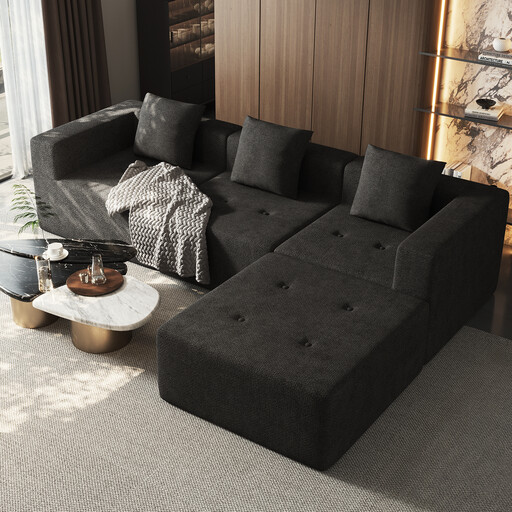
Why it suits this profile: This spacious corner sofa is designed for households looking for plenty of seating and sleeping space, as well as a flexible layout.
The overall dimensions of 258.5 × 160 cm and sleeping area of 183.5 × 258.5 cm are specified. The model is delivered without assembly, but you’ll need enough space for it.
Pocket-sprung seat cushions, chenille upholstery, a chaise that can be positioned on either side and a 24-month warranty, according to the product details.
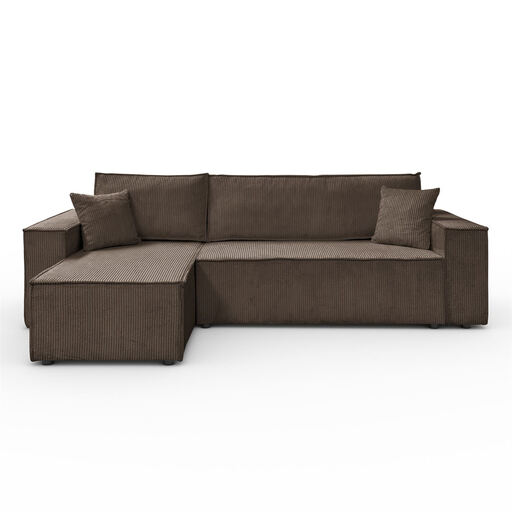
Why it suits this profile: This corner sofa combines a sleeping function with a storage compartment. The chaise can be fitted on the left or right during assembly.
The sleeping area of 200 × 130 cm, storage compartment and self-assembly requirements are clearly described. Two people and around one to two hours are recommended for assembly.
Zigzag springs and T30 foam in the seat, POSO corduroy upholstery with a stated abrasion rating of over 35,000 Martindale cycles, and a fully upholstered back.
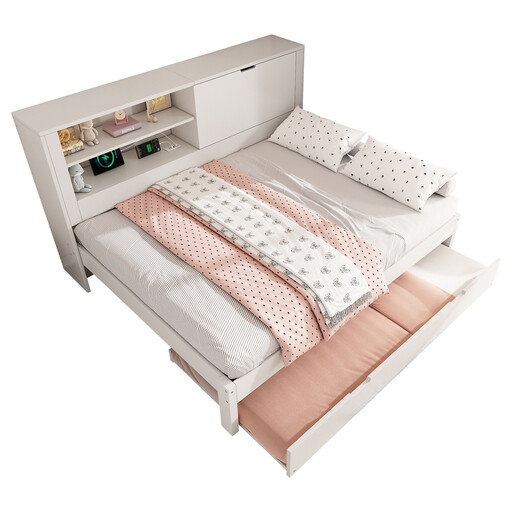
Why it suits this profile: This model has a pull-out double bed measuring 140 × 198 cm, as well as an additional single bed measuring 90 × 190 cm. This makes it suitable for overnight guests and flexible sleeping arrangements.
The different sleeping areas, assembly requirements and the fact that no mattress is included are listed separately in the product details.
Storage, USB and USB-C ports, a wood-based construction and a stated maximum load capacity of up to 150 kg.
We’ve put together a complete, regularly updated list of products that meet these strict selection criteria and fully comply with the safety regulations in force in the EU.
Place your sofa bed on a flat, stable surface. With pull-out models, keep the castors and mechanism clear of rug edges, cables and other objects. You can usually care for the upholstery by vacuuming it regularly and spot-cleaning it with a suitable mild cleaner. Always follow the instructions provided by the manufacturer.
If your sofa bed arrives in several packages, check that all the parts are there before assembly. Keep packaging and small parts out of reach of young children. Operate moving parts slowly, and keep hands and fingers clear of the mechanism.
It depends on the construction and sleeping area. Many models are designed as occasional guest beds. For regular use, a sleeping area that’s large enough and as even as possible, along with a suitable base, is essential. Check that the product description clearly states whether it’s suitable for regular sleeping.
As well as the sofa’s dimensions when closed, you’ll need to allow room for it to extend and keep the area in front clear. For a corner sofa bed, also consider the depth of the chaise and access to the storage compartment. Mark out the dimensions on the floor with masking tape before you order.
A traditional sofa bed doesn’t use electricity in everyday use. Extra ports such as USB or USB-C only use power when a device is plugged in. Ongoing costs are mainly for care and, if needed, replacement covers or an additional mattress topper.