
Lieferung heute & morgen

Qualitätsgarantie

Willkommens-Angebote freischalten: KOSTENLOSE Lieferung | Bis zu 80 % RABATT | Kostenlose 30-Tage-JoyPlus-Testphase
App herunterladen
A sofa bed gives you somewhere to sit as well as extra sleeping space. It’s a practical choice for guests, small flats, student accommodation or a home office that occasionally doubles as a bedroom. But unclear dimensions, soft cushions that don’t provide enough support and hard-to-use folding mechanisms can all lead to a disappointing purchase.
So before you buy, look beyond colour and price. The key things to consider are the actual sleeping area, how much room the sofa needs when opened out, its weight capacity and how practical the upholstery is for everyday use.
An extending sofa needs considerably more room than a standard sofa. Before you buy, measure its maximum depth and width when fully opened. Make sure there’s still enough space to move around and that doors, radiators and windows remain accessible.
With a corner sofa bed, you’ll also need to consider the position of the chaise. Check whether the sleeping area is on the left or right, and whether you can rearrange the furniture if you move home.
Very soft cushions can feel pleasant to sit on, but may not provide enough support for regular sleeping. Check the details about the upholstery, frame and maximum weight capacity. A sofa bed for occasional overnight guests has different requirements from one you’ll use every day.
A sofa bed with a USB port, storage or an adjustable backrest can be useful, but these features should suit the way you plan to use it. A USB port is only helpful if there’s a socket nearby. Storage is handy, but it shouldn’t make the sofa awkward to open.
Make a note of these three measurements:
A 2-seater sofa bed will often fit into a smaller room, but the width of the sleeping area varies by model. A modular sofa may offer more flexibility, but it requires several separate modules and may take longer to arrange.
A metal or wooden frame affects the sofa’s stability and weight. When checking the product details, distinguish between static weight capacity, weight capacity per seat and any stated total weight capacity. These figures don’t necessarily apply in the same way to every sleeping position.
Foam, pocket springs and combinations of the two all have different properties. Higher foam density is a technical specification, but it isn’t the only measure of personal comfort. Seat height, seat depth, backrest angle and the availability of replacement or washable covers also matter.
Corduroy, chenille, polyester and velvet differ in feel, abrasion resistance and care requirements. If you have children or pets, removable covers or clear cleaning instructions can be helpful. Also check whether the upholstery can only be spot-cleaned, and bear in mind that the colour may look different in different lighting.
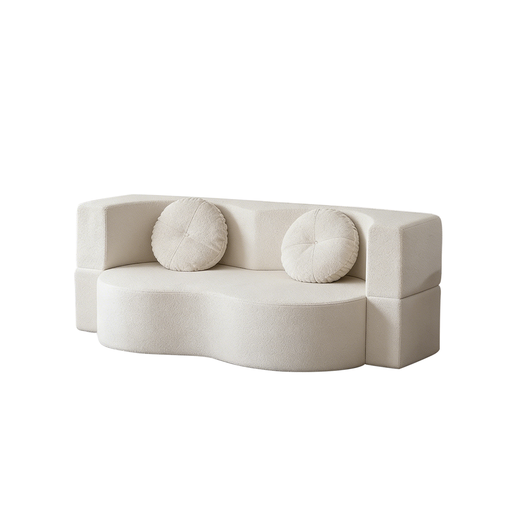
Why this product suits this profile: This compact 2-seater sofa bed is a good fit for a living room, guest room or smaller flat. It can be converted into a temporary double bed for occasional overnight stays.
The product details specify that it converts into a bed, comes with two cushions and supports a maximum load of up to 250 kg for three people. Check these details against the space available in your home before buying.
High-density foam, wide armrests and delivery with no tools required for assembly, according to the product description.
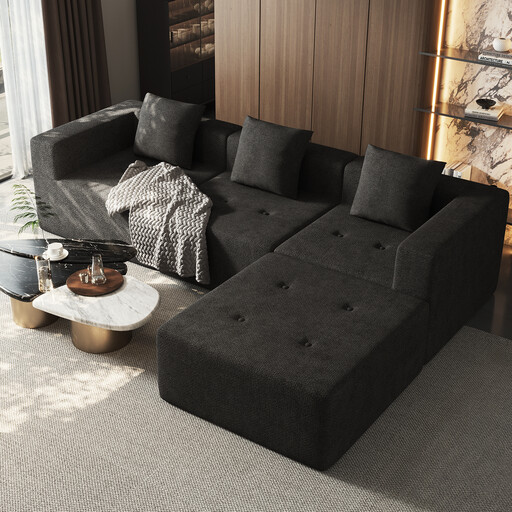
Why this product suits this profile: This spacious corner sofa is designed for homes with plenty of room, combining generous seating, a large sleeping area and a versatile chaise.
The pocket-spring construction and stated sleeping area of 183.5 × 258.5 cm provide concrete details to consider, rather than relying on general comfort claims. Measure carefully to make sure the overall width of 258.5 cm will fit.
Chenille upholstery, three scatter cushions, a reversible chaise and a 24-month guarantee, according to the product description.
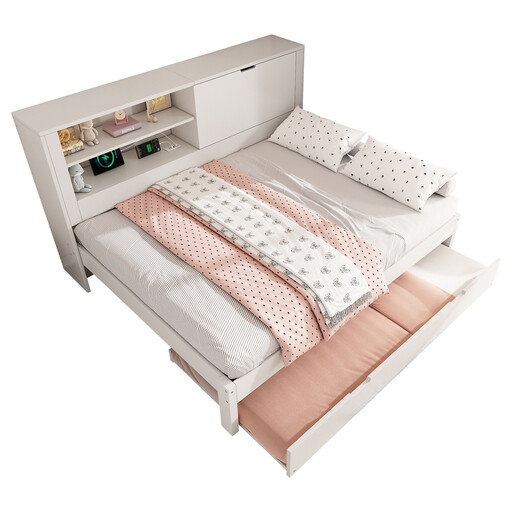
Why this product suits this profile: This model combines a 140 × 198 cm sleeping area with an additional pull-out single bed. It’s designed for families, frequent guests and small flats where storage is also needed.
The product description gives the dimensions, storage details, USB and USB-C ports, and a maximum weight capacity of up to 150 kg. Assembly is required, so check the contents and room measurements in advance.
An additional pull-out bed, open and closed storage compartments, and integrated charging ports.
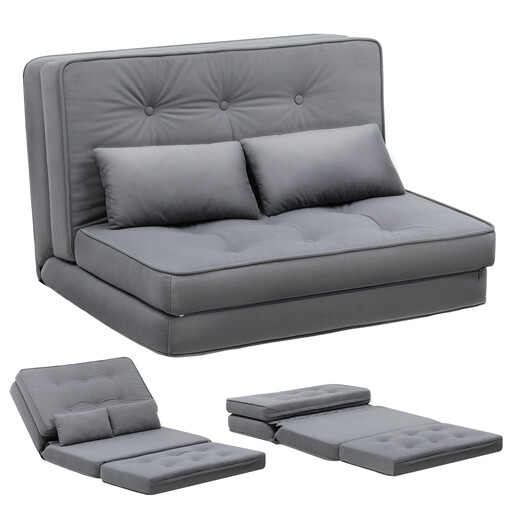
Why this product suits this profile: This compact floor sofa is designed for student accommodation, home offices, guest rooms or occasional camping. The backrest adjusts to six positions.
Instead of a complicated pull-out mechanism, you create the sleeping position by adjusting the backrest. At 90 × 53 × 57 cm when folded and weighing 9 kg, its space requirements are easy to plan for.
Six backrest positions, two lumbar cushions and a removable cover, according to the product description.
We’ve put together a complete, regularly updated list of products that meet these strict selection criteria and fully comply with the safety regulations in force in the EU.
Read the assembly and safety instructions before using the sofa for the first time. Vacuum-packed models may need to be left to air and regain their shape for several hours. If your sofa is delivered in two packages, check that both have arrived.
Follow the care instructions provided by the manufacturer. Regularly remove dust with a suitable attachment and spot-clean stains wherever possible. Heavy furniture should be moved by at least two people. Don’t put excessive weight on the armrests or backrests, and only use the sleeping function as intended.
It depends on the mechanism and the size of the sleeping area. Measure the maximum depth and width, including the chaise or pull-out section. Leave enough space to open the bed and keep doors, windows and sockets accessible.
Not every model is designed for regular use. Check the sleeping area, upholstery construction, frame, weight capacity and care instructions. Many sofa beds are intended as an extra sleeping option for guests. If you’ll be using one regularly, take particular care to compare its ergonomic features and the height of the mattress or upholstery.
The sofa itself doesn’t use electricity. You’ll only incur costs from the chargers and devices plugged into it. These depend on the port’s technical specifications, charging output and power adapter. When assembling the sofa, route the cables so they won’t get trapped or become a trip hazard.