
Lieferung heute & morgen

Qualitätsgarantie

Willkommens-Angebote freischalten: KOSTENLOSE Lieferung | Bis zu 80 % RABATT | Kostenlose 30-Tage-JoyPlus-Testphase
App herunterladen
By a Joybuy Product Recommendation Officer, August 29, 2026
Furnishing small apartments, studios, or guest rooms presents a unique challenge: every square inch counts. A sofa bed for small spaces seems like the ideal solution—a place to sit by day and a bed by night. However, the market is flooded with models whose real-world functionality often fails to live up to their advertising. Before you make a decision, it's crucial to understand the common pitfalls that can lead to a bad purchase.
Many buyers focus on design and price, overlooking critical structural flaws. Here are the three most common problems that can render a supposedly practical piece of furniture useless:
To ensure your new piece of furniture functions as both a couch for small spaces and a comfortable guest bed, you should carefully examine three core aspects. These are the primary determinants of its durability and utility.
The mechanism is the component that endures the most stress. Look for a solid construction.
The comfort, both as a sofa and a bed, depends directly on the quality of the upholstery and the underlying frame.
Measuring is essential for a space-saving piece of furniture. Don't just note one measurement; record three important ones:
Instead of presenting a confusing list, we have selected one product that meets a clear requirement profile and avoids common weaknesses.
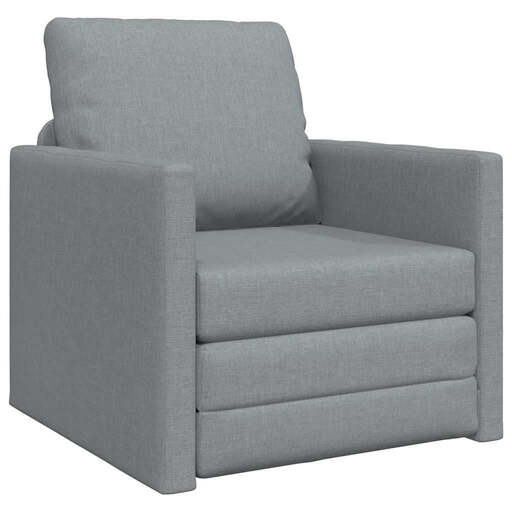
Why This Fits Their Persona: This model is designed as a floor sofa, making it extremely space-saving and flexible. It's perfect for dorms, small rooms in shared flats, or as a multifunctional seating and sleeping solution in a home office. The simple design and compact dimensions suit a modern, uncomplicated lifestyle.
The conversion mechanism is incredibly simple: the seat cushions are just rearranged. This completely eliminates the risk of mechanical failure. The thick foam padding provides a continuous sleeping surface without any annoying gaps or hard edges.
The 2-in-1 function is achieved without complex mechanics. According to the manufacturer, the sturdy metal frame ensures stability and a weight capacity of up to 110 kg per seat. The fabric cover is breathable and durable.
The requirements for a sofa bed are highly individual. If the model presented doesn't exactly meet your needs, you can find a broader selection here, compiled based on objective criteria like material quality and functionality.
Suitability for daily use depends heavily on the construction. Models that are primarily designed as sofas, where the seat cushions become the sleeping surface, are better suited as an occasional guest bed. For daily use, sofa beds with a separate, integrated mattress and a slatted frame are the better choice, as they offer higher and more ergonomic sleeping comfort.
As a general rule, the simpler the mechanism, the less prone it is to defects. Systems based on simple pull-out or folding functions with robust metal hinges are often more durable than complex folding mechanisms with many small moving parts. Modular systems, where elements like ottomans or cushions are rearranged to create a sleeping surface, have no mechanical wear at all.