
Lieferung heute & morgen

Qualitätsgarantie

Willkommens-Angebote freischalten: KOSTENLOSE Lieferung | Bis zu 80 % RABATT | Kostenlose 30-Tage-JoyPlus-Testphase
App herunterladen
Sofas are often chosen for their colour and shape. In everyday use, though, other factors determine whether one will work in your home: dimensions, seat height, cushioning, upholstery and how much assembly is required. In a small flat, just a few centimetres can make the difference between a sofa fitting through the hallway and blocking the way.
It’s worth comparing your options carefully before you buy. The tips below will help you make sense of marketing terms and choose a sofa to suit your room, household and how you plan to use it.
A 2-seater sofa that is 180 cm wide doesn’t necessarily offer 180 cm of seating space. Armrests, side panels and the upholstery structure all reduce the usable area. For example, the vidaXL model measures 180 × 78 × 84 cm overall, but has a stated seat width of 140 cm. That may be enough for two people, but could feel tight if you often want to stretch out or seat three adults.
Seat depth matters, too. A depth of around 50 cm is suitable for sitting upright, while particularly deep seats need more room for you to lean back.
A modular sofa may offer flexible configurations, but it still needs enough floor space. With a corner sofa, you’ll also need to check the length of each side, the distance from doors and the space in front of the sofa.
In smaller homes, a small sofa, loveseat or compact 2-seater is often easier to accommodate than an L-shaped sofa. Before ordering, measure your lift, stairwell and front door, too. Vacuum-packed models can be easier to move through narrow hallways, but they need time to regain their shape once unpacked.
Velvet, chenille and corduroy feel and look different, and each needs different care. A polyester velvet sofa can be vacuumed regularly and spot-cleaned with a damp cloth. However, harsh cleaning products and prolonged exposure to direct sunlight may damage the upholstery. Chenille and corduroy have a more pronounced texture, where pressure marks or changes in the pile’s direction may be visible.
“Ready to use” and “easy to assemble” don’t mean the same thing, either. A sofa that requires no assembly can be set up as soon as it’s unpacked. Other models may need you to attach the feet, armrests or individual modules.
Measure more than just the wall space available. Check:
A 2-seater sofa is often suitable for couples, individuals, home offices or guest rooms. A loveseat is usually compact and can fit into an alcove. For families or larger rooms, consider a modular sofa, corner sofa or L-shaped sofa.
The product description should include details of the frame and filling. Materials may include solid wood, engineered wood, metal, foam, sinuous springs or pocket springs. These terms describe the construction, but don’t guarantee a particular lifespan on their own.
Check the stated maximum weight capacity and whether it applies per seat or to the whole sofa. The GTIMEX model has a stated static weight capacity of 270 kg. The L-shaped corduroy sofa has a maximum weight capacity of 150 kg. These figures come from the manufacturer, and the sofa shouldn’t be pushed to its limits by jumping, climbing or placing excessive weight on one spot.
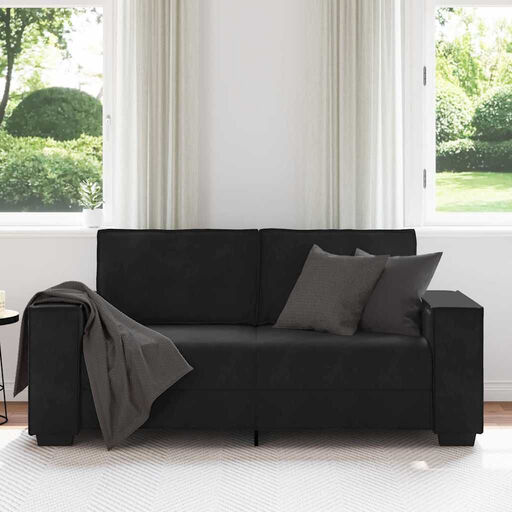
Why this product suits this profile: With an overall width of 180 cm and a stated seat width of 140 cm, this model is easy to plan for in a living room, office or guest room with seating for two.
The seat width, depth and height are all specified. This makes it easier to judge the actual seating space than by looking at the overall dimensions alone.
Foam seat, PP fibre back cushions and a frame made from metal, plywood and solid wood; assembly required.
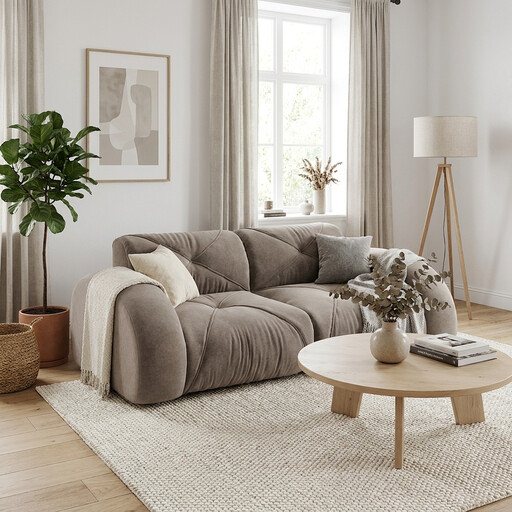
Why this product suits this profile: Measuring 204 × 95 × 76 cm, this frameless 2-seater sofa features a single-piece 32D foam core and chenille upholstery.
The description specifies the materials, foam density and recovery time after unpacking. This gives you a clear idea of what to expect when setting it up.
Frameless design, chenille upholstery and modular configuration options; a recovery time of around 72 hours is stated.
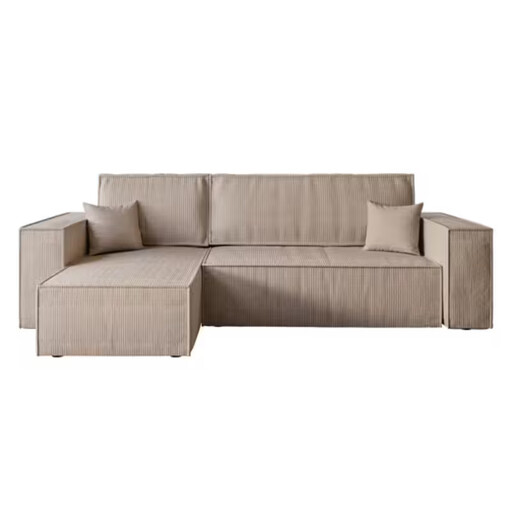
Why this product suits this profile: At 246 cm wide, this corner sofa combines a sofa bed and storage, making it suitable for households that need both seating and an occasional place to sleep.
The chaise longue can be fitted on the left or right during assembly, so you don’t have to commit to a particular layout before buying.
Sleeping area measuring 200 × 130 cm, storage compartment, sinuous springs with T30 foam, and POSO corduroy fabric with a stated abrasion rating of A over 35,000 Martindale cycles.
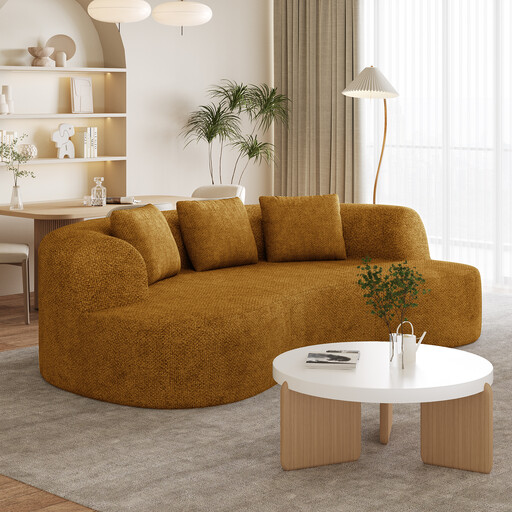
Why this product suits this profile: Measuring 168 × 90 × 67 cm, this compact model is a good fit for flats, alcoves and guest rooms where floor space is limited.
The sofa arrives ready to use and vacuum-compressed. Allow for the stated recovery time of around 24 to 72 hours when planning its arrival.
Chenille upholstery, curved design, three decorative cushions and a stated static weight capacity of 270 kg.
We’ve put together a complete, regularly updated list of products that meet these strict selection criteria and fully comply with the safety regulations in force in the EU.
Allow for usual walkways, space around the coffee table and room for doors to open. If you’re choosing a sofa bed or corner sofa, you’ll also need to leave enough space for it when unfolded. Try marking out the sofa’s overall dimensions on the floor with masking tape.
There’s no standard lifespan that applies to every type of sofa. It depends on factors such as how often it’s used, the weight it supports, its frame and cushioning, how the upholstery is cared for and the room’s climate. Check the material details, weight capacity, warranty or guarantee information, and care instructions.
A sofa doesn’t usually have any ongoing energy costs. You may need to budget for care products, professional cleaning, replacement covers or new parts. If you have a sofa bed, regularly check that the mechanism and moving parts are properly in place and show no visible signs of damage.