
Lieferung heute & morgen

Qualitätsgarantie

Willkommens-Angebote freischalten: KOSTENLOSE Lieferung | Bis zu 80 % RABATT | Kostenlose 30-Tage-JoyPlus-Testphase
App herunterladen
A sofa cover can protect upholstered furniture from pet hair, stains and everyday wear. At the same time, it can transform the look of a sofa without having to buy a new piece of furniture. However, your choice should not be based on colour or price alone. An unsuitable sofa cover can slip, crease or lose its shape after washing.
The description “for sofa” says little about the actual fit. A cover for a 1-seater is not automatically suitable for a wide armchair. A 2-seater, corner sofa and sofa bed also differ considerably in width, seat depth, armrest height and backrest.
You should therefore take the following measurements before buying:
A sofa cover for 1-seaters and 2-seaters should be explicitly designed for the relevant number of seats. A stretch cover that is too small may put strain on the seams, while an oversized sofa throw can shift more easily during everyday use.
A non-slip sofa protector can be stabilised in various ways. With a stretch cover, an elasticated edge often secures it around the lower sofa frame. With an individual seat or armrest cover, on the other hand, a textured underside or a pattern with non-slip properties may be used.
In practice, this means:
“Non-slip” should therefore be understood as a construction feature, not a guarantee against all movement. The fit and the sofa’s surface remain crucial.
A machine-washable sofa cover is practical for family homes or households with pets. Even so, you should consider the washing temperature, drying method and material. Polyester, fleece, chenille and bouclé may have different care requirements. High heat can cause some textiles to shrink or lose their shape.
Pay attention to:
A complete stretch sofa cover must be able to follow the shape of the furniture. Elasticated edges help with adjustment, but they do not replace accurate measuring. For an individual seat, a square protector may be more suitable than a complete cover. According to the product information, the 110 × 110 cm models are designed for larger seating areas, corner sofa sections or modular sofas.
Smaller individual pieces are more practical for an armrest. The available sizes of 70 × 70 cm and 90 × 90 cm are suitable for different areas, depending on the shape of the armrest and the level of coverage required. The dimensions should be compared with the actual surface area.
Chenille has a textured surface and is used for seat or armrest protectors. In the products mentioned, chenille is combined with a herringbone pattern. Fleece is soft and lightweight and can be used as a seat protector, blanket or pet blanket. Bouclé has a distinctive textile texture and is used for the 2-seater cover.
None of these materials will automatically prevent every stain. A sofa protector reduces direct contact between everyday dirt and the original upholstery, but should be removed and cleaned as soon as possible if liquids are spilt.
A cover should not trail on the floor or hang loosely into walkways. With complete covers, the fabric is smoothed out after fitting and tucked in around the bottom edge. With seat protectors, make sure they lie flat and do not create a trip hazard.
Synthetic textiles and fleece should be kept away from naked flames and strong heat sources. The relevant care and safety instructions on the product label take priority.
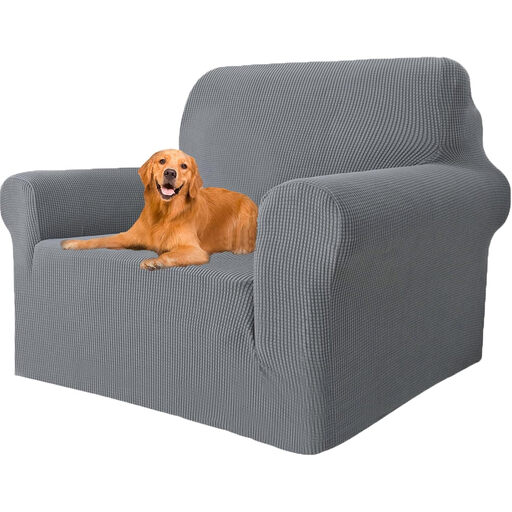
Why this product suits this profile: This cover is designed for 1-seaters and is suitable for individual armchairs or compact seating where complete sofa protection is required.
The stated seating size helps prevent a cover that is too wide from being used on a single seat. The elasticated edge helps it fit securely around the bottom.
Fleece material, light grey colour and machine-washable care according to the product description.

Why this product suits this profile: This chenille seat protector is designed for larger seating areas, corner sofa sections and modular sofas, and can be placed directly on the furniture.
The specific size and non-slip silicone underside address two common problems: unclear dimensions and slipping on the seat.
Chenille with a herringbone texture, reinforced edges and machine-washable care according to the product information.
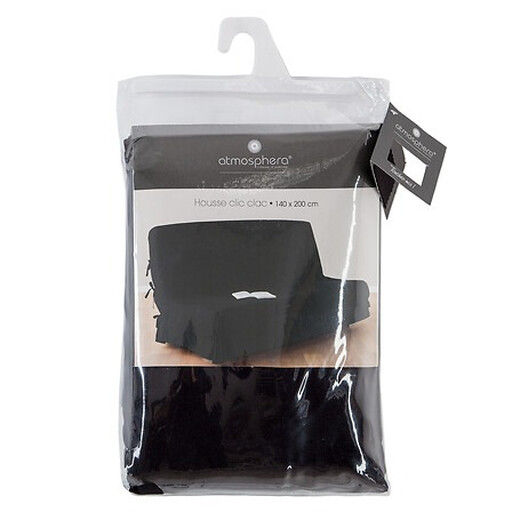
Why this product suits this profile: This cover is designed for a sofa bed with a sleeping area measuring 140 × 200 cm and can be removed for regular use.
The stated sleeping-area size reduces the risk of using a standard sofa cover on a pull-out piece of furniture.
Cotton material, dark grey colour, and easy placement and removal according to the product description.
Why this product suits this profile: An individual armrest cover protects particularly hard-wearing areas without covering the entire sofa.
The defined size makes it easier to choose a cover for an armrest. The herringbone pattern is specified as a non-slip construction.
Chenille material, 70 × 70 cm size, and targeted protection against everyday wear, stains and pet hair according to the description.
Before using the sofa cover for the first time, spread it out fully and check the fit on the furniture. With a stretch cover, pull the fabric over the backrest and seat; then align the elasticated edge underneath the sofa. With a seat or armrest protector, simply place it flat without creasing.
For households with children or pets, it may be useful to use several smaller sofa seat covers or armrest protectors. Individual pieces can be replaced when dirty while the rest of the sofa protection remains in place. In a rented property, a neutral shade such as grey or dark grey can complement the existing décor without making any permanent changes to the upholstery.
We have put together a complete, regularly updated list of products that fully meet these strict selection criteria and the safety regulations applicable in the EU.
Measure the maximum outer width, including the armrests, as well as the seat and backrest depth. With a stretch sofa cover, the backrest height and the shape of the lower sofa frame are also important. Always compare your measurements with the product’s specific size information.
Start by choosing the correct seating size. An elasticated bottom edge can help keep a complete cover in position. For a seat protector, non-slip textures or a silicone underside can help. After placing it, smooth out the fabric and tuck it in at suitable points.
Its lifespan depends on the material, washing frequency, friction and level of use. Regular care according to the manufacturer’s instructions, low drying temperatures and avoiding bleach can help preserve the cover’s shape and surface. If there is visible damage, the sofa protector should be replaced to prevent loose parts from becoming a trip hazard.