
Lieferung heute & morgen

Qualitätsgarantie

Willkommens-Angebote freischalten: KOSTENLOSE Lieferung | Bis zu 80 % RABATT | Kostenlose 30-Tage-JoyPlus-Testphase
App herunterladen
A sofa for small spaces needs to do more than simply take up little room. In flats, studios, teenagers’ bedrooms and small living rooms, a few centimetres can make all the difference to whether doors open fully, walkways stay clear and the room feels uncluttered. At the same time, your sofa should be comfortable, easy to care for and as versatile as possible.
Three common pitfalls can lead to the wrong choice:
Measure the sofa’s overall depth as well as the width of the wall. Even a narrow two-seater can take up a lot of room if it has deep seats or wide armrests. You should also allow for:
A small sofa between 143 and 165 cm wide will often suit a single-person household, a couple or a separate bedroom. By contrast, a corner sofa measuring 247 cm or more needs a clearly defined space. If you’re considering a chaise longue, check whether it can be positioned on the left or right, or placed freely in the room.
Seat height affects how easy it is to get up, as well as how comfortable the sofa is to use at a desk or coffee table. Models with a seat height of around 42 to 48 cm are generally easier to use day to day than particularly low lounge-style sofas. A deeper seat makes for more relaxed sitting, but takes up more space in front of the sofa.
When checking weight capacity, distinguish between total weight capacity, capacity per seat and the manufacturer’s stated limit. For example, one model may have a stated total capacity of 263 kg, while another lists a maximum of 150 kg per seat. These figures are not directly comparable. The important thing is not to exceed the stated limit and to place the sofa on a flat, stable surface.
A chenille sofa or corduroy sofa can feel pleasantly soft, but it needs care suited to how you use it. The descriptions for the respective models describe chenille and microfibre as hard-wearing and breathable. According to the product details, faux leather can be wiped clean with a damp cloth, making it a practical choice for homes where small spills are common.
The construction matters too:
Check the assembly details too. A sofa that requires no assembly saves time, while models with wooden frames, legs or several packages need to be put together carefully.
The models below vary considerably in their dimensions, features and construction. The details are based on the respective product descriptions. Before you buy, check the latest specifications, delivery information and safety guidance on the product page.
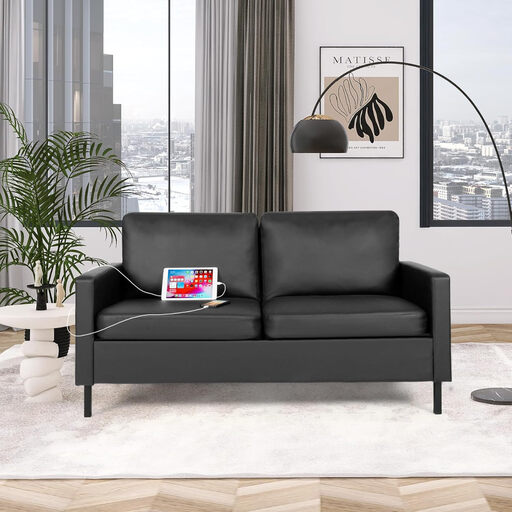
Why this product suits this profile: At 143 cm wide, this model is designed for flats, bedrooms, teenagers’ rooms or a small living room. USB and Type-C ports add everyday convenience.
The specific width and 48 cm seat depth make it easier to plan where the sofa will go. Unlike a sofa that requires no assembly, this one takes around 15 to 30 minutes to put together.
Wooden frame with slats, a stated weight capacity of up to 263 kg, and coated feet to help protect different types of flooring.
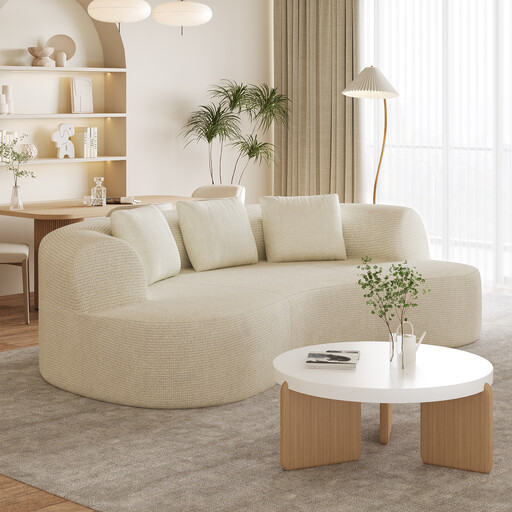
Why this product suits this profile: This 168 cm-wide model combines chenille upholstery, a curved shape and three decorative cushions. It’s designed for those who want an appealing finish and a sofa that’s ready to use straight away.
The product description specifically states that no assembly is required. However, after delivery in vacuum-compressed packaging, allow around 24 to 72 hours for the sofa to regain its full shape.
Chenille upholstery, a stated static weight capacity of 270 kg and three decorative cushions included. Follow the care instructions for the best results.
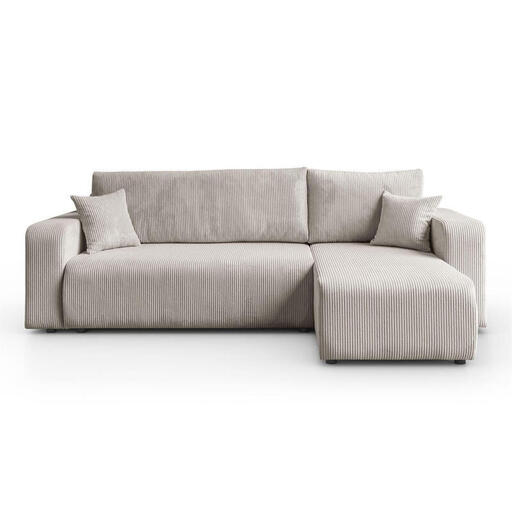
Why this product suits this profile: This corner sofa has a sofa bed with a 200 × 130 cm sleeping area, a storage box and a chaise longue that can be positioned on the left or right.
The stated sleeping area and flexible chaise longue make it easier to work out how much room you’ll need to unfold and position the sofa. At 247 × 143 cm, though, it’s still a model for a relatively spacious small room.
Sinuous springs and T30 foam in the seat, storage space and a finished, fabric-covered back. Assembly is required and should be carried out according to the instructions.
Models between around 143 and 168 cm wide can work well for one person or a couple. The width isn’t the only thing to consider: seat depth and the space left for a walkway matter too. With a corner sofa, remember to check the depth of the chaise longue as well.
That depends on its construction, the size of the sleeping area and the manufacturer’s guidance. Many compact sofa beds are intended for guests or occasional overnight stays. Check that the seat and sleeping cushions are designed for the way you plan to use the sofa, and that you can unfold it without moving it.
There’s no reliable one-size-fits-all answer. Its lifespan depends on factors including daily use, weight, cushion construction, upholstery care and the floor it stands on. Regular vacuuming, avoiding jumping on the sofa and following the care and weight-limit guidance can all help keep it in good condition.