
Lieferung heute & morgen

Qualitätsgarantie

Willkommens-Angebote freischalten: KOSTENLOSE Lieferung | Bis zu 80 % RABATT | Kostenlose 30-Tage-JoyPlus-Testphase
App herunterladen
Soft toys, plush toys and cuddly toys often look much the same in product photos: a soft surface, a friendly face and a suitable size. In practice, though, it’s the details that determine whether a soft toy for children is really suitable for everyday use. Unclear age guidance, materials that are difficult to clean and loose small parts are among the most common reasons for buying the wrong toy.
This guide explains what to check before you buy and which soft cuddly toy suits different needs – from a baby’s comforter to a collectible plush toy.
A plush toy may look suitable for children but still have small parts such as button eyes, plastic noses or removable accessories. These are particularly important for babies and children under three, as small parts that can be swallowed may pose a risk. So don’t judge by appearance alone: check the stated age recommendation and the manufacturer’s safety advice.
Care instructions matter for a bedtime companion or a soft toy that gets frequent use. Some models can only be cleaned with a damp cloth, while others can be hand-washed or put through a 30 °C wash cycle. Cleaning a toy incorrectly can affect its shape, filling, colours or special features.
A small soft toy is handy for trips out, a rucksack or a desk. A large plush toy needs more space and is harder to carry around. Weight can also matter if a toddler is expected to carry the toy themselves. Before you buy, compare the dimensions with the space where you plan to use it.
First, check the age guidance on the product page. For babies and toddlers, models without removable small parts are generally easier to assess. Pay particular attention to the warning if a product has plastic parts, button eyes, pendants or small balls.
For a baby’s comforter, the following points are also important:
According to the product details, the Fehn Flamingo comforter is suitable from birth, but should not be left unattended in a baby’s cot. It is intended for supervised play and comfort.
Polyester is commonly used in plush toys, and its feel can vary depending on the weave, pile length and filling. Corduroy, velour, knitted and plush surfaces offer different textures to explore. If your child has sensitive skin, check the material details and care instructions on the product page.
If a brand mentions certifications or chemical content, check that the claims are clearly attributed. For example, the Fehn Flamingo comforter is listed as OEKO-TEX certified, with the note “no SVHC above 0.1% found in the test report”. This information comes from the product description and is not a medical claim.
Compact models measuring around 14 to 25 cm are usually easier to carry on trips or to nursery. Larger versions are better suited to a bed, sofa or room decoration. Key things to check include:
A plush toy bought as a gift should also suit the recipient’s lifestyle. An easy-care model is more practical for everyday use, while a delicate collectible may be better suited to display.
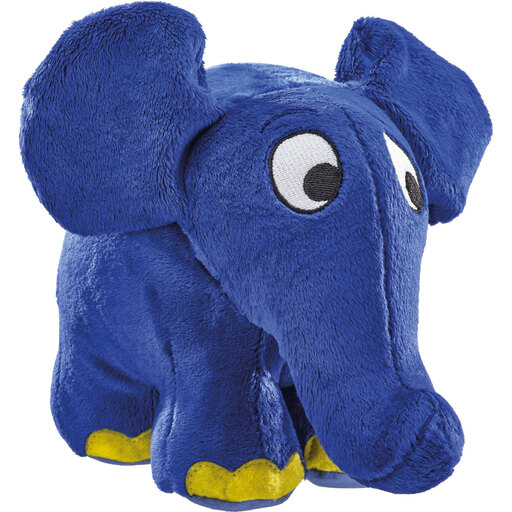
Why it suits this type of buyer: This compact model measures 16 × 22 cm and is recommended for children aged 3 and over, according to the product details. It makes a lovely little gift, travel companion or decoration for a child’s bedroom.
Clear size and age details make it easier to choose and reduce the risk of buying a soft toy that’s too large or unsuitable for the child’s age.
Compact dimensions, takes up less space and can be used as either a cuddly toy or a child’s bedroom decoration.
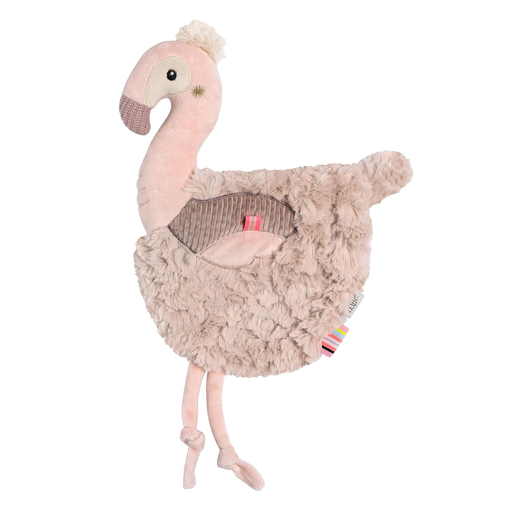
Why it suits this type of buyer: Measuring 27.4 × 16.5 cm, this comfort blanket is suitable from birth according to the product description. It combines polyester with corduroy, plush, velour and knitted surfaces.
The product details specify that it can be machine-washed at 30 °C. The additional guidance on supervised use makes clear that it is not intended as an unsupervised sleep aid.
Listed as suitable from birth, with a variety of surface textures and care instructions allowing for washing at 30 °C.
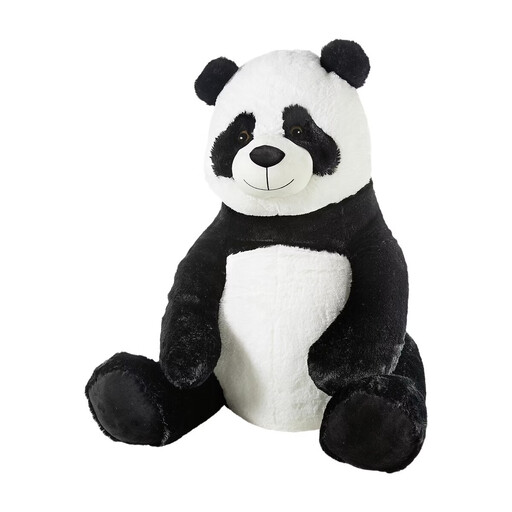
Why it suits this type of buyer: The panda is 100 cm tall and can be machine-washed at 30 °C, according to the product details. It’s a good fit for a large child’s bedroom, a sofa or a reading nook where you want a striking decorative feature.
The specified washing temperature and dimensions make it easier to see whether this model will suit your home. That helps avoid buying a toy without realising how much space or care it needs.
100 cm tall, designed in a seated position and machine-washable at 30 °C according to the product description.
When choosing a soft toy for a girl or boy, personal preference matters more than gender-based labels. Animal characters, horses, unicorns, licensed characters and neutral fantasy figures cater to a range of interests. If you’re buying a collectible plush toy, also check the edition, what’s included and how the figure is presented.
Blind-box products are quite different from traditional soft toys. You won’t know which figure is inside until you open the box, and some models contain small parts. The JOTOYS series and 52TOYS Tom and Jerry products are listed as unsuitable for children under three; one 52TOYS product also specifies a minimum age of 15. These items are therefore better suited to older fans and collectors than to toddlers.
We’ve put together a complete, regularly updated list of products that meet these strict selection criteria and fully comply with the safety regulations in force in the EU.
According to the manufacturer, a baby’s comforter should be suitable from birth and ideally have no small parts that could come loose easily. Care instructions and warnings are important. A product that is not intended for unsupervised sleep should not be left in the baby’s cot.
It depends on how often it’s used, the material and the manufacturer’s instructions. For toys used every day, check them regularly and clean them as soon as you notice visible dirt. Follow the recommended washing temperature and drying method. For collectible figures that cannot be washed, gentle surface cleaning with a soft cloth is a sensible option.
Its lifespan depends on the seams, material, care and how often it’s used. If a toy is cuddled frequently, check its seams, eyes, nose and other attached parts regularly. If any parts come loose or the material is damaged, young children should no longer use it.