
Lieferung heute & morgen

Qualitätsgarantie

Willkommens-Angebote freischalten: KOSTENLOSE Lieferung | Bis zu 80 % RABATT | Kostenlose 30-Tage-JoyPlus-Testphase
App herunterladen
A soft toy can serve several purposes in everyday life: it can accompany a child during play, lie in bed as a sleep companion, or be given as a gift and used as a decorative plush toy. However, the choice is vast, and product images alone reveal little about age suitability, care requirements or practical everyday use.
Three typical purchasing problems occur particularly often:
The age recommendation on the product page and packaging is a key factor when choosing a product. For babies and toddlers, buyers should pay particular attention to detachable pendants, button eyes, plastic parts, clips and loose stitching.
Important: A general statement such as “from 0 months” does not replace checking the specific safety information. For example, the Fehn Sloth is stated to be suitable from 0 months, while the product information also includes a warning about small parts and use under supervision. The markings on the product supplied should therefore be treated as decisive when making the final choice.
For a soft toy for children aged three and over, more design options are available. However, blind-box plush figures with PVC elements or small pendants are not suitable for younger children if they contain parts that could be swallowed.
The right size depends on how the toy will be used:
You should also check the material information. Polyester is common in many products, but the filling, surface texture and construction are equally important. Velour, jersey, corduroy and short-pile plush all feel different. A textured surface can be interesting to touch, while smooth short-pile plush is often easier to clean.
A soft toy is handled regularly, taken on trips and may become dirty during mealtimes or play. Before buying, you should find out:
Electronic sleep aids involve additional ongoing battery costs. Moving, illuminated or sound-producing functions should also only be used according to the instructions and with appropriate supervision. A sleep aid can form part of a bedtime routine, but it does not replace individual care or a safe sleeping environment.
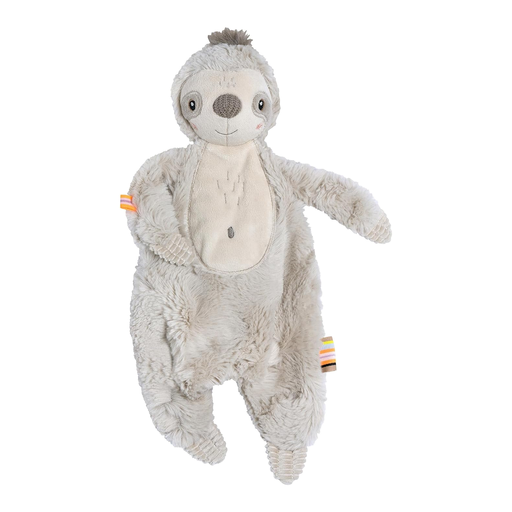
Why this product suits this profile: Measuring approximately 19.4 × 17.3 × 6.2 cm and weighing around 90 g, this compact comforter requires no batteries. This makes it suitable for small hands and for use both at home and on the go.
The product information lists several tactile surfaces, including plush, velour, corduroy and knitted fabric. Before use, however, parents should check the warning about small parts and the age recommendation on the packaging.
Lightweight, battery-free and machine-washable according to the product information. The design combines a comforter with a plush figure.
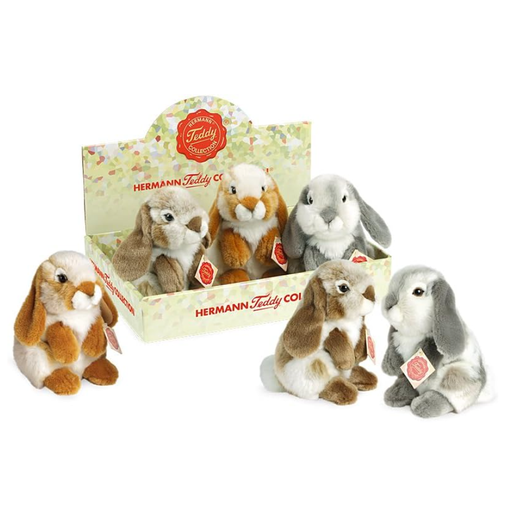
Why this product suits this profile: The sitting rabbit is stated to be suitable for children aged 18 months and over and has a filling made from recycled polyester. Its natural design works well for play and cuddling, as well as understated children’s bedroom décor.
The specific age recommendation defines suitable use more clearly than general baby-focused advertising. The care instructions specify a 30 °C wool cycle, a maximum of 600 revolutions and air drying; tumble-drying is not recommended.
Recycled polyester filling, clearly defined care instructions and, according to the product information, safety testing by accredited institutes.
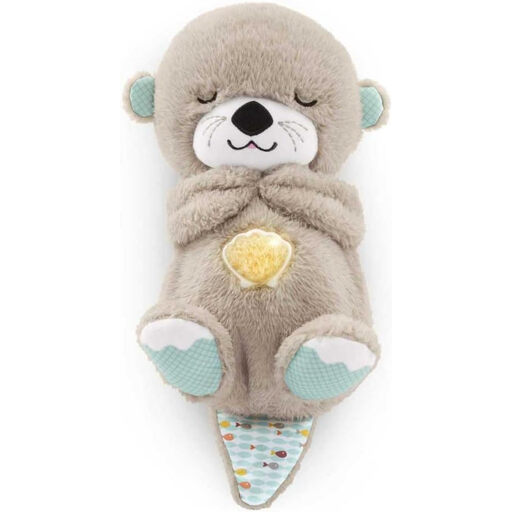
Why this product suits this profile: Measuring approximately 28 cm, this otter combines plush fabric with sounds, light and rhythmic movement. It is aimed at families who want to incorporate a technology-based sleep aid into their bedtime routine.
The functions are clearly specified and adjustable: up to 30 minutes of different sounds, as well as a night light. The electronic module must be removed before washing to prevent accidental damage during cleaning.
Several sound modes, a light function and a detachable electronic module. According to the product information, four AA batteries are required.
We have put together a complete, regularly updated list of products that fully meet these strict selection criteria and the safety regulations applicable in the EU.
Even a soft fabric toy should be checked from time to time. Look out for open seams, protruding threads, loose eyes, detached pendants and damaged filling. For products with a sound or light module, the battery compartment and casing must be kept dry.
Always follow the care instructions provided by the relevant manufacturer. Machine washing is convenient, but not possible for every plush toy. After washing, the soft toy should be completely dry before it is used again or placed in bed. For hand washing, a mild detergent and gently pressing out excess water are recommended instead of vigorous twisting.
For babies, only products whose age recommendation and safety information clearly match the intended use should be considered. Choose a lightweight model without loose small parts and check it regularly. If the product page and packaging contain conflicting information, the markings on the item supplied should take precedence.
For taking out and about, around 15 to 20 cm is usually easier to handle. A plush toy measuring 25 to 35 cm offers more surface area for cuddling and can also be used as a decorative feature. For babies, size should not be the only consideration: weight, shape, attachments and the specific sleeping environment are also relevant.
Its lifespan depends on the material, stitching, frequency of use and care. A fabric toy used every day may wear out more quickly than a collector’s piece. Check the product before every use, follow the washing instructions and replace it if any parts are damaged or no longer securely attached.