
Lieferung heute & morgen

Qualitätsgarantie

Willkommens-Angebote freischalten: KOSTENLOSE Lieferung | Bis zu 80 % RABATT | Kostenlose 30-Tage-JoyPlus-Testphase
App herunterladen
Soft toys accompany children during play, at bedtime and on the go. Plush toys and fabric toys are also popular gifts. The choice ranges from classic animal soft toys and unicorn soft toys to interactive characters and collectables. However, an appealing design alone says little about a toy’s suitability for everyday use, care requirements or safety.
A particularly large soft toy may make an impressive statement, but it might not fit in a child’s bed, pushchair or luggage. For taking along on trips, models measuring around 16 to 25 cm are generally easier to transport. Larger versions can instead be used as decorations or cushions, provided the product description indicates that they are suitable for this purpose.
Terms such as “super-soft” or “especially fluffy” are difficult to assess without specific material information. Look for details such as 100% polyester, the type of filling and the recommended cleaning methods. For sensitive skin, parents should also check the textile labelling and the information on the packaging.
Interactive soft toys with sounds or accessories require batteries and can often only be cleaned on the surface. Small plastic parts, button eyes, glitter elements or accessories may pose a risk to younger children. The age recommendation is therefore more important than how well known the character is.
A soft toy for children under three should not contain any small parts that can easily come loose. For products with button eyes, plastic noses, glitter appliqués, removable accessories or small balls, the relevant warning is particularly important. The CE mark indicates compliance with applicable EU requirements, but it does not replace checking the specific product information.
For baby soft toys, parents should also check whether seams, ribbons or labels could come loose. Packaging materials and fastenings must be removed before giving the toy to a child. The manufacturer’s information takes precedence if the age recommendation and product details differ.
Clear material information makes it easier to compare products. Polyester is common in many soft plush toys; Teddy Hermann, for example, uses recycled polyester filling in its rabbit. Strong seams, securely attached elements and a surface that is compatible with the intended care method are also important.
Check the following before buying:
The dimensions should suit where the toy will be used. A 16 cm dog soft toy is more suitable as a companion for taking along or as a desk decoration. A model measuring 30 to 35 cm is more eye-catching and can be used for cuddling or display. When choosing a soft toy as a gift, it is also worth considering the recipient’s interests and age: a unicorn soft toy may appeal to different children than a rabbit soft toy, a horse or a familiar TV character.
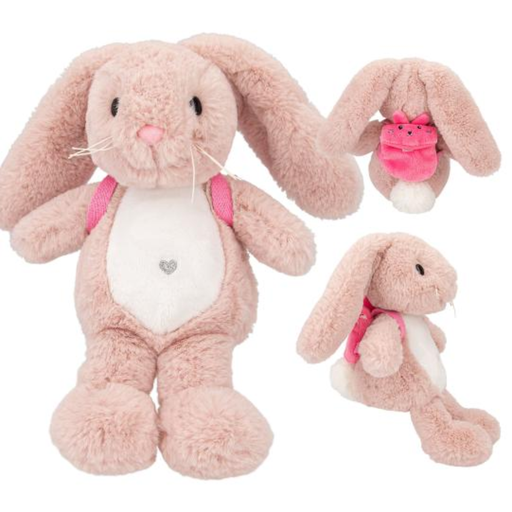
Why this product suits this profile: Measuring 19 cm, this 100% polyester bunny soft toy is compact and comes with a small plush backpack for an added element of play.
The dimensions and material are clearly stated. Because it contains small parts, including button eyes, the product information recommends it for children aged three and over.
Compact size, 100% polyester material and an embroidered heart detail with an additional backpack.
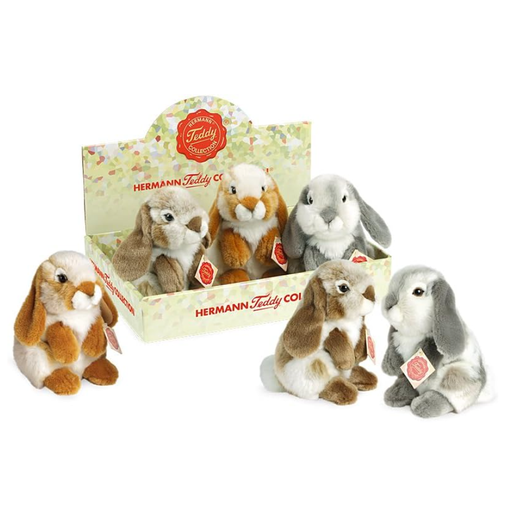
Why this product suits this profile: This sitting rabbit combines a natural design with recycled polyester filling and a stated suitability for children aged 18 months and over.
The product information gives a specific age limit, recycled filling and a 30 °C wash cycle on the wool programme.
Recycled polyester filling, care at 30 °C and, according to the product description, safety confirmed by accredited testing bodies.
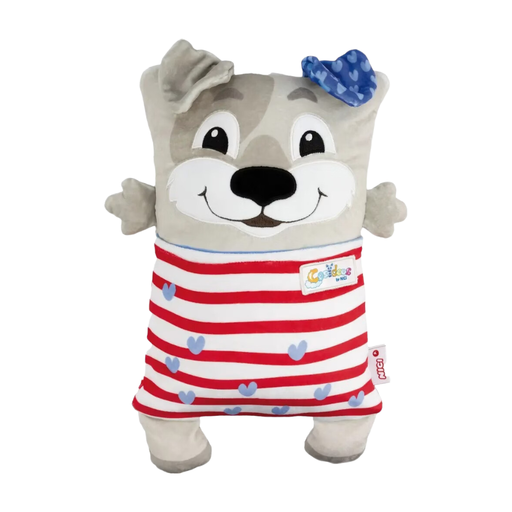
Why this product suits this profile: The reversible design offers two looks for playtime and bedtime routines. According to the product information, the model is suitable for children aged 12 months and over and requires no batteries.
Instead of an electronic extra, this model works manually. That reduces the need to change batteries; care consists of spot cleaning or hand washing.
Reversible design, cushion function, integrated soft pockets and dimensions of approximately 30 × 20 cm.
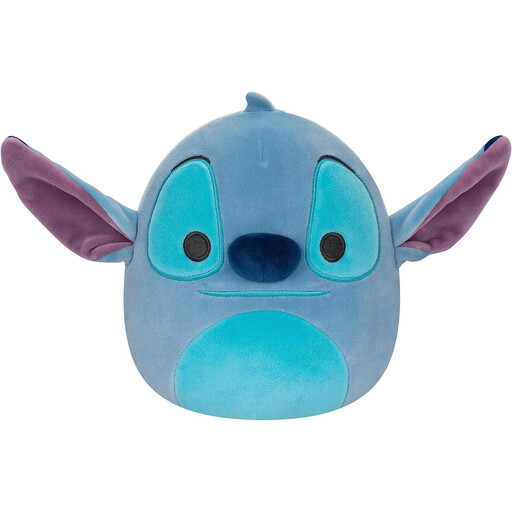
Why this product suits this profile: Measuring 35 cm, this Stitch plush toy is aimed at character fans looking for a distinctive model to cuddle, display or take with them.
The product description lists polyester as the outer and filling material and recommends hand washing. This gives you a realistic idea of the care requirements before buying.
35 cm size, official Stitch character design, polyester material and, according to the product information, suitability for hand washing.
We have put together a complete, regularly updated list of products that fully meet these strict selection criteria and the safety regulations applicable in the EU.
Lifespan depends greatly on use, material and care. Remove dirt according to the manufacturer’s instructions and allow washed plush toys to dry completely. Models with electronics, such as the Peppa Pig Evie plush figure, may only be cleaned on the outside according to the product information and require two AAA batteries. For classic fabric toys without electronics, care is generally more straightforward.
Regularly check seams, eyes, noses and accessories. If parts come loose or the filling starts to escape, stop using the soft toy. According to the product description, a worry eater such as “Ping” by Schmidt Spiele is intended for children aged 36 months and over and can be hand washed. The age recommendation and care instructions should remain the deciding factors, even with popular brands such as NICI, Squishmallows or character ranges.
For babies, only consider models whose age recommendation expressly matches their age and which contain no detachable small parts. Check the seams, ribbons, eyes and labels before every use. If the information is contradictory, the labelling on the packaging and product takes precedence.
This depends on how it is used and the material. Cleaning is advisable if the toy is visibly dirty or regularly comes into contact with food and liquids. Follow the care instructions: some models can be washed at 30 °C, while others may only be hand washed or cleaned on the surface.
They can incur ongoing costs for batteries. Cleaning is also often restricted because electronic components must not get wet. Before buying, compare the battery type, contents and cleaning method.