
Lieferung heute & morgen

Qualitätsgarantie

Willkommens-Angebote freischalten: KOSTENLOSE Lieferung | Bis zu 80 % RABATT | Kostenlose 30-Tage-JoyPlus-Testphase
App herunterladen
A soft toy to give as a gift may seem straightforward at first glance. But there are important differences between baby soft toys, plush rabbits, teddy bears and interactive soft toys. The recommended age, build quality, cleaning requirements and features all determine whether a soft toy remains practical in everyday life or ends up unused on a shelf after a short time.
A soft plush toy may feel pleasant to hold, but delicate surfaces, glued-on details or hard-to-reach filling can make care more difficult. Especially for young children, you should check whether the soft toy can be cleaned and whether seams, eyes or other elements could come loose through regular play.
An interactive soft toy with lights, sounds or movement can be appealing. However, it requires batteries and contains additional electronic components. Before buying, parents should check whether the volume can be adjusted, how long the functions run and whether the electronic module can be removed for cleaning.
A 90 cm teddy bear makes an eye-catching companion in a child’s bedroom, but is less practical for travelling or smaller beds. A compact soft toy, on the other hand, fits into a rucksack and small hands, but offers less room for cuddling. The right size therefore depends on how the toy is intended to be used.
The age recommendation on the product page and packaging is a key safety parameter. Soft toys with button eyes, plastic parts, shoes, dummies or small accessories may be unsuitable for younger children. A soft toy for children aged 3 and over should not automatically be given to a baby.
Additional precautions apply to babies: a comforter or baby soft toy should always be supervised during use. This is particularly important while sleeping. The Fehn Flamingo Comforter specifically advises that the product should not be left unattended in a baby’s cot.
Polyester plush is common in many soft toys. The quality of the seams, how details are attached and the type of filling are also important. For products intended for younger children, parents should regularly check whether threads, seams or plastic parts are damaged.
Clear material information is more useful than vague marketing claims such as “especially safe” or “extra cuddly”. If your child has sensitive skin, supervised use for a short period at first is advisable.
A washable soft toy is generally more practical for family life. You should follow the specific care instructions:
The filling and size also affect drying time. Large models require more space and may remain damp for longer.
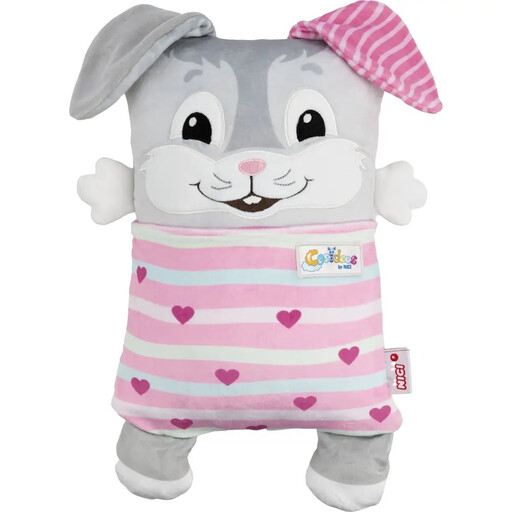
Why this product suits this profile: The plush rabbit combines playtime and bedtime routines in one compact design and, according to the product information, is suitable for children aged one and over.
The reversible function changes the colour and design for day and night. Soft pockets replace loose accessories and provide space for small items.
No batteries required; can be used as a soft toy and gentle cushion; packaging dimensions: approximately 35.3 × 24.8 × 10.5 cm.
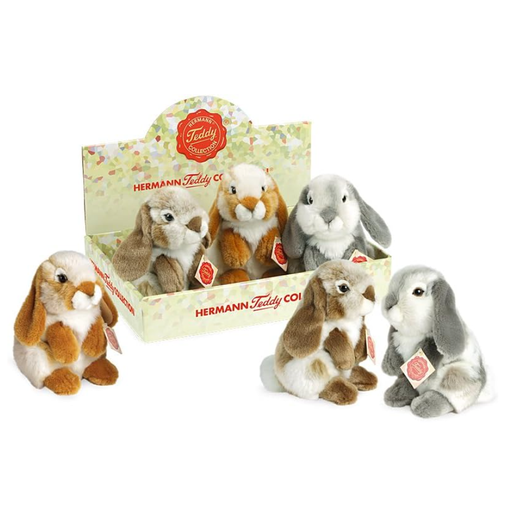
Why this product suits this profile: The realistically designed rabbit is intended for children aged 18 months and over, combining plush fabric with recycled polyester filling.
The care instructions are specific: gentle wash at 30 °C, spin at up to 600 revolutions per minute and air-dry. Tumble drying is not recommended.
Recycled polyester filling; machine-washable at 30 °C; age recommendation from 18 months.
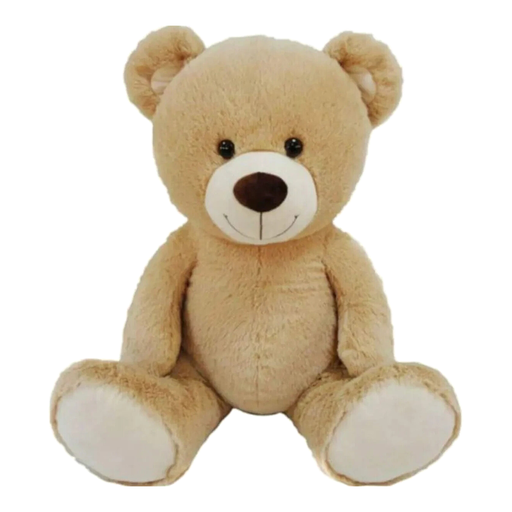
Why this product suits this profile: The large teddy bear is designed as an eye-catching bedtime companion for children and as a decoration for the nursery.
The product information states that it can be machine-washed at 30 °C. This makes it easier to incorporate care into family life compared with surface-clean-only models.
Approximately 90 cm tall; brown plush fabric; washable at 30 °C according to the product description; suitable from 12 months.
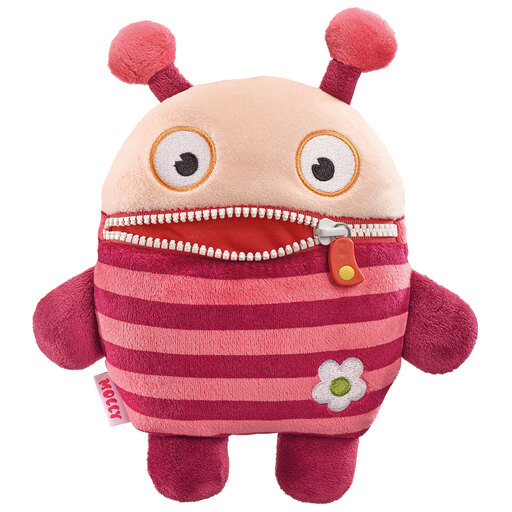
Why this product suits this profile: The Worry Eater gives children a playful way to draw or write down their thoughts and keep them in a zipped compartment.
The compartment is part of the design, not a loose accessory. The product information advises parents to discuss the contents with their child.
23 cm size; washable according to the product information; zipped mouth for notes; can be used as a soft toy and a conversation starter.
We have put together a complete, regularly updated list of products that fully meet these strict selection criteria and the safety regulations applicable in the EU.
The lifespan of a plush toy depends more on how it is used and cared for than on its appearance when purchased. A soft toy that lies in bed every day should be checked regularly for loose seams, damaged eyes and stretched fastenings. For a washable model, follow the care instructions. Surface-clean-only models, such as some plush dogs or decorative figures, should only be wiped with a damp cloth.
Electronic soft toys such as a Bedtime Otter or a Soothe-and-Settle Bunny require batteries. The electronic module must be removed before washing. Batteries should be removed if the toy will not be used for an extended period, to prevent damage caused by leaks.
For babies, only products whose age approval explicitly states that they are suitable from birth or for the relevant age should be considered. Small parts, button eyes, ribbons and detachable accessories can be hazardous. A baby soft toy should only be used under supervision and should not be left unattended in the sleeping area.
That depends on how it is used. Cleaning may be advisable after daily contact, visible soiling or travel. The manufacturer’s instructions are the key reference. Not every soft plush toy is machine-washable; some models may only be cleaned with a damp cloth.
Running costs are generally limited to batteries. How often they need to be replaced depends on the volume, lights, movement function and length of use. Before buying, parents should check which type of battery is required and whether the product can also be used without the functions switched on.