What should you look for when buying?
First, choose between an enclosed light tent and a light you can position freely. Then check reflection control, the space available and the connections you already have.
Compact LED light tent
A good fit if: The ornament and the framing you want will fit inside the tent, and you prefer an all-in-one set-up. For example, NEEWER describes the LP40 as a foldable light tent measuring 40 × 40 × 40 cm.
The trade-off: The enclosed surfaces make it easier to create an even set-up, but limit how freely you can position individual reflective surfaces.
Softbox with a compatible light
A good fit if: You want to position light to the side of or behind the glass and shape bright reflections precisely. broncolor notes that a narrow softbox can produce narrow reflections.
The trade-off: The light and modifier may be sold separately, and you’ll need space beside the table to set them up.
Existing light with a diffusion panel
A good fit if: You want to try whether a diffused surface behind the glass, with dark cards beside it, gives you the look you want. Bastian Peter describes this approach for transparent products.
The trade-off: The result depends on where your existing light source is positioned and which surfaces are reflected in the glass from your camera angle.
| Consideration |
What to check before buying |
Who will find this important? |
| Reflections and glass edges |
Check that you can position the light source and background as needed, with room beside the ornament for dark cards. |
If you want to bring out edges and curves, controlling bright and dark reflections is important. Around 36% of consumers put this first. |
| Space and storage |
Compare the usable interior dimensions of a light tent, or the dimensions of the softbox, stand and camera position, with your table. |
If your table has little spare space, your subject, camera and lighting all need to fit the set-up. Around 29% of consumers pay particular attention to the space required and storage. |
| Connection and what’s included |
Check that your light’s connection matches the modifier, and whether a light, stand, adapter and power supply are included. |
If you already have a light, you’ll want to avoid buying duplicate equipment and find a compatible modifier. Around 21% of consumers prioritise this. |
| Colour temperature and brightness |
Check whether the specific model is dimmable and its colour temperature. Only compare lux figures when the measuring distance and modifier are the same. |
If you want to adjust the colour temperature or brightness to suit your shot, the available settings are key. Around 14% of consumers prioritise this. |
Joybuy products for compact photo set-ups
The products below are compact LED light tents for product photography. They’re better suited to an all-in-one tabletop set-up than to positioning reflective surfaces freely.
 No image available
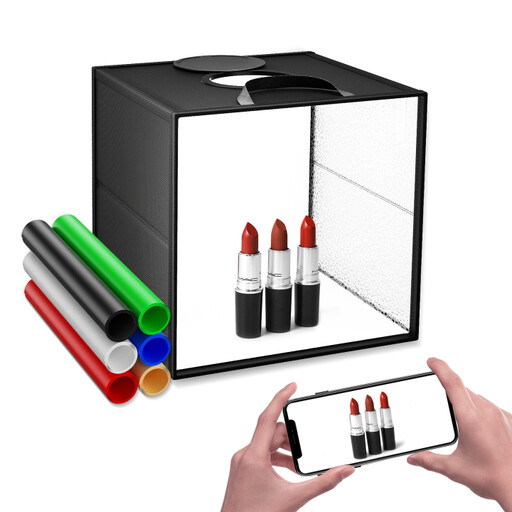
30 × 30 cm Oxford fabric light tent
Foldable LED photo studio for product photography; the product title specifies six coloured backgrounds and dimmable lighting.
View on Joybuy
 No image available
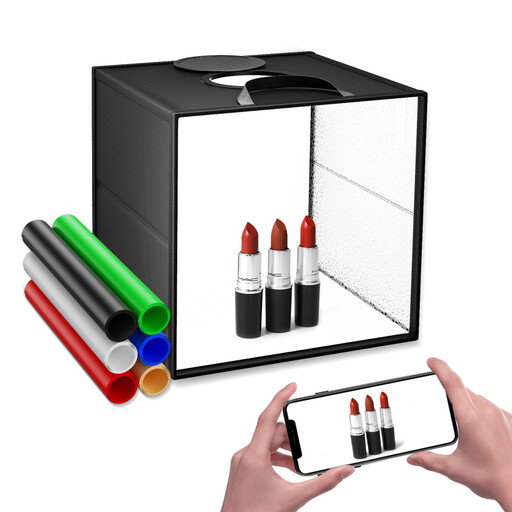
Foldable 30 cm LED light tent
The tent format makes this a compact set-up for small product subjects. The product title specifies 120 LEDs, three colour temperatures, nine brightness levels and six coloured backgrounds.
View on Joybuy
 No image available
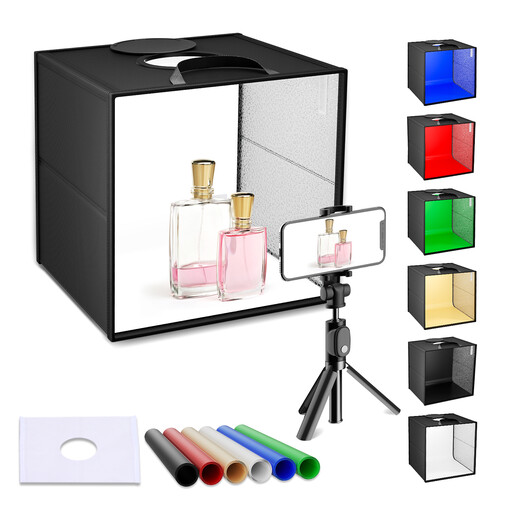
Foldable LED light tent with coloured backgrounds
This foldable tent is designed for a compact product photography set-up. You have less flexibility to position individual reflective surfaces than with a freestanding softbox.
View on Joybuy
 No image available
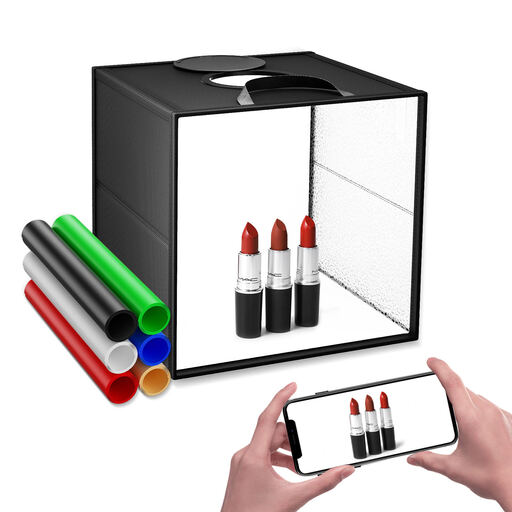
40 cm mini photo studio with 120 LEDs
Designed for a foldable product photography set-up. The product title specifies 5600 K, dimmable lighting, six coloured backgrounds and soft light cloths.
View on Joybuy
Frequently asked questions
Do I definitely need two softboxes for transparent glass?
No. You can start by lighting a diffused surface behind the glass and placing dark cards to the side. Bastian Peter describes this approach for transparent products; what matters is which bright and dark surfaces are reflected in the glass from your camera angle.
How should I adjust the lighting if an engraving disappears?
First, adjust the light position and the flags, then check the image from the final camera angle. In a glass set-up documented by broncolor, a softbox provided even base lighting while additional directional light made the engraving more visible. This is one example, not equipment you need for every ornament.
What should I check about the power supply and mains adapter?
Follow the instructions for the specific device and check what type of power supply it needs. NEEWER explicitly states that a mains adapter is not included with the USB-A-powered LB30B.
What rights do I have if a light is faulty or I buy online?
When you buy from a business seller in the EU, you generally have statutory rights for faulty goods for at least two years from receiving them; a manufacturer’s guarantee does not replace these rights. Most online purchases also come with a 14-day right to withdraw from the contract, starting from delivery, subject to legal exceptions. Your Europe also explains that you should check whether you may have to pay return postage before buying.
Does an LED photo light need to carry a CE mark?
A CE mark is required when EU harmonisation rules applicable to the specific product require it. It is a declaration by the manufacturer, not a general, independent quality mark. When carrying out market surveillance, the Bundesnetzagentur checks, among other things, product marking and identification, manufacturer details and German-language instructions. So check the requirements for the specific device.


