
Lieferung heute & morgen

Qualitätsgarantie

Willkommens-Angebote freischalten: KOSTENLOSE Lieferung | Bis zu 80 % RABATT | Kostenlose 30-Tage-JoyPlus-Testphase
App herunterladen
Solar copper wire string lights promise simple and atmospheric lighting for your garden, balcony, or patio—all without electricity costs or complex wiring. However, the vast market selection also has its pitfalls. Many products disappoint with short illumination times or poor weather resistance. This guide will show you which technical features to look for to make an informed purchasing decision.
Before buying, it's helpful to know the three most common weaknesses, which often only become apparent after a few weeks of use:
To avoid these problems, you should carefully check three technical parameters. These provide an objective measure of the quality and suitability of solar string lights for outdoor use.
The IP (Ingress Protection) rating is the most reliable indicator of weather resistance. It consists of two digits. For string lights that need to be waterproof, the second digit is crucial:
Always check the product description for an explicit IP rating. If it's missing, be cautious.
A long and reliable illumination time depends directly on the performance of the solar system. Look for the following features:
Good solar garden lighting should be able to store enough energy on a sunny day for 8 to 10 hours of light.
Aesthetics are just as important as technology. The flexible copper wire allows for creative decorations, but the light colour is what truly sets the atmosphere.
Here are some product recommendations tailored to different needs and locations.
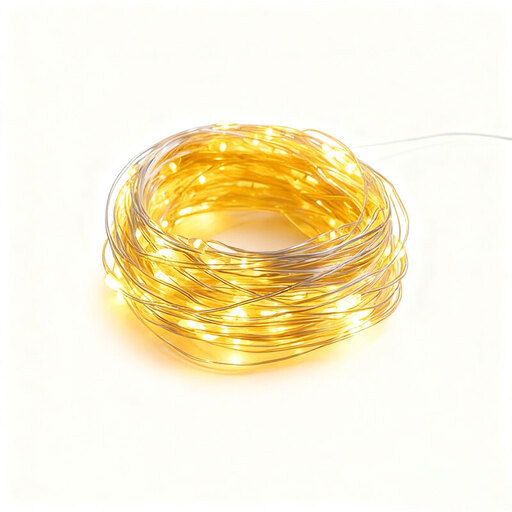
Why This Fits Their Persona: Ideal for users looking for a cost-effective solution for sheltered areas like covered balcony decorative lights. The 8-meter length and warm white light create a pleasant basic atmosphere without a large investment.
The product description specifies a clear IP44 rating. This is an honest specification, indicating the product is designed for splash-proof areas but not for heavy rain.
Equipped with a polycrystalline solar panel and a 300mAh battery, it provides a solid foundation for nighttime illumination. Three light modes (On/Off/Flashing) add some variety.
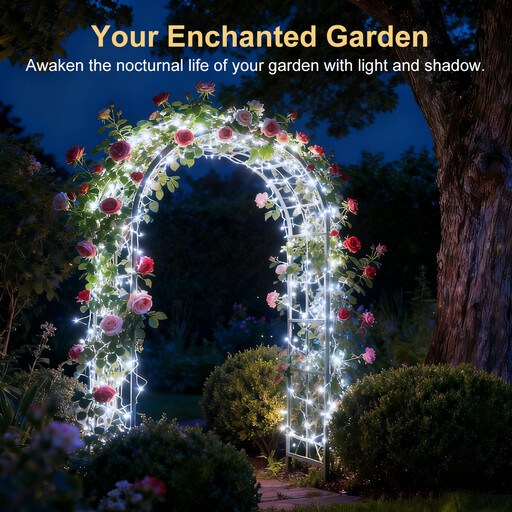
Why This Fits Their Persona: Perfect for homeowners who need reliable, weatherproof lighting for year-round use in unprotected garden areas. The 2-pack offers good value for money for larger spaces.
With an IP65 certification, this model is explicitly protected against water jets, thus avoiding the trap of vague waterproofing promises. The reinforced housing of the solar panel contributes to its durability.
The improved solar panel promises higher energy conversion efficiency for an illumination time of 8–14 hours. 8 lighting modes with a memory function offer creative flexibility.
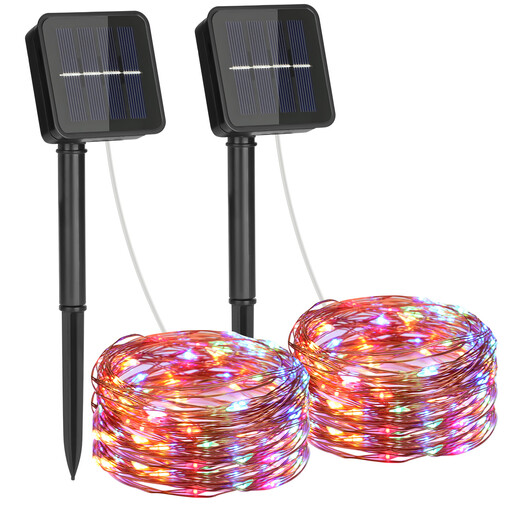
Why This Fits Their Persona: The combination of 12 meters in length, 120 colourful LEDs, and 8 lighting modes makes this 2-pack the top choice for garden parties, holiday decorations, or large-scale staging of shrubs and trees.
Here too, the IP65 rating ensures reliability in all weather conditions. The flexible yet robust copper wire can also withstand repeated bending and shaping for various decorative projects.
The generous length and high LED density allow for impressive and colourful lighting. The memory function for the last selected mode is especially practical for recurring events.
We have compiled a complete, real-time updated list of products that fully meet these strict selection criteria and safety standards.
The lifespan depends on several factors. The LEDs themselves have a very long life, often exceeding 10,000 hours. The battery is typically the component with the shortest lifespan and can lose capacity after 1-3 years, depending on quality and charging cycles. The physical durability of the copper wire and solar panel depends heavily on the material quality and weather resistance (IP rating).
Yes, but with reduced performance. Solar panels also charge in diffuse light, but much more slowly than in direct sunlight. In winter or on consistently cloudy days, the battery may not fully charge, leading to a shorter illumination time at night. For optimal performance in winter, the solar panel should be kept free of snow and positioned to face the low-lying sun as much as possible.
The most important step is the placement of the solar panel. It should be mounted in a location that receives as much direct sunlight as possible throughout the day, ideally with a south-facing orientation. Avoid shadows from trees, buildings, or awnings. The copper wire itself can be flexibly wrapped around railings, plants, or other objects. Be careful not to bend or stretch the wire too tightly to avoid breakage.