
Lieferung heute & morgen

Qualitätsgarantie

Willkommens-Angebote freischalten: KOSTENLOSE Lieferung | Bis zu 80 % RABATT | Kostenlose 30-Tage-JoyPlus-Testphase
App herunterladen
Solar garden lights are a practical alternative to permanently installed lighting in many outdoor spaces. They don’t need a mains connection and can usually be placed in the ground without tools. However, the wrong choice can quickly lead to disappointment: the light stays off after cloudy days, the stated splash-proof rating is misunderstood, or the light isn’t suited to how you want to use it.
This guide explains which technical details really matter when choosing solar lights for the garden, and which models suit different needs.
Claims of 8 to 12 hours of light generally assume suitable charging conditions. A small solar panel will produce much less energy on a shady balcony, under trees or in the weak winter sun. Before you buy, check whether your chosen spot will get several hours of direct daylight.
IP44 means protection against solid foreign objects above a certain size, as well as splashing water from various directions. This rating is suitable for many decorative outdoor LED solar lights, but it doesn’t mean they can be submerged in water. If the ground is regularly wet, there’s a risk of flooding or the lights will be installed in a particularly exposed position, follow the manufacturer’s guidance.
Warm white light at around 2700 Kelvin has a subtle feel and is often a good choice for seating areas, flower beds and paths. Cool white light at around 6500 Kelvin looks much brighter and more functional. RGB solar lights change colour and are best suited to decorative accents. For even solar path lighting, a steady, consistent light is often easier on the eye than changing colours.
Check the stated charging time, battery type and expected light duration. The products featured here use Ni-MH batteries. Several models specify a charging time of around 4 to 6 hours and a light duration of 8 to 12 hours in suitable conditions. These figures aren’t guaranteed for every season or location.
Keep the solar panel clear of leaves and dust, and make sure it isn’t permanently shaded. Regularly cleaning it with a soft cloth can help prevent dirt from affecting its charging performance.
Solar stake lights can be placed in soft soil or a lawn. They’re less suitable for hard, compacted ground, as forcing them into the earth can damage the stake or housing. Also check the height and spacing of the lights. Low solar ground lights highlight individual areas, while taller models can mark out a path or flower bed from further away.
A dusk-to-dawn sensor switches the light on as it gets darker and off again in daylight, so you don’t need to operate it manually. The selected models switch on automatically once they’ve received enough charge. The products featured here aren’t listed as having motion sensors, so don’t assume they do.
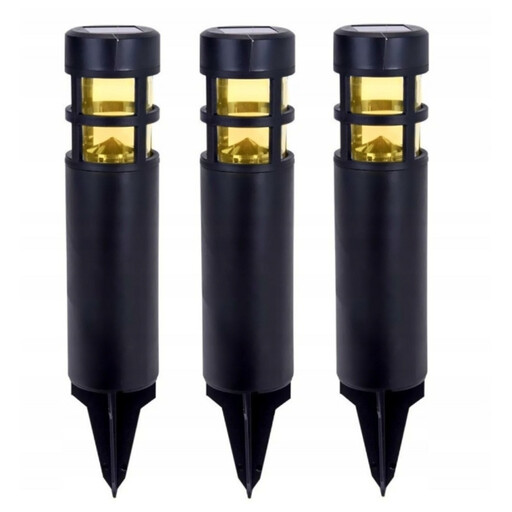
Why this product suits your needs: This set of three lights offers an easy way to illuminate small flower beds, balcony planters or a short path without fixed wiring. Simply place them in a spot that gets direct sunlight.
Automatic dusk activation means less need for manual operation. Before buying, though, check that all three locations will get enough sunlight.
Three lights in one set; automatic activation at dusk; designed for paths, gardens and borders.
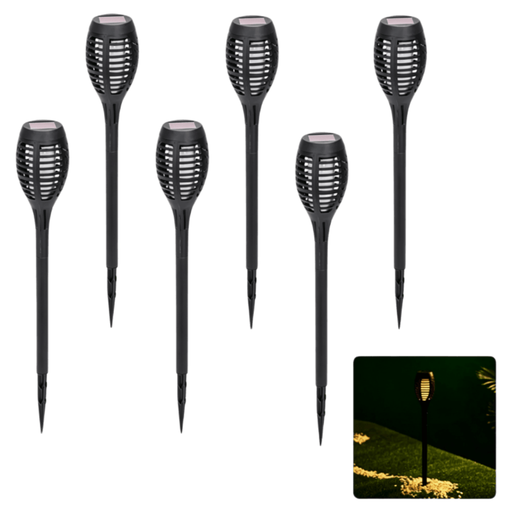
Why this product suits your needs: This set of six lights is designed for longer paths, lawn edges or several planting areas. The stated colour temperature of 2700 Kelvin produces warm white light. The flame effect is decorative and shouldn’t be seen as functional illumination.
The product details clearly state the charging time, light duration and IP44 rating. Even so, the lights shouldn’t be submerged or used outside the stated conditions.
Six lights; warm white 2700 K; product details state a charging time of 4–6 hours and a light duration of 8–12 hours in suitable conditions.
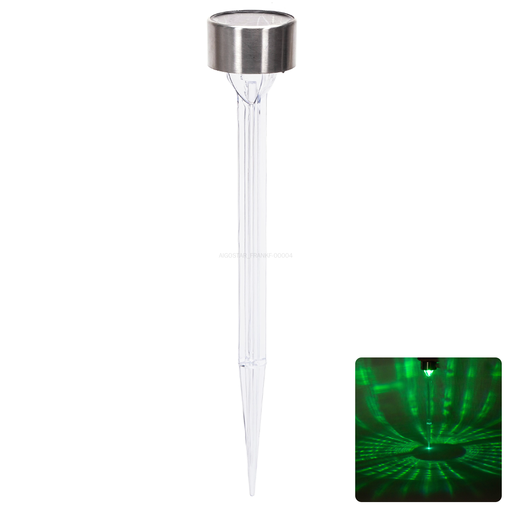
Why this product suits your needs: The RGB function is a good choice if you want to add colour to paths, lawns or flower beds. The stake lets you position the light flexibly in soft soil.
The RGB function is presented as a decorative feature, not as a way to get brighter illumination. The IP44 rating makes the light suitable for outdoor use, but it doesn’t protect it from standing water.
RGB lighting; product details state a light duration of 8–12 hours and a charging time of 4–6 hours; IP44 rating and automatic switching on at dusk and off in daylight.
We’ve put together a complete, regularly updated list of products that meet these strict selection criteria and fully comply with the safety regulations in force in the EU.
Choose a spot that gets as much direct daylight as possible. The panel shouldn’t be permanently shaded by walls, trees or larger plants. Place stake lights in loose soil and angle the panel upwards. You may need to leave the lights charging for several hours before using them for the first time.
Lifespan depends on the battery, LED, housing, location and care. Some Aigostar models featured here are stated to have an LED lifespan of up to 15,000 hours. This doesn’t mean every component will last just as long. Batteries are wear parts and can be put under greater strain by frequent charging cycles, frost, heat or prolonged exposure to moisture.
Solar lights draw power from their built-in battery while in use. The battery charges during the day via the solar panel. The models featured here don’t need to be connected to the mains. However, actual light duration depends on sunlight, the condition of the panel, battery capacity and outdoor temperature.