
Lieferung heute & morgen

Qualitätsgarantie

Willkommens-Angebote freischalten: KOSTENLOSE Lieferung | Bis zu 80 % RABATT | Kostenlose 30-Tage-JoyPlus-Testphase
App herunterladen
A solar garden light can illuminate paths, lawns, flower beds or your patio without a permanent mains connection. However, not every model suits every outdoor space. What matters most is not decorative marketing claims, but the technical specifications, where you plan to install it and how you expect to use it.
A solar light’s stated running time usually applies under suitable charging conditions. In the shade, on short days or under cloudy skies, the solar panel charges more slowly. So a stated lighting time of several hours is not guaranteed every night.
Look out for:
An IP44 garden light is protected against solid objects larger than 1 millimetre and splashing water from various directions. It is suitable for sheltered areas of the garden, for example, but should not be left standing in water.
An IP65 outdoor light is fully protected against dust and can withstand jets of water. This makes it a good option for more exposed positions along paths or driveways. However, IP65 does not mean the light can be submerged. The protection rating also does not replace correct installation.
A decorative solar ground spike light with warm light adds an accent, but it won’t necessarily replace a bright garden path light. A subtle light source is often enough for lawns and flower beds. By contrast, for driveways or steps, light output, beam angle and secure installation are more important.
Warm white light in the 2700–3000 Kelvin range has a subtle appearance and suits seating areas, flower beds and decorative garden lighting. A warm white solar light at 2700 Kelvin, for example, can highlight plants or lawn edges.
An RGB solar light lets you switch between colours. It’s best suited to decorative settings, but shouldn’t be relied on as your only source of safety or wayfinding light. For paths and driveways, even light distribution and sufficient brightness are usually more important than colour effects.
Check the IP rating in the technical specifications. IP44 may be sufficient for sheltered areas of the garden. For a freestanding weatherproof outdoor light in an exposed position, IP65 offers extra protection against dust and jets of water.
The material also matters. Plastic can reduce weight and make installation easier. Glass, metal or a sturdy base plate may offer different levels of mechanical durability in permanently installed lights. Terms such as ‘stainless steel effect’ do not necessarily mean that stainless steel is the main material.
A solar ground spike light should be pushed into soft ground or a lawn without bending the spike. Avoid placing it under trees, directly beside house walls or behind tall plants. A permanently installed outdoor light may need a suitable power supply and professional installation.
When choosing solar lights, also consider:
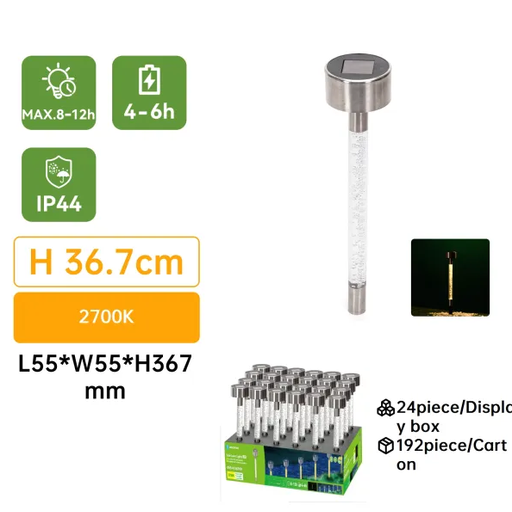
Why this product suits this profile: This lightweight solar garden light can be placed in suitable lawns and flower beds without a direct mains connection. Its warm white light is designed to create decorative accents.
The product description sets out the charging time, lighting time, IP44 protection rating and need to position the light in direct sunlight. This makes it easier to understand its limitations before you buy.
According to the product details: 2700 Kelvin, 8–12 hours of lighting under suitable charging conditions, automatic switch-on and switch-off, and a height of 36.7 cm.
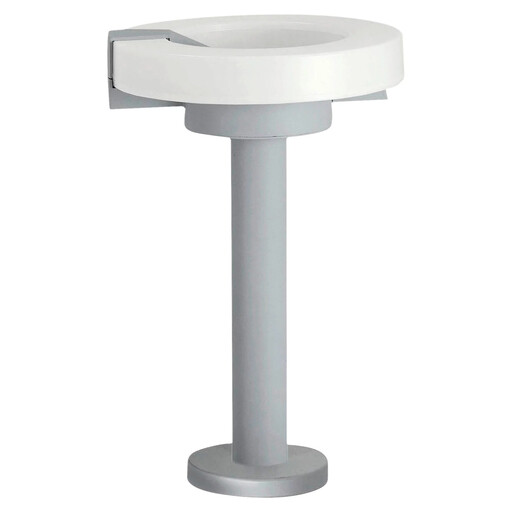
Why this product suits this profile: This permanently installable outdoor light is designed for paths, lawns and driveways where greater durability and a defined light output are important.
The stated IP65 rating is a clearer indication of suitability for dust-protected, freestanding outdoor areas than a vague description such as ‘weatherproof’. However, this is not a solar light and needs a suitable power supply.
According to the product description: IP65, 3000 Kelvin, 470 lumens, a non-dimmable LED module and an E27 fitting for bulbs up to 40 watts; the bulb is not included.
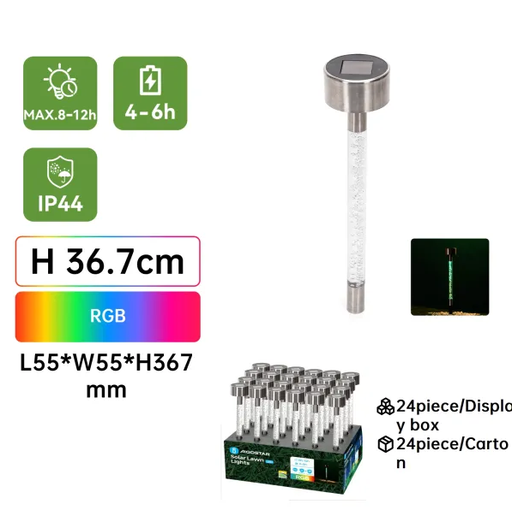
Why this product suits this profile: This RGB version is for anyone who wants to add changing splashes of colour to flower beds, lawns or a patio without laying cables.
The product details clearly state IP44, a charging time of around 4–6 hours and a lighting time of 8–12 hours under suitable conditions. This makes clear that the RGB feature does not mean the light is brighter.
According to the product details: RGB light source, automatic operation, a height of 36.7 cm, power consumption of 0.006 watts and a weight of around 80 grams.
We’ve put together a complete, regularly updated list of products that meet these strict selection criteria and fully comply with the safety regulations in force in the EU.
Place the solar panel somewhere unobstructed, facing upwards if possible. Trees, walls and buildings can reduce its charging performance. For a solar ground spike light, the ground should be soft enough for the spike but firm enough to keep it stable. Before using it for the first time, check the charging time given in the product description.
The actual lighting time depends on sunlight, the time of year, shade, battery condition and temperature. Figures such as 8–12 hours should therefore be treated as guidelines for suitable conditions. Clean the solar panel regularly with a soft cloth and follow the battery care instructions.
A solar light does not need to be connected to the mains while it is operating, as it stores energy from the solar panel during the day. Its running costs are therefore not comparable to those of a mains-powered LED garden light. For a permanently installed outdoor ground light, however, you should take the power connection, wattage and operating time into account when choosing a model.