
Lieferung heute & morgen

Qualitätsgarantie

Willkommens-Angebote freischalten: KOSTENLOSE Lieferung | Bis zu 80 % RABATT | Kostenlose 30-Tage-JoyPlus-Testphase
App herunterladen
Solar garden lights promise a simple, cost-effective, and eco-friendly way to illuminate paths, accentuate patios, and enhance security. But the reality is often quite different: lights that fail after the first rain, a runtime that barely lasts a short evening, and materials that turn brittle after one summer. As your Joybuy Product Recommendation Officer, I'll help you recognise the typical pitfalls and make an informed decision.
Many products on the market don't live up to their advertising claims. Pay special attention to these three points to avoid disappointment:
To find suitable and durable garden lighting without electricity, you should carefully examine three technical features. These determine the function, durability, and desired lighting effect.
The IP (Ingress Protection) rating indicates how well an electrical device is protected against the intrusion of foreign objects (first digit) and water (second digit). For outdoor use, the following values are relevant:
The combination of the battery and solar panel determines the runtime, especially in less-than-optimal light conditions.
The lighting effect is crucial for the intended use.
Here are some product recommendations tailored to specific needs and user profiles.

Why This Fits Their Persona: Ideal for users looking for a straightforward and affordable solution to mark garden paths or flowerbeds. The ground stake installation is incredibly simple and requires no tools.
The stainless steel housing is more resistant to UV radiation and breakage than pure plastic. The IP44 certification is clearly communicated and is appropriate for its intended use as a splash-proof accent light.
Simple, wire-free installation. The cool white light (6500K) ensures clear visibility along paths. A charging time of 4-6 hours provides a runtime of 8-12 hours under good conditions.
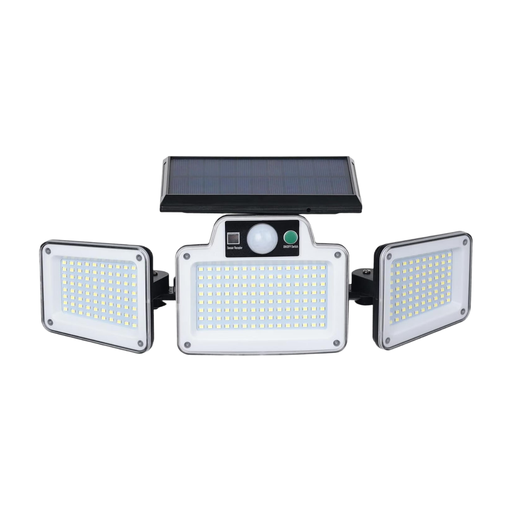
Why This Fits Their Persona: Perfect for homeowners who want to reliably illuminate driveways, garages, or dark corners of their property. The three adjustable heads and motion sensor offer flexibility and security.
With an IP65 rating, this spotlight is well-equipped for heavy rain. The separate solar panel with a long cable solves the problem of mounting the light in the shade while placing the panel in full sun, which maximises runtime.
Three operating modes can be selected via remote control. The 2400mAh battery and 280 LEDs provide bright illumination upon motion detection. The three pivoting heads allow for wide and targeted light distribution.
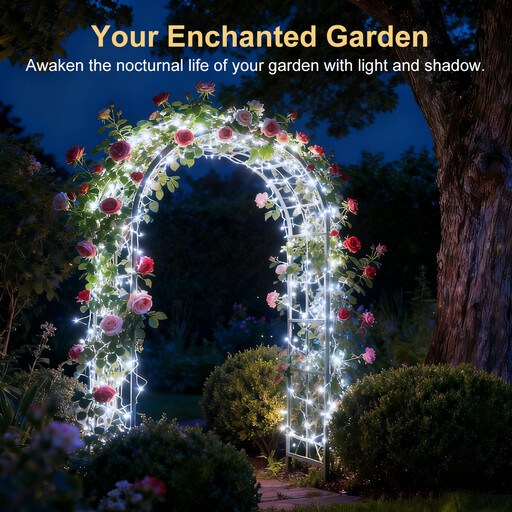
Why This Fits Their Persona: For anyone who wants to create atmospheric decorations in their garden, on their balcony, or on their patio for parties or cosy evenings. The flexible copper wire can be easily wrapped around railings, plants, or other objects.
The IP65 certification ensures that the string lights function reliably even in bad weather. The product description provides a realistic, weather-dependent runtime of 8–14 hours, avoiding exaggerated promises.
Eight different lighting modes with a memory function offer variety. The set includes two 8-metre-long string lights, allowing for a generous decoration area. No tools or wiring required.
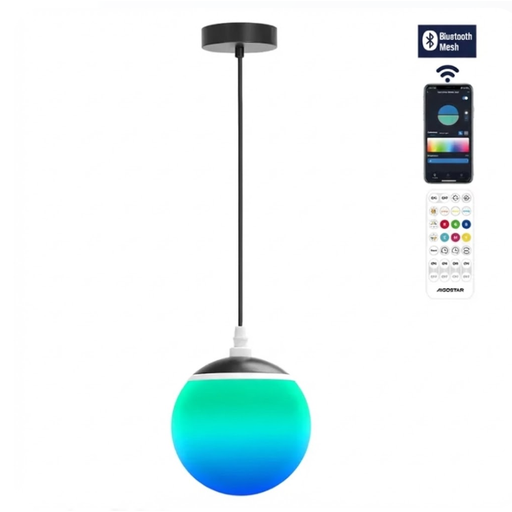
Why This Fits Their Persona: For tech-savvy users who want full control over their lighting. Ideal for covered patios, gazebos, or even sheds where smart functions and flexible colour choices are desired.
The split design (separate light and panel) is the direct solution to the problem of many solar lights not working in shady areas. The IP65 rating and UV-stabilised polycarbonate housing prevent weather-related failures and material fatigue.
Control via the AigoSmart App using Bluetooth Mesh. The RGBCCT spectrum allows you to choose from 16 million colours as well as adjustable white light (2700K–6500K). Smart energy management optimises brightness for a longer runtime.
We have compiled a complete, up-to-date list of products that fully meet these strict selection criteria and safety regulations.
The lifespan of a solar light depends on three components: the LED, the battery, and the housing. The LEDs themselves often have a lifespan of 15,000 hours or more. The battery (usually NiMH or lithium-ion) is the most common wear-and-tear component and typically lasts 1-3 years, depending on quality and charging cycles. A high-quality, weatherproof housing (e.g., made of stainless steel or UV-resistant plastic) significantly contributes to the overall longevity of the light.
Yes, but with reduced performance. Solar panels also charge in diffuse light, but much more slowly than in direct sunlight. In winter, the days are shorter and the sunlight is weaker, leading to a significantly reduced runtime. To maximise performance, the solar panel should always be kept clean and free of snow or leaves, and ideally be south-facing.
The biggest advantage is the simple installation. You don't need any groundwork or an electrician. The most important point is the placement of the solar panel: it must receive as much direct sunlight as possible during the day. Make sure it is not shaded by trees, buildings, or other objects. With models that have a separate panel, you have more flexibility to position the light in the shade and the panel in the sun.