
Lieferung heute & morgen

Qualitätsgarantie

Willkommens-Angebote freischalten: KOSTENLOSE Lieferung | Bis zu 80 % RABATT | Kostenlose 30-Tage-JoyPlus-Testphase
App herunterladen
Solar garden lights promise simple, atmospheric lighting with no wires and no extra electricity costs. But the reality is often different: many products disappoint after just a short time with dim light, short runtimes, or complete failure after the first heavy rain. Before you invest, it's crucial to understand the typical pitfalls that often lurk behind tempting product descriptions.
We'll show you the three mistakes that most frequently lead to disappointment and which technical features you should look for instead to find durable and functional solar garden lighting.
To avoid a bad purchase, focus on objective technical specifications rather than marketing promises. Three metrics are particularly important.
The IP (Ingress Protection) rating indicates how well a light is protected against the entry of foreign objects and water. For outdoor use, the following values are relevant:
The runtime depends directly on the capacity and quality of the battery. The capacity is given in milliampere-hours (mAh)—the higher the value, the longer the light can potentially stay on. Also, pay attention to the battery type:
Not every LED solar light is suitable for every purpose. Consider whether you are looking for functional lighting or atmospheric solar garden decor.
Based on these objective criteria, we have selected some products for different user profiles.
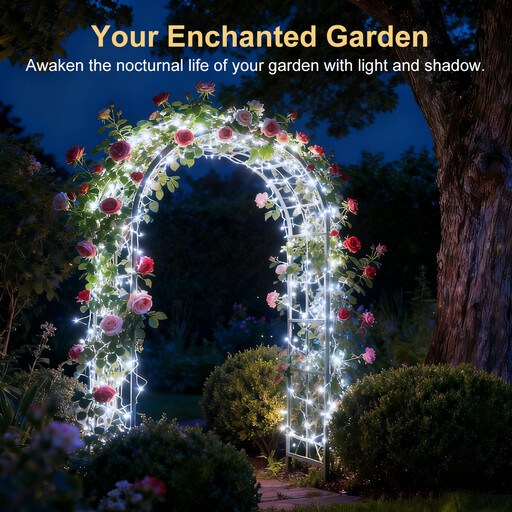
Why it fits the profile: Ideal for flexible and creative decoration of balconies, patios, trees, or fences. The bendable copper wire makes it easy to create a cosy and inviting atmosphere.
With an IP65 rating, this string light is significantly better protected against the elements than many purely decorative products. The specified runtime of 8–14 hours is designed for continuous overnight illumination.
Offers 8 different lighting modes (from steady on to flashing) with a memory function that remembers the last setting. The set includes two separate 8-metre string lights.
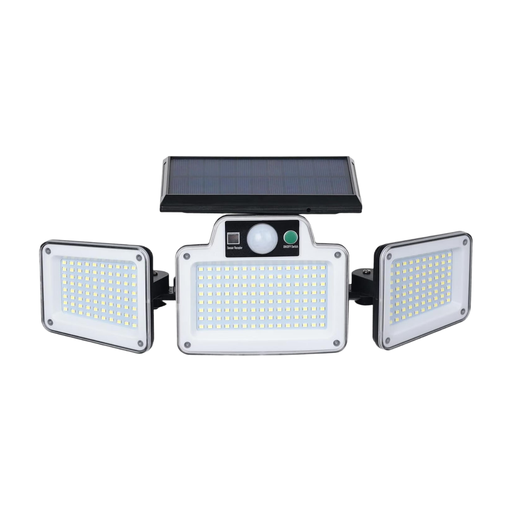
Why it fits the profile: Designed for functional illumination of driveways, garages, yards, and paths. The motion sensor provides security and bright, on-demand lighting.
The separate solar panel with a long cable solves the problem of shady installation spots. The light can be mounted in the dark while the panel is placed in full sun. The IP65 certification ensures robustness.
Three adjustable light heads for wide illumination and three operating modes (including a pure motion sensor mode), which can be conveniently set via remote control.

Why it fits the profile: A straightforward and reliable solution for marking paths, flowerbeds, or lawn edges. Installation is tool-free by simply staking them into the ground.
The stainless steel construction is more durable than all-plastic models. Although it is only IP44 certified, this is sufficient for its intended purpose as a path light. The specified runtime of 8–12 hours is adequate for overnight orientation.
Very simple, tool-free handling and a clean, functional design with cool white light (6500K) that makes paths clearly visible.
We have compiled a comprehensive, up-to-date list of products that meet these strict selection criteria and applicable safety regulations.
Yes, but with limitations. The shorter days and lower angle of the sun in winter result in the battery charging less. This shortens the runtime per night. Models with high-efficiency solar panels and large-capacity batteries have an advantage here. It's also important to keep the solar panel free of snow and dirt to maximise charging performance.
The lifespan is mainly determined by two components: the battery and the housing. The LED itself has a very long life, often 15,000 hours or more. A standard NiMH battery may need to be replaced after 1–3 years, while high-quality LiFePO4 batteries last significantly longer. A housing made of stainless steel or robust ABS plastic is more weather-resistant than simple plastic and also contributes to a longer service life.
The IP (Ingress Protection) rating is an international standard that indicates how well an electrical device is protected against the ingress of foreign objects (first digit) and water (second digit). For solar lights in the garden, IP44 (protection against splashing water) is the minimum standard. IP65 (protection against water jets) offers a higher level of protection and is recommended for lights that are exposed to the weather without shelter.